In our conversation with Alice Gateaux for the Cellophane et Vaseline podcast, we dug into where tattooing fits in a world shaped by capitalism, the search for meaning, and degrowth. We explored the value of handcraft, the contradictions of artistic labor, and how the body, ink, and time have become grounds for quiet resistance.
The value of craft
Pricing your work is not a side issue. It is also part of our training courses in Grenoble, alongside the less glamorous realities around the actual craft.
"Raise your prices, and you'll get more respect."
That line, shared by Alice Gateaux during our chat, echoes through studios and the minds of independent artisans everywhere.
In tattooing, price goes beyond a simple transaction. It expresses something intangible: time, precision, mental load, the piece of soul invested in every line. As Richard Sennett wrote in The Craftsman (2008), "craftsmanship rests on a lasting desire to do a job well for its own sake."
Yet faced with hyper-productivity and platform culture, the slow gesture — drawing on paper, sketching by hand — becomes almost an act of defiance.
"I just want to draw on paper," Alice says. "On Procreate, everyone has the same line."
It's a return to singularity, to material, to the hand.
Free festivals… but not for the artists
Arthak brings up a scene he's seen play out too many times: a festival organizer invites tattoo artists but refuses to let them charge. "They told us they didn't want him to charge for his tattoos."
Meanwhile, the musicians got paid.
This paradox captures a contemporary drift: under the cover of "anti-capitalist" ideals or "community," manual and creative work often gets erased. As Silvia Federici points out in Patriarchal Capitalism (2019), certain forms of "passion work" reinforce inequality — when passion stops feeding you, it becomes exploitation.
Arthak says it softly but firmly: "The only ones making money were the musicians' fees. The tattoo artists, we do this out of passion — except one day, passion gets hungry."
Degrowth and mental health
In tattooing, degrowth isn't just an economic stance — it's a philosophy of pace.
"Before, I'd stress about not having enough appointments. Now I'm learning to be OK with that."
This echoes Ivan Illich in Tools for Conviviality (1973): finding the right balance between doing and living, between production and presence.
Learning to see emptiness as fertile space — that's a political act in a society obsessed with output. Working less sometimes means listening better. Drawing better. Existing better.
Tattooing becomes a practice of slowness: a workshop of quiet resistance, a space where the hand reclaims its role as an extension of the body, not a tool for performance.
The tattoo as activism: body, ecology, and everyday politics
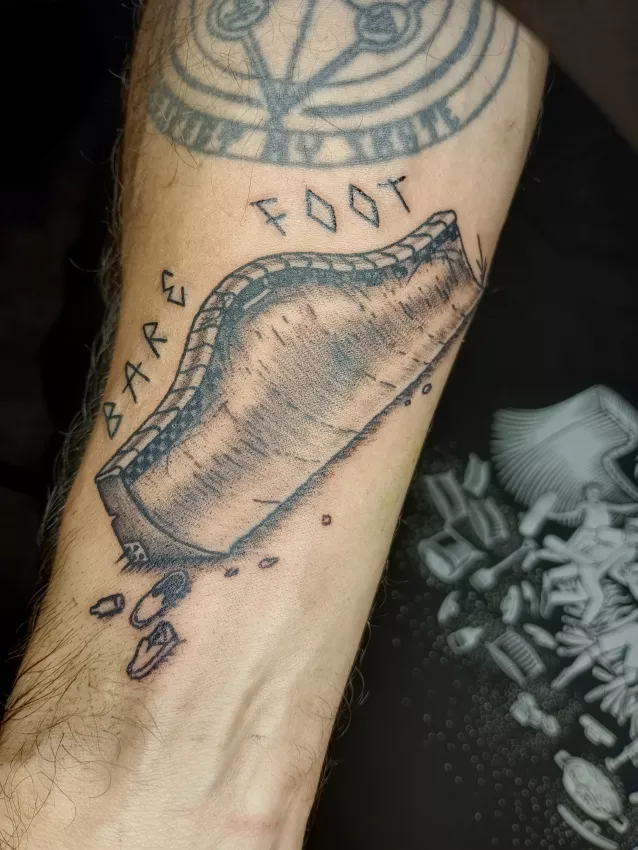
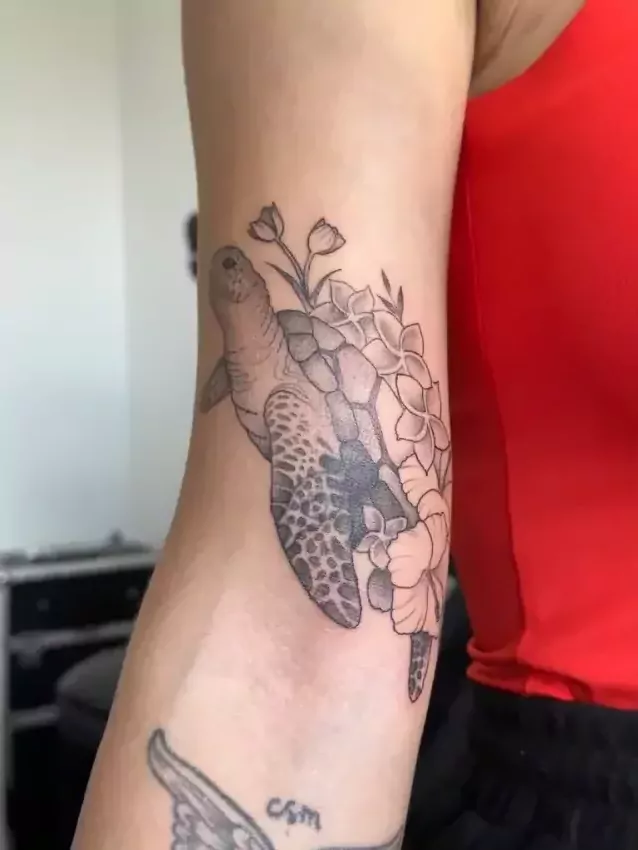
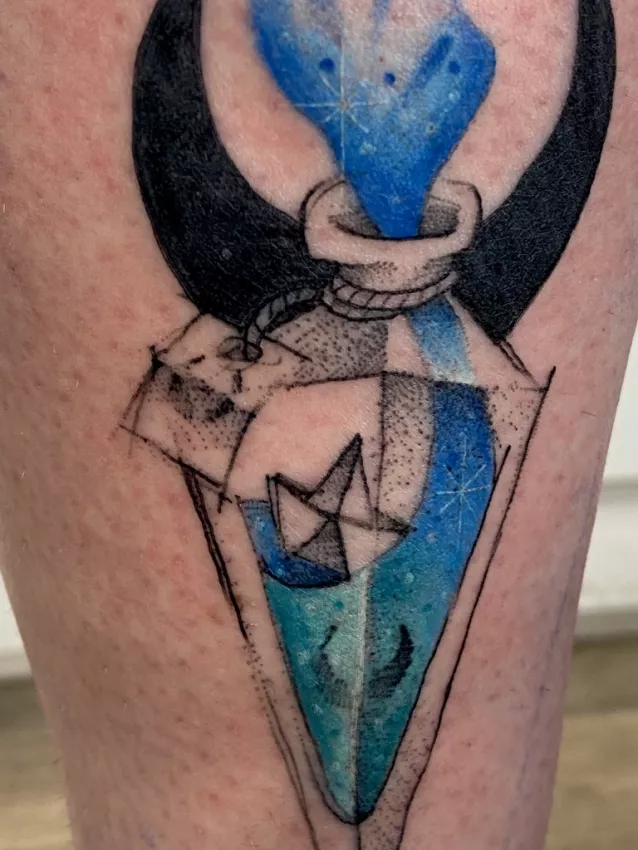
A tattooed body is a manifesto.
It tells — sometimes without words — a personal story and a collective stance. In an age of digital streams and infinitely reproducible images, ink in skin becomes a form of lasting commitment.
Some reclaim their bodies through tattooing; others see it as an ecological act — replacing the consumption of objects with an art that doesn't wear out.
For Alice, refusing digital mediums or style standardization is also ecological.
"I'm an old fart, I like paper," she says with a laugh.
This choice fits into degrowth philosophy: slow down, re-inhabit the tangible, reject the full dematerialization of the creative act.
Board games and drawing: rebuilding connection
Between reflections on society, Alice also talks about Scrabble, Saboteur, game nights that reconnect with conviviality.
The link between drawing and games isn't incidental: both tap into shared creativity, a collective memory.
These moments — often ordinary — embody the essence of human connection: shared creation, deliberate slowness, the simple joy of being together.
In a screen-saturated world, these craft and play practices become small spaces of relational ecology.
In conclusion
Alice Gateaux's journey reminds us that tattooing isn't just body art: it's a manifesto of the gesture.
Working with your hands means slowing the world down — but also giving it room to breathe.
Tattooing, like many crafts, invites us to rethink what good work is worth, to unlearn speed, to rediscover the beauty of meaningful utility.
And maybe real degrowth starts here: in how you draw a line, meet someone's eyes, or simply allow yourself to produce nothing — slowly, together.
📍 Find Alice Gateaux → @licetattoo → Regular guest at Studio Pixel, Grenoble & Paris
🎙️ Listen to the podcast → On YouTube → On all podcast platforms