I have a weird relationship with sunscreen.
I know it matters. I know I should use it. And yet, every summer, a small part of me behaves as if the sun were just a rumor.
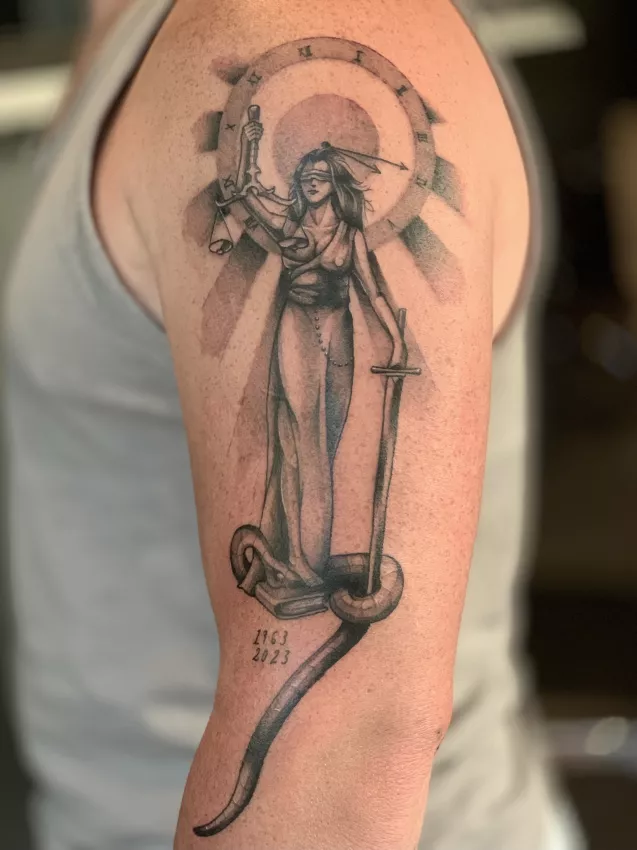
Then I see an old tattoo, well protected, still sharp and contrasted. And next to it, another one that has taken fifteen summers with no defense, now blurry like the memory of a night out.
And that is when I get serious again.
Well, serious in my own way. So serious, but with a badly closed water bottle in the bag.
You don’t change a team that draws, as Orelsan would say.
A tattoo lives in your skin
We often talk about tattoos like objects.
“My tattoo.”
“My piece.”
“My design.”
But it is not a sticker placed on top of you. It is in your skin. So anything that damages your skin can visually damage your tattoo.
Sun, dryness, friction, burns, poor healing, major body changes, repeated aggression.
A tattoo does not float in a parallel dimension. It goes through your life with you.
Poor little thing.
During healing: keep protection simple
If your tattoo is fresh, do not put sunscreen on it.
Keep it away from direct sun.
Loose clothing. Shade. No swimming. No intense sport. No rubbing.
On our Care page, we recommend avoiding pools, baths, steam rooms, saunas, direct sun and heavy sweating for three weeks.
This is the time to keep things simple.
Wash gently. Pat dry. Apply a thin layer of suitable cream if the skin feels tight. Do not turn your tattoo into a cosmetic mille-feuille.
A fresh tattoo wants stability.
Not a TikTok routine with six products and an oil that smells like dessert.
After healing: SPF 50
Once the tattoo has healed, the number one reflex is sun protection.
SPF 50.
Not because you are fragile. Because UV rays contribute to skin aging and can make tattoos lose intensity over time.
Black usually holds better than light colors, but nothing is invincible.
Even a heavy black fill can lose depth if the skin gets wrecked by the sun for years.
SPF is less sexy than a new tattoo. But it helps the tattoo stay readable.
Sometimes glamour is just a bottle of white sunscreen forgotten in a tote bag.
Clothing: the boring but efficient hero
Before sunscreen, there is clothing.
A T-shirt, a light shirt, loose trousers, a UV sleeve if you are really exposed.
It is not very rock’n’roll, but it works.
Especially if your tattoo is recent, or on an area that catches everything: forearms, shoulders, calves, neck, hands.
Careful: protective clothing does not mean tight clothing. If it rubs, it irritates. If it sticks, it macerates. If you have to peel it off your skin like an old jar label, that is not a good sign.
Moisturize, but don’t drown it
Dry skin often makes a tattoo look duller.
Moisturizing regularly helps keep skin supple, more comfortable, and better looking visually.
But again, no need to turn it into a construction site.
A simple cream, fragrance-free if your skin is sensitive, applied normally. Not a thick layer. Not every fifteen minutes. Not until your arm shines like a tuned car.
During healing, too much cream can suffocate the skin. After healing, moisturizing becomes mostly comfort and maintenance.
Simple. Regular. Not mystical.
The most exposed areas age faster
Tattoos on hands, fingers, forearms, shoulders, neck, shins or calves often see more sun.
So they need more attention.
It is not fate. It is just logic.
A tattoo hidden under a T-shirt half the year does not live the same life as a hand tattoo taking sun, washing, sanitizer, friction and door handles.
Hands live in a permanent war zone. We ask a lot from them. Even opening a packet of smoked tofu becomes combat sport.
What about colors?
Colors can be more sensitive to sun exposure over time.
Very light tones, pastels, yellows, pale pinks and whites can lose intensity faster, or shift visually depending on the skin and exposure.
Black often remains the most durable base, especially when it is well contrasted.
But careful: that is not an excuse to stop protecting black tattoos.
A beautiful black in sun-damaged skin also loses impact.
Readability is not just ink. It is ink plus skin.
A fragile little couple. A bit like two roommates who only communicate through sticky notes.
After swimming, after sun
If your tattoo is healed and you swim, rinse yourself.
Moisturize later if the skin feels tight.
Reapply sunscreen if you stay exposed.
Do not scratch. Do not rub like you are cleaning a pan.
And if your tattoo is still recent, reread the article about tattoos and swimming before playing dolphin.
The best care: don’t do stupid things for too long
An accident happens.
Forgetting happens.
A badly planned day in the sun happens.
The real problem is repetition. Summer after summer. No protection. No hydration. Never looking at your skin.
Protecting a tattoo does not mean becoming an SPF monk.
It just means accepting that if you want a drawing to stay beautiful on your body, you need to protect the support.
Like a painting. Except the painting sweats, takes the tram, eats ice cream and sometimes forgets its hat.
Sources
- EADV, Tattoo aftercare patient leaflet.
- Allure, Why You Should Wait to Swim After Getting a Tattoo.
- Township Tattoo, Aftercare.