The first time I saw a tattoo truly age — not on Instagram, not on a friend — was Michel. Michel, 67, former sailor, a tattoo on his forearm dated 1982. A boat. The lines were thick, bluish, a bit blurry. The boat almost looked like a sideways octopus.
Michel looked at me and said: "See, back then the guy promised me it'd stay perfect forever."
He was 28 when he got it. At 67, his arm wasn't the same. Neither was the tattoo. But he still loved it. Because it was his.
I won't lie: a tattoo ages. Like you. Like me. But it's not inevitable doom. It's just understanding what happens under the skin.
Years 0-5: The Golden Years
The first five years, your tattoo is at its peak.
Lines are crisp, colors are bright, contrast is strong. This is the showing-off period, the compliments, the "glad I did this" phase.
It's also when upkeep matters most. A well-moisturized, sun-protected tattoo will stay fresh much longer. I know people who put sunscreen on their tattoo every day, even in winter. They seem crazy, but ten years later they still have a beautiful tattoo.
I recommend reading my article on tattoos and the sun if you don't want your masterpiece to turn into a faded blue blob.
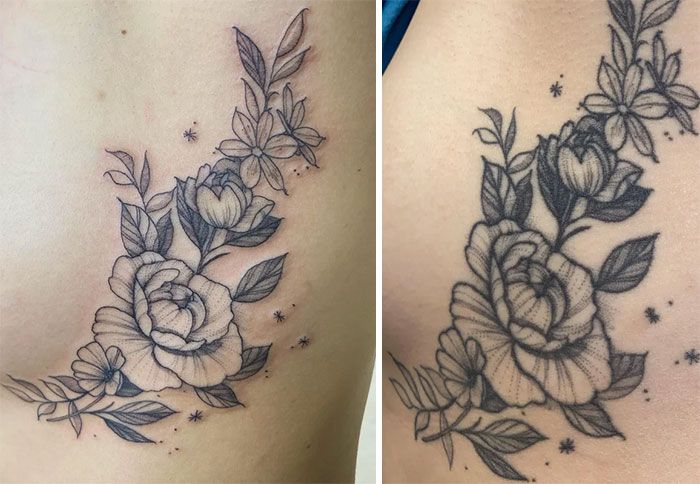
Years 5-10: First Signs
Now it starts showing if you've neglected care. Blacks can shift slightly toward green or blue. Fine lines begin thickening just a tiny bit. Normal.
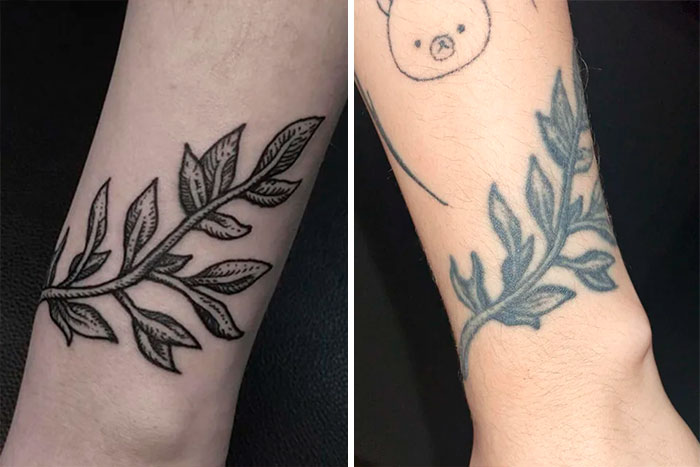
But the biggest factor is your body changing.
If you gain weight, hit the gym, stretch your skin — the tattoo follows. A design on the belly can ovalize. A drawing on the bicep can distort if the muscle grows. And if you lose weight, the tattoo can shrink unevenly.
A tattoo isn't a sticker. It's ink in your skin. And your skin is alive.
Years 10-20: The Great Divide
After ten years, everything depends on three things:
- The tattoo style — an American traditional with thick lines will age better than a hyper-detailed fine line.
- The placement — sun-exposed areas (hands, forearms, neck) age worse than sheltered spots.
- Your age when you got it — a tattoo done at 20 on young skin ages with you. A tattoo done at 50 on skin that's been in the sun for thirty years will look different.
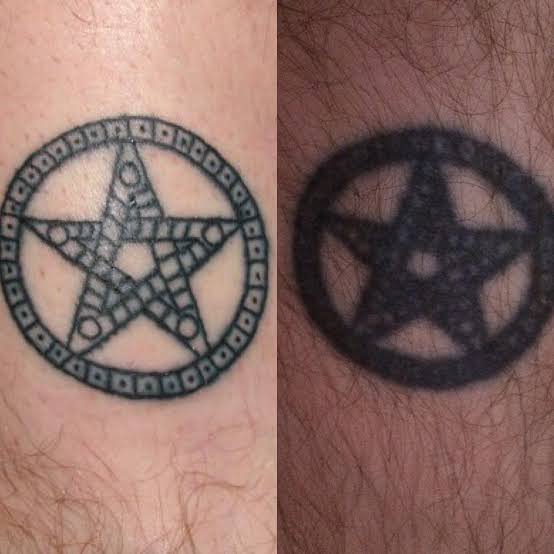
I have clients coming back twenty years after their first tattoo. Sometimes we touch up. A pass on the blacks to revive contrast, a touch on the outlines that have spread. Not a new tattoo, but it brings life back.
And sometimes we decide to leave it alone. Because imperfections also tell a story.
The Invisible Enemies
The sun, I've said it. But it's so important I'll repeat: UV rays destroy ink. Not in one summer, but over twenty years. The difference between a protected tattoo and an exposed one is night and day.
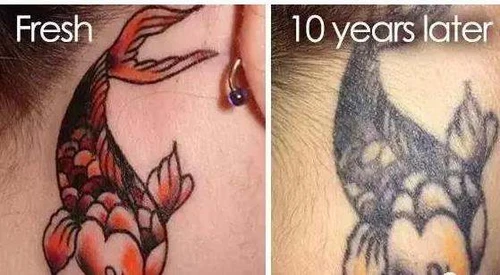
The other enemy is ink quality and workmanship. A tattoo done by an amateur with sketchy ink turns gray-green or nasty pink within five years. A clean job with professional ink degrades much slower.
And then there's the skin itself. As we age, skin loosens, loses elasticity. Lines naturally widen, tiny details blur. Not a tragedy — just life.
Do Color Tattoos Hold Up Better?
Yes and no.
Blacks hold better than colors, that's a fact. But modern inks with better pigments hold up much better than twenty years ago. A well-placed red can stay vibrant a long time if you protect it.
Yellow and white are the first to go. That's physiological. If your project relies on white or very light pastels, it'll probably need a touch-up someday. That's why in tattoos meant to last, we bet on contrast and strong values.
Speaking of which, if you're unsure about text size or fine script, I recommend reading what I wrote about tattoo typography and fine fonts. Classic long-term regret material.
So What Do We Do?
You get tattooed knowing it'll change. Like a wooden piece of furniture, like a favorite pair of jeans, like a photo that yellows. It becomes something else. Sometimes less sharp, sometimes more beautiful.
I have a rib tattoo that's ten years old. It's less precise than day one. Lines have thickened a bit, shadows have softened. But I find it more beautiful now than back then. Because it's become my skin. It's become me.
Or maybe I just tell myself that to feel better about aging. Possible too.