The question comes up all the time.
"Does it hurt?"
And every time, I want to give a very precise, very scientific, very useful answer: yes but no but it depends.
Fantastic. Thanks Arthak. Nobel Prize in vagueness.
Except it is true. Tattoo pain depends on so many things that a "pain zones from 1 to 10" chart found on Pinterest often contains about as much truth as a horoscope written by a microwave.
It can help you get your bearings. But it does not tell you how you, your body, your stress, your project, and your skin will react.
The placement changes a lot
Some areas are calmer.
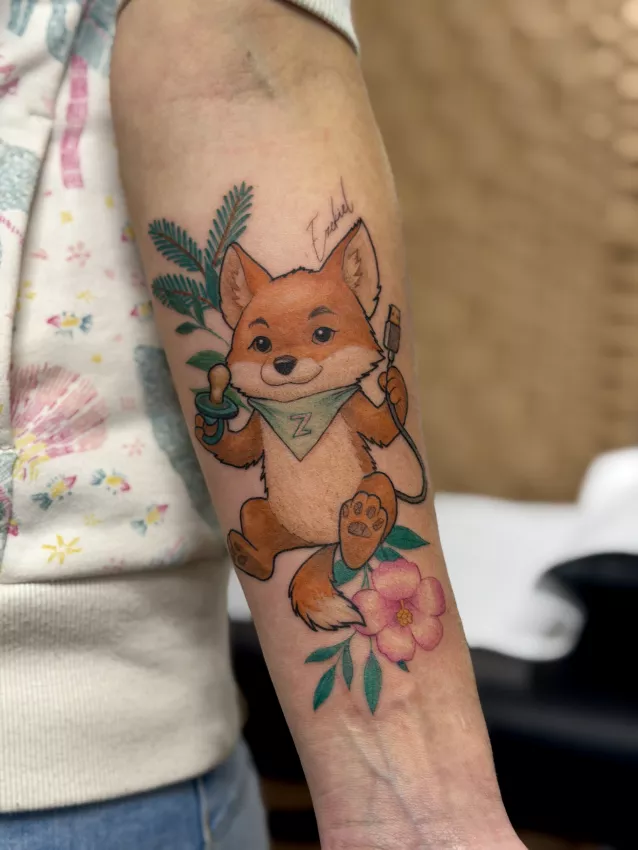
Forearm, arm, calf, thigh: these often go pretty well, even for a first tattoo. Not always. But often.
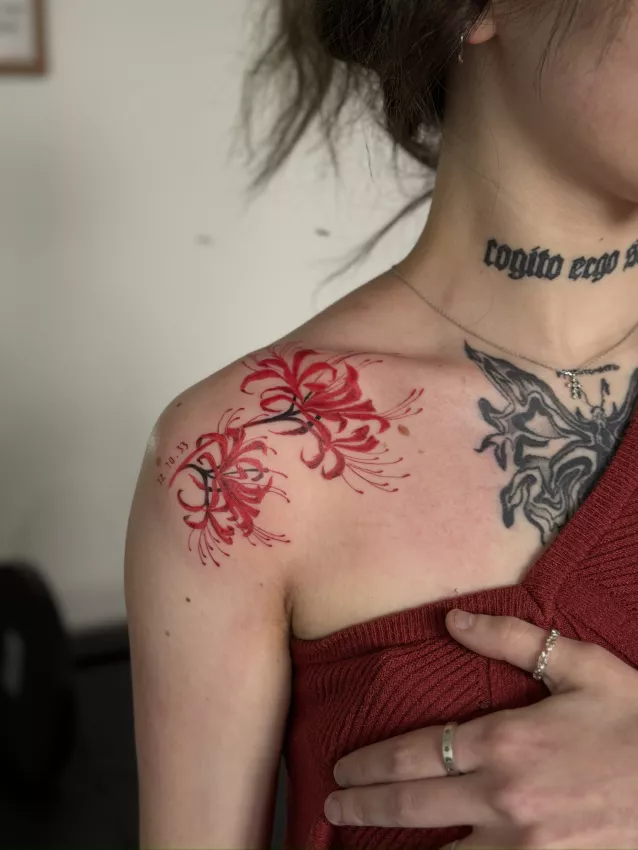
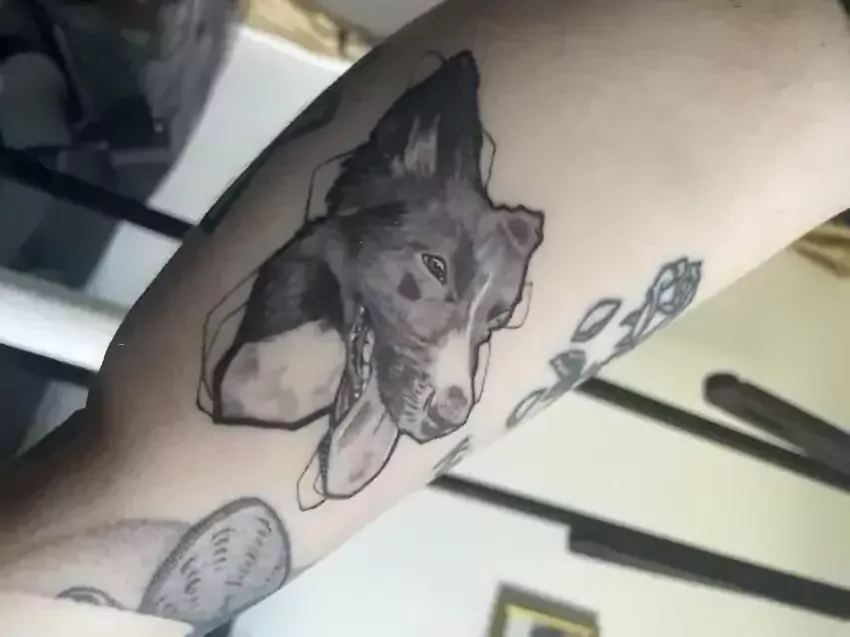
Other areas are more playful: ribs, sternum, stomach, knee, elbow, foot, ankle, fingers, inner arm. There, the body may suddenly remember that it owns a nervous system and would like to join the conversation.
Skin is not the same thickness everywhere. Bones are not the same distance away. Nerves are not either. And some places move with your breathing, reflexes, and muscles.
So yes, placement matters. But it does not tell the whole story.
The style changes the pain too
Not all tattoos hurt the same way.
A quick fine line is not a big black fill. Light shading is not a dense solid area. A tiny symbol is not a full back piece.
The longer we work on the same area, the more the skin gets tired. It heats up, swells, becomes sensitive. At first you think, "honestly, this is fine." Two hours later, you are mentally negotiating with a minor deity of furniture.
The equipment matters too. A very small fine needle can feel sharp. A wider needle can feel heavier. A magnum used for shading does not feel the same as a liner.
And no, that does not mean thinner always equals less painful. Tattooing loves ruining overly simple logic.
Session length matters almost as much as placement
A twenty-minute tattoo on a sensitive area can be manageable.
A six-hour tattoo on an "easy" area can become honestly rough.
Time wears you down. At the beginning, the body produces endorphins. That helps. Then after a while, the stock drops. Like good resolutions in February.
Breaks can help, but they can also make restarting harder. When the skin cools down, the brain understands what is happening, and you have to go back in, it is not always the most glamorous moment.
That is why sessions are often adapted. A large piece can be split. A first tattoo can stay reasonable. That is not a defeat. It is body logistics.
Stress amplifies everything
A first tattoo is stressful. Even when you pretend it is not.
Stress tightens the body. Breathing gets short. Muscles tense up. And an unpleasant feeling becomes bigger.
What helps: eat beforehand, sleep properly, wear comfortable clothes, avoid alcohol and excess the day before, ask your questions before the session, and say something if you need a stop.
You can prepare your appointment with the article about choosing a first tattoo without panicking or reread the FAQ. Not because you need to control everything. Just because an informed brain invents fewer disasters.
Moving, coughing, sneezing: warn us first
A tattoo is a needle in the skin.
So if you feel you are about to cough, sneeze, move, spasm, faint, or launch into contemporary choreography, warn us.
You say "stop," the artist lifts the needle, we breathe, and we start again. Simple.
Small movements happen. We handle them. But warning us avoids lines deciding to go live their own life somewhere else.
This is not a courage exam. You do not get extra points for suffering in silence like antique furniture.
And after, how long does it hurt?
After the session, the feeling changes.
Often, it feels like a mild burn, a strong localized sunburn, or skin that has been a bit traumatized and wants you to know it filed the report.
During the first few days, it can feel tight, warm, and itchy. The itching is often more annoying than the pain. That is when you need to avoid scratching, soaking it, exposing it to the sun, or rubbing it with clothes that are too tight.
The tattoo aftercare page gives the basics. And your tattoo artist can adjust the advice depending on the area, size, ink density, and your skin.
If the pain becomes strong, if redness spreads, if the area gets very hot, if there is pus, fever, or a weird general feeling: get medical advice. At that point, we are out of "it feels a bit tight" territory and we stop debating in the group chat.
Key takeaways
- Yes, a tattoo can hurt. But pain varies a lot.
- Placement, session length, style, fatigue, and stress change everything.
- Warning before moving helps avoid problems.
- Eating, sleeping, and breathing sounds basic, but it works.
- Aftercare matters as much as the session itself.
Yes, a tattoo can hurt.
But not always the way you imagine. Not always in the same place. Not always for the whole session. Not always in an unbearable way.
For many projects, especially reasonable first tattoos, it is absolutely doable.
The real point is choosing a project that fits your threshold, your placement, your timing, and doing it in a setting where you can speak up.
Because a scared body already talks loudly enough.
Sources
- Frontiers in Virtual Reality, study about pain during a tattoo procedure: https://www.frontiersin.org/journals/virtual-reality/articles/10.3389/frvir.2021.643938/full
- PubMed, muscle relaxation techniques and pain during laser tattoo removal: https://pubmed.ncbi.nlm.nih.gov/27184151/
- A day with a tattoo artist! - YouTube: https://www.youtube.com/watch?v=HAU6416Qwwg