The other day, a client walks in with a picture of a peony. Beautiful, very pink, very "I want this on my shoulder." I ask her why the peony. She says: "No idea, I just like the shape."
It was the perfect answer.
Because at the end of the day, a flower tattoo doesn't need to carry a whole speech. Sometimes it's just the right shape in the right spot. But flowers still carry stories with them — symbols, legends, cultural clashes, garden memories, bouquets received on a June evening.
I spent a good chunk of time compiling the 100 most requested flowers at the studio and their meanings. Not so you can pick yours from a table. More so you know what you're bringing with you.
Like with animals, every design tells something. Even if you don't know it yet.
The Classics — The Ones We See All the Time
These get tattooed at the studio every month. Sometimes every week. They've proven themselves — graphically and symbolically.
-
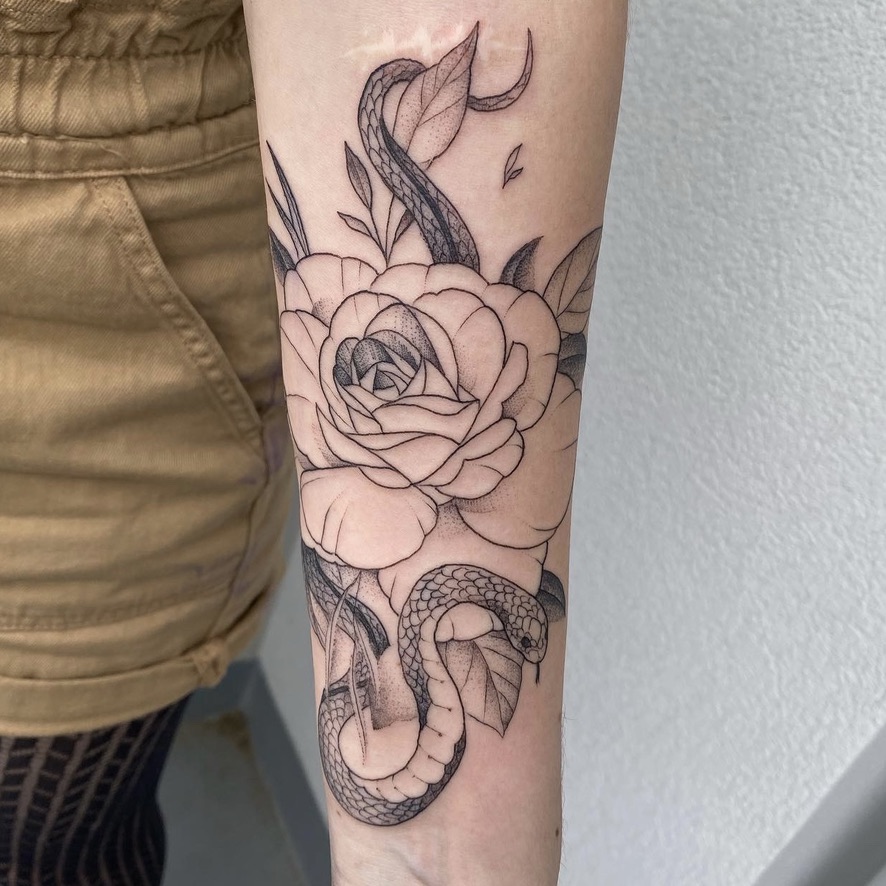
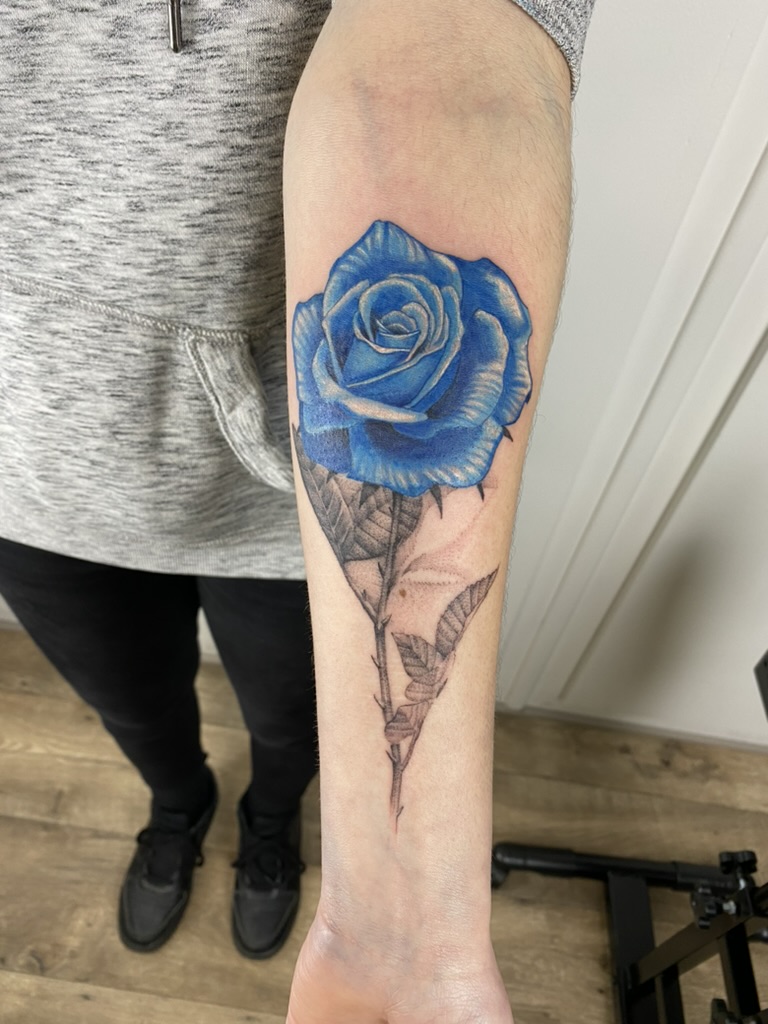
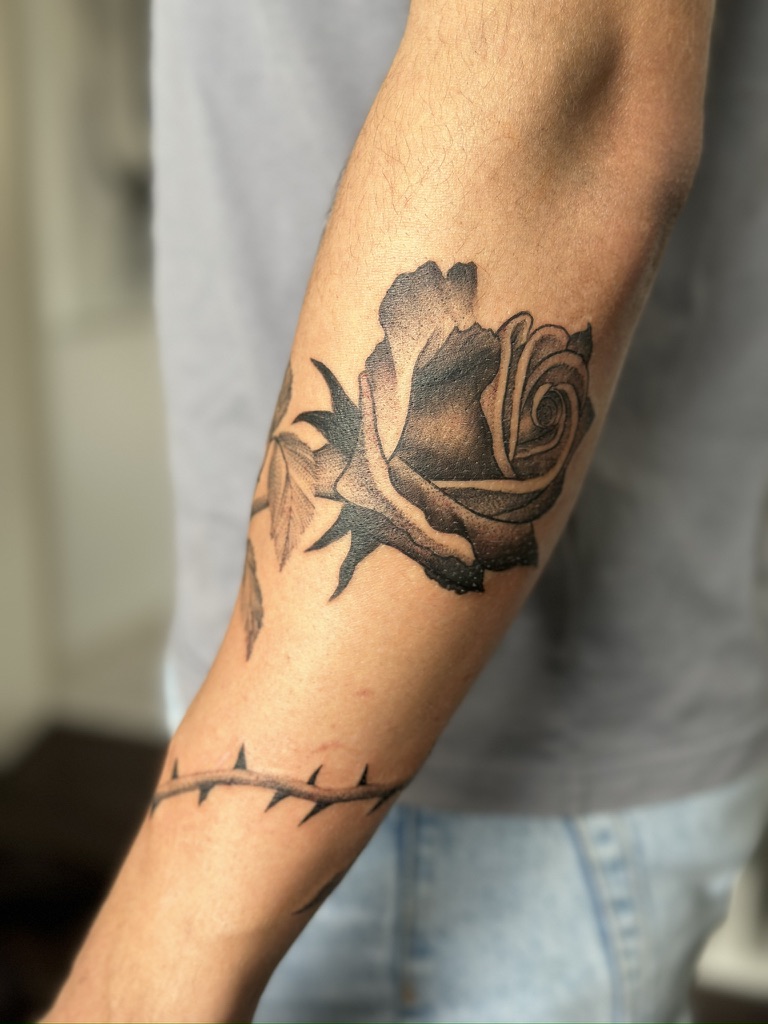
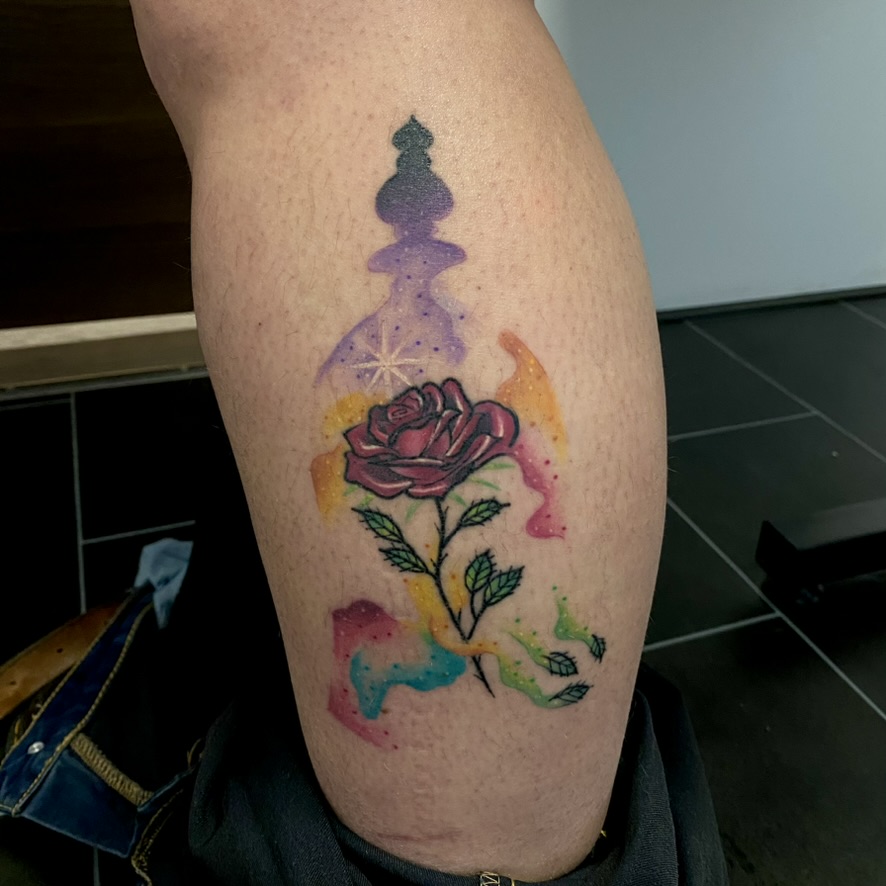
Rose — Love, passion, but also mourning depending on the color. Red is intense love. Black is the end of a cycle. White is remembrance. The rose does it all — it's kind of the queen of the game.
-
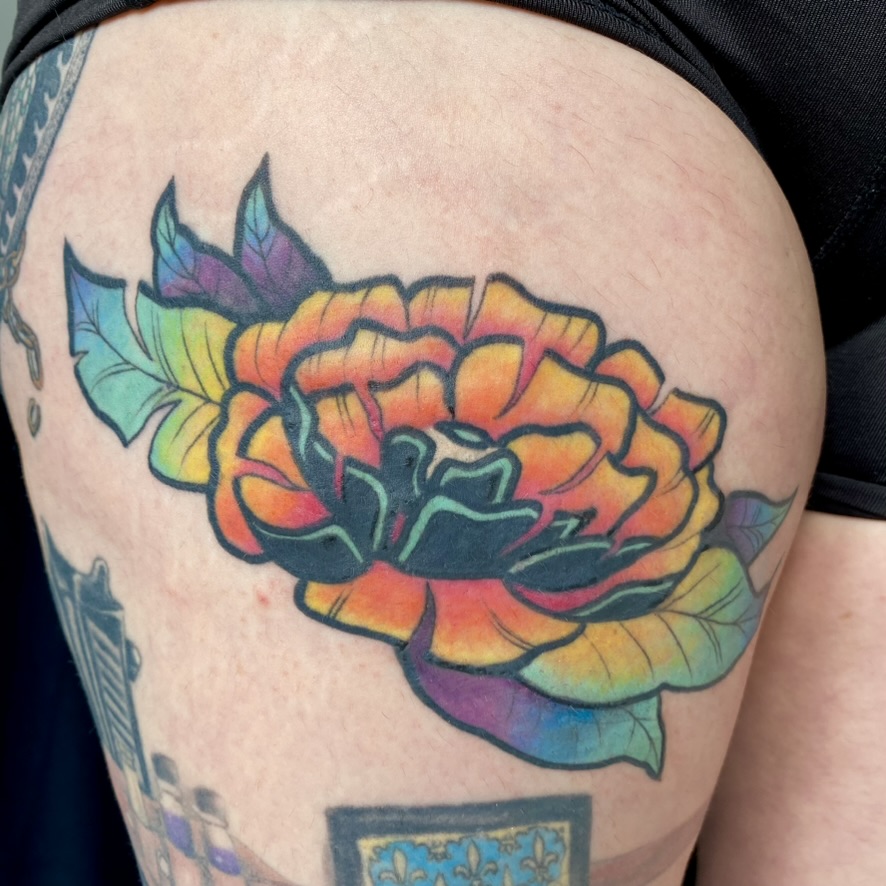
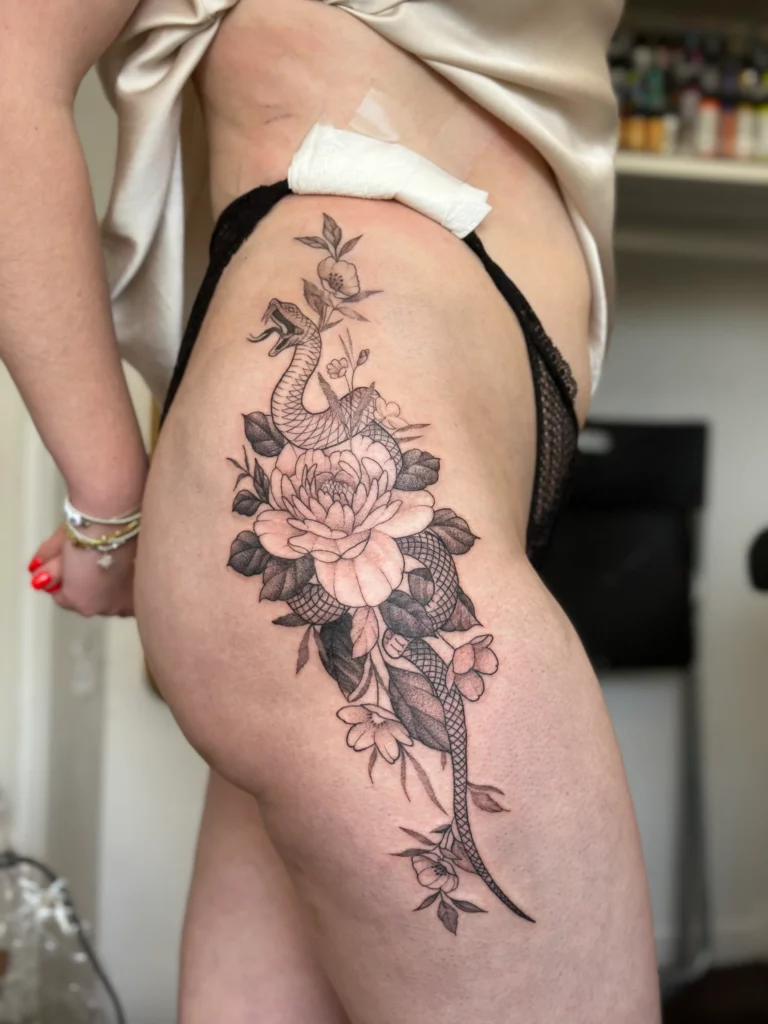
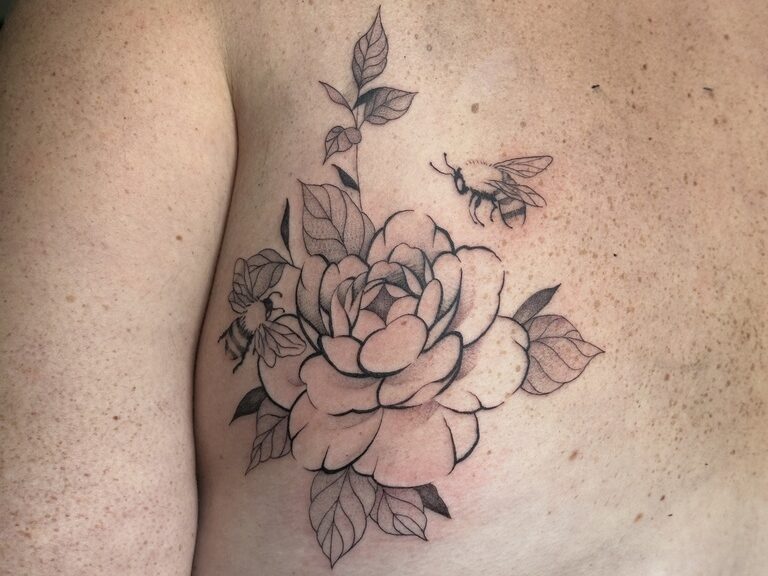
Peony — Wealth, honor, generous beauty. In Japanese tradition it's the flower of the brave. In neo-trad it's a petal monster that fills any space.
-
Lotus — Rebirth, resilience, spiritual awakening. It grows in mud and comes out clean. If you've been through some stuff, this is your flower.
-
Sunflower — Joy, loyalty, positivity. It follows the sun all day. If you're the glass-half-full type, even after a bad day.
-
Lily — Purity, rebirth, nobility. Heads up: in ancient Greece it was an explicit sexual symbol. Flowers are never as innocent as they seem.
-
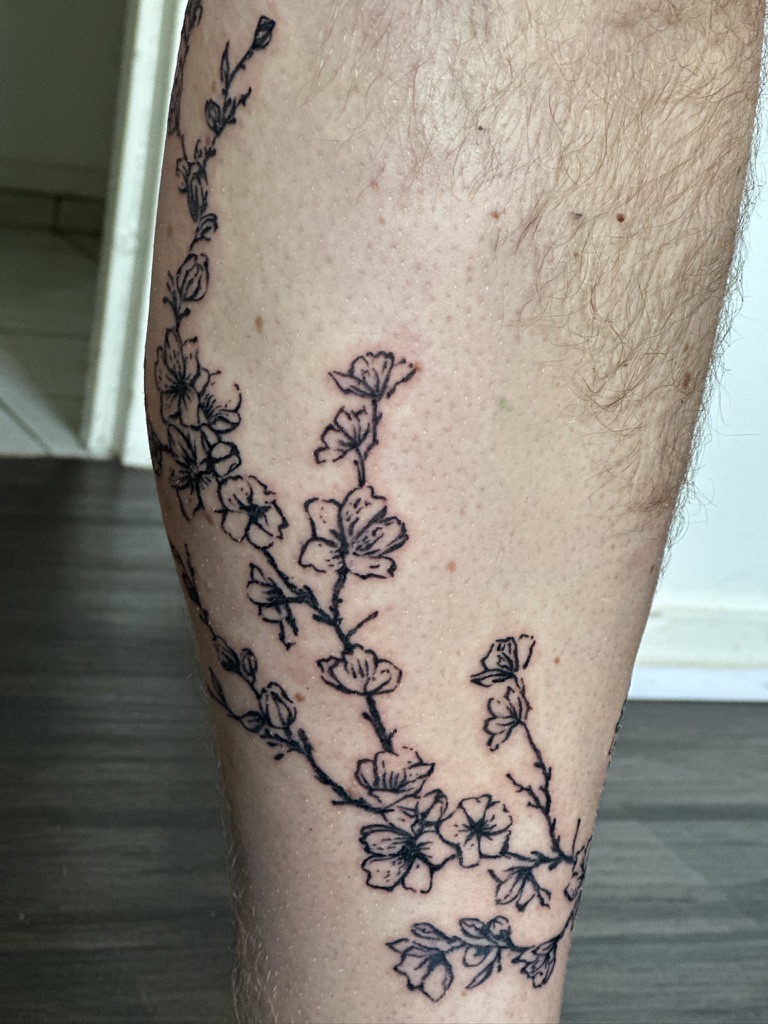
Cherry blossom (sakura) — Ephemeral beauty, impermanence, renewal. The petals fall after a few days. That's the whole point.
-
Lavender — Calm, serenity, remembrance. In Victorian flower language it meant "distrust." Today it's the flower of the South, of fields, of good-smelling wardrobes.
-
Orchid — Rare beauty, sensuality, quiet strength. The Black Widow of flowers, minus the superpowers.
-
Violet — Humility, modesty, faithfulness. Discreet but tenacious.
-
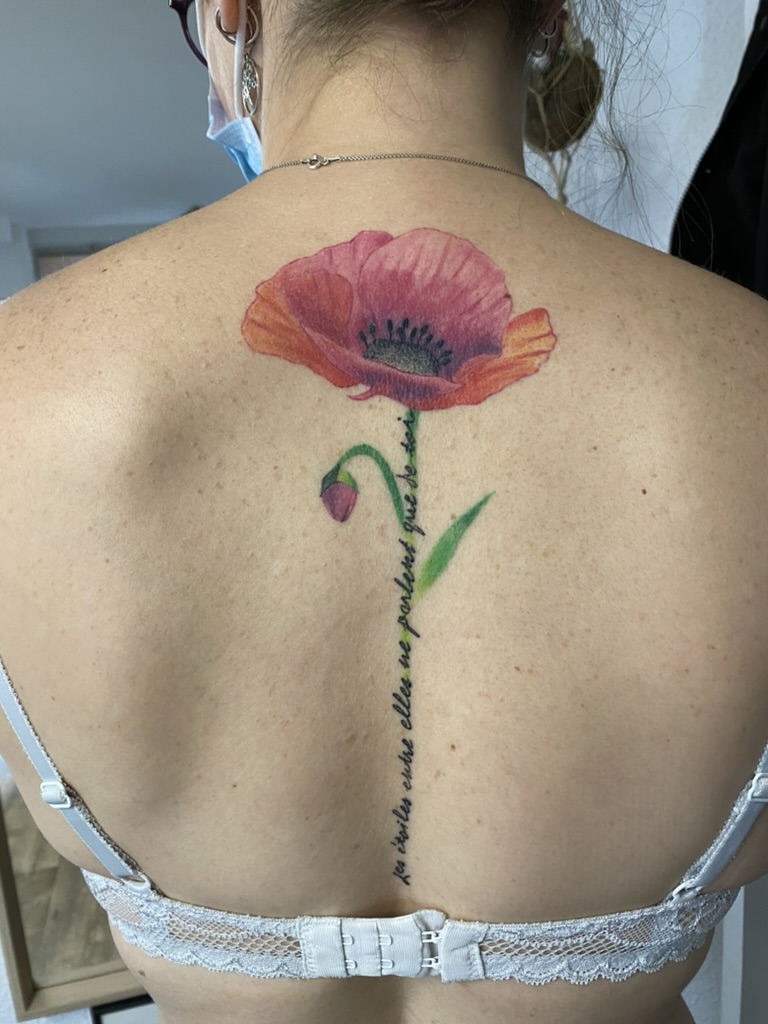
Poppy — Memory, remembrance, peace. Linked to the world wars, but also to summer, red fields, fragility.
-
Daisy — Innocence, simplicity, new beginning. The flower of "he loves me, he loves me not…"
-
Tulip — True love, renewal, spring. The Dutch ruined themselves for it in the 17th century. That's a level of commitment.
-
Lily of the valley — Return of happiness, luck, sweetness. The May Day flower, but also a violent poison if you eat the stem.
-
Iris — Wisdom, hope, faith. Named after the messenger of the Greek gods.
-
Dahlia — Elegance, commitment, dignity. According to Greenaway (1884): "instability." Victorians knew their double meanings.
-
Hydrangea — Gratitude, abundance, generous beauty. Fun fact: it changes color depending on soil pH. A bit of a chameleon.
-
Wisteria — Lasting friendship, welcome. Its vines wrap around and hold over time.
-
Camellia — Inner beauty, admiration. The flower of La Dame aux Camélias — a classic.
-
Magnolia — Nobility, perseverance, longevity. A flower that's been around for millions of years.
-
Carnation — Love, fascination, but also mourning depending on color. The chameleon of flowers.
-
Daffodil — Renewal, spring, self-love. Not necessarily narcissistic, but it plays the part.
-
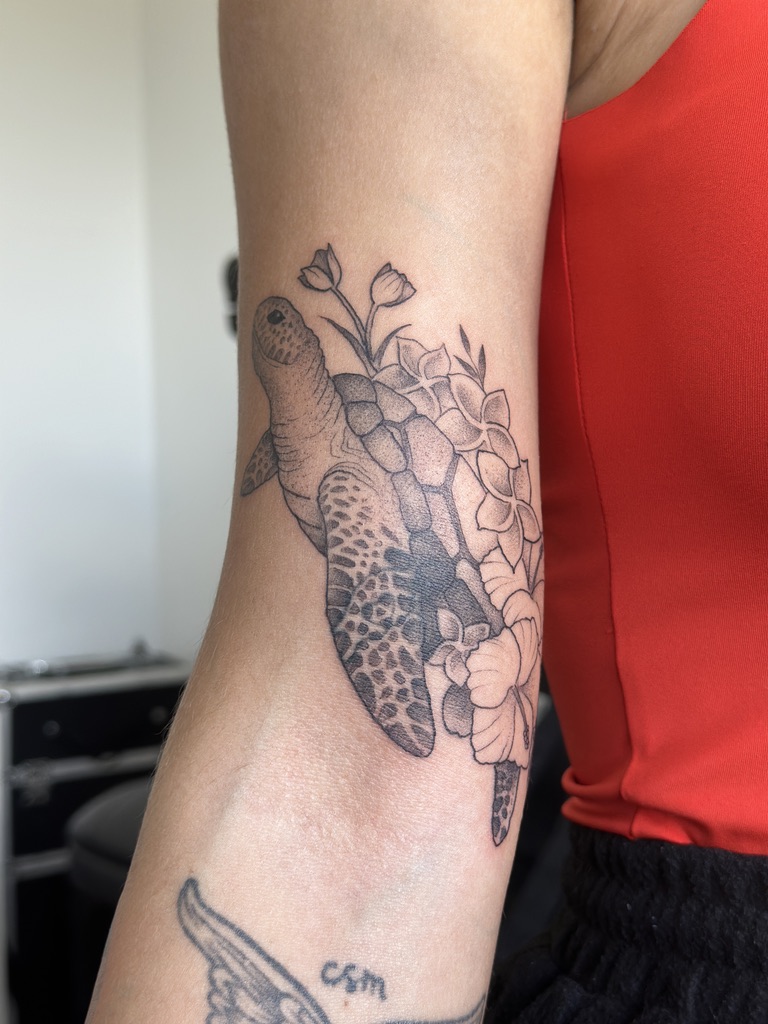
Hibiscus — Delicate beauty, exoticism, hospitality. Perfect for a tattoo that feels like a vacation.
-
Jasmine — Sensuality, elegance, sweetness. Its scent is strongest in the evening.
-
Lilac — First love, innocence, youth. The flower of childhood memories.
-
Chrysanthemum — In Asia: longevity, joy, perfection. In Europe: mourning. Depending on where you live, the same tattoo tells two opposite stories.
The Character Flowers — The Ones That Surprise You
These have strong personalities, unusual shapes, or meanings you wouldn't expect.
-
Thistle — Protection, resistance, pride. It's spiky, it's got a botanical punk vibe. If you find roses too tame.
-
Hellebore — Mystery, protection. In antiquity it was used to treat madness. A flower with some edge.
-
Foxglove — Insincerity in Victorian flower language, but also protection in Celtic traditions. Very beautiful, very toxic.
-
Opium poppy — Sleep, peace, imagination. Different from the common poppy: broader, more dreamlike.
-
Anemone — Protection against evil, fragility, anticipation. "Daughter of the wind" in Greek.
-
Hyacinth — Regret (purple), playfulness and joy (pink), sincerity (blue). Color changes everything.
-
Azalea — Fragile passion, temperance. Beautiful but delicate to grow.
-
Passionflower — Faith, mystery, the passion of Christ (hence the name). A flower that looks like it's from another planet.
-
Bougainvillea — Passion, exoticism, intensity. No petals — those are colored bracts. The show-off that goes all out.
-
Snapdragon — Grace, strength, but also indiscretion. Pinch the flower and it opens its mouth like a dragon.
-
Bleeding heart — Passionate love, compassion. Its little heart-shaped flowers are unmistakable.
-
Clematis — Cunning, ingenuity, intellectual beauty. A flower that climbs wherever it wants.
-
Nasturtium — Conquest, victory, patriotism. You can eat it in a salad — it's good and peppery.
-
Arum lily — Protection, resilience, understated elegance. A very graphic shape, almost architectural.
-
Periwinkle — Faithfulness, friendship, sweet memories. The little blue flower that lasts all summer.
-
Edelweiss — Courage, devotion, purity. It grows high in the mountains under impossible conditions.
-
Gorse — Eternal love, hope in adversity. It blooms year-round, even in winter.
-
Anthurium — Hospitality, welcome, generous heart. A flower that looks like a painted heart.
-
Water lily — Transformation, serenity, inner peace. The lotus's big cousin, French pond edition.
-
Crocus — Joy of living, hope. One of the first spring flowers, sometimes pushing through snow.
-
Autumn crocus (meadow saffron) — Sadness, mourning, melancholy. Very toxic, very beautiful, very "I'm going through a phase."
-
Zinnia — Remembrance, lasting friendship, constancy. It holds up for a long time in a bouquet.
-
Moonflower — Wisdom, mystery, sacred femininity. It opens at night.
-
Flax — Peace, tranquility, gentleness. The softest blue in the plant world.
-
Hollyhock — Ambition, growth, pride. It grows tall and proud along walls.
The Double Lives — Flowers That Change Meaning Across Cultures and History
My favorites. The ones that prove a flower is never just one thing.
-
Marigold (calendula) — Grief, empathy, healing. Used in medicine for centuries. Sunshine in a pot.
-
Amaryllis — Pride, radiant beauty, pastoral poetry. Named after a shepherdess in Virgil.
-
Rosemary — Remembrance, faithfulness. "Rosemary for remembrance" said Shakespeare. The Romans used it in wedding rituals.
-
Ivy — Faithfulness, friendship, perseverance. It clings to everything. Not to be confused with poison ivy.
-
Fern — Sincerity, magic, humility. No flowers — just leaves — but the Celts saw mystical power in it.
-
Heather — Luck, protection, solitary admiration. White for protection, pink for admiration.
-
Snowdrop — Hope, renewal, purity. It grows in snow. Literally a flower that says "we believe."
-
Primrose — Youth, hope, first love. "Prima vera" = first spring.
-
Cyclamen — Goodbye, resignation, but also maternal love in Japanese culture.
-
Pansy — Fond memories, loving thoughts. In English: "think of me."
-
Forget-me-not — Don't forget me, faithful love. The flower of eternal remembrance.
-
Cornflower — Compassion, faithfulness, delicacy. A symbol of remembrance in France, like the poppy in Britain.
-
Delphinium (larkspur) — Joy, ardor, lightness. It stands tall and straight.
-
Sweet pea — Understated elegance, modesty, sincerity. A soft, refined scent.
-
Verbena — Sensitivity, wisdom, healing. Used in purification rituals.
-
Hawthorn — Hope, protection, chastity. Its white flowers announce spring.
-
Honeysuckle — Devotion, unbreakable bond, lasting love. Its vines intertwine.
-
Bindweed — Unrequited love, coquettishness, but also perseverance (it always comes back).
-
Acacia — Friendship, elegance, secret love. Yellow = secret love. White = elegance.
-
Mimosa — Secret love, sensitivity, femininity. It closes up when touched.
-
Mexican sunflower (tithonia) — Exuberance, solar energy, intense joy. The extroverted cousin of the sunflower.
-
Rose campion — Resilience, wild beauty. Grows in wastelands. Rock'n'roll.
-
Gladiolus — Strength, resilience, remembrance. The flower of gladiators.
-
Strawflower (everlasting) — Eternal remembrance, comfort. It never truly fades.
-
Eucalyptus — Healing, protection, renewal. Its scent cleanses everything.
The Underdogs — Hidden Gems Worth Considering
The ones you see less often, but that have everything to become a personal, original tattoo.
-
Amaranth — Immortality, eternal love, faithfulness. Its color barely fades.
-
Alstroemeria — Prosperity, friendship, success. The lily of the Incas.
-
Aster — Love, delicacy, patience. The star of autumn gardens.
-
Freesia — Lasting friendship, innocence, trust. A scent that carries for miles.
-
Bluebell — Gratitude, constancy, faith. The little bell of the woods.
-
Bergamot (bee balm) — Protection, compassion, therapy. A flower that heals.
-
Angelica — Inspiration, protection, healing. Monks cultivated it against the plague.
-
Milkweed — Compassion, rebirth, emotional healing. The flower of monarch butterflies.
-
Clover — Luck, protection, prosperity. Four-leaf, obviously.
-
Holly — Protection, immortality, domestic joy. Its spikes say "don't touch."
-
Bay laurel — Glory, victory, recognition. The crowns of champions.
-
Olive blossom — Peace, wisdom, reconciliation. Discreet but powerful.
-
Orange blossom — Purity, fertility, happy marriage. Traditionally worn by brides.
-
Buttercup — Charm, radiance, magnetism. The flower that shines like it's varnished.
-
English daisy — Innocence, simplicity, childhood. The little sister of the common daisy.
-
Corn cockle — Resilience, adaptation. Grows in wheat fields, between crops.
-
Wild rose (eglantine) — Hope, freedom, poetry. The wild rose of the hedgerows.
-
Apple blossom — Preference, budding love, fertility.
-
Star of Bethlehem — Hope, purity, reconciliation.
-
Banana flower — Fertility, prosperity, tropical abundance.
-
Broom — Humility, purification, protection in Celtic tradition.
-
Boxwood — Resistance, perseverance, quiet strength.
-
Sage — Wisdom, immortality, ritual protection.
-
Mallow — Gentleness, maternal love, gentle healing. The flower of grandmothers.
-
Gardenia — Secret love, purity, "you're too beautiful" (Greenaway: "I'm too happy").
How to Choose Yours
If you're reading this list thinking "okay but I don't know where to start": that's normal.
Start with how the flower makes you feel. Not with its meaning. An official meaning is just something written by some 19th-century person who doesn't know you.
You can pick a flower:
- Because it grew at your grandparents' house
- Because its shape follows your arm well
- Because it's named after your mom
- Because it reminds you of a trip, a book, a smell
- Because its double cultural meaning makes you smile (chrysanthemum, for instance — classy in Japan, cemetery vibes in France)
Then we look at placement. Some flowers need space. A tiny peony gets messy. A thistle that's too small loses its spikes. A rose can do anything, but exactly for that reason — skip the automatic rose.
If you want to combine several flowers (a little family garden, birth flowers for each child), come see us at the studio. We can start from a specific flower or just a vibe.
And if you want to go deeper into your flower's meaning, I wrote another, more general article about the meaning of flower tattoos.
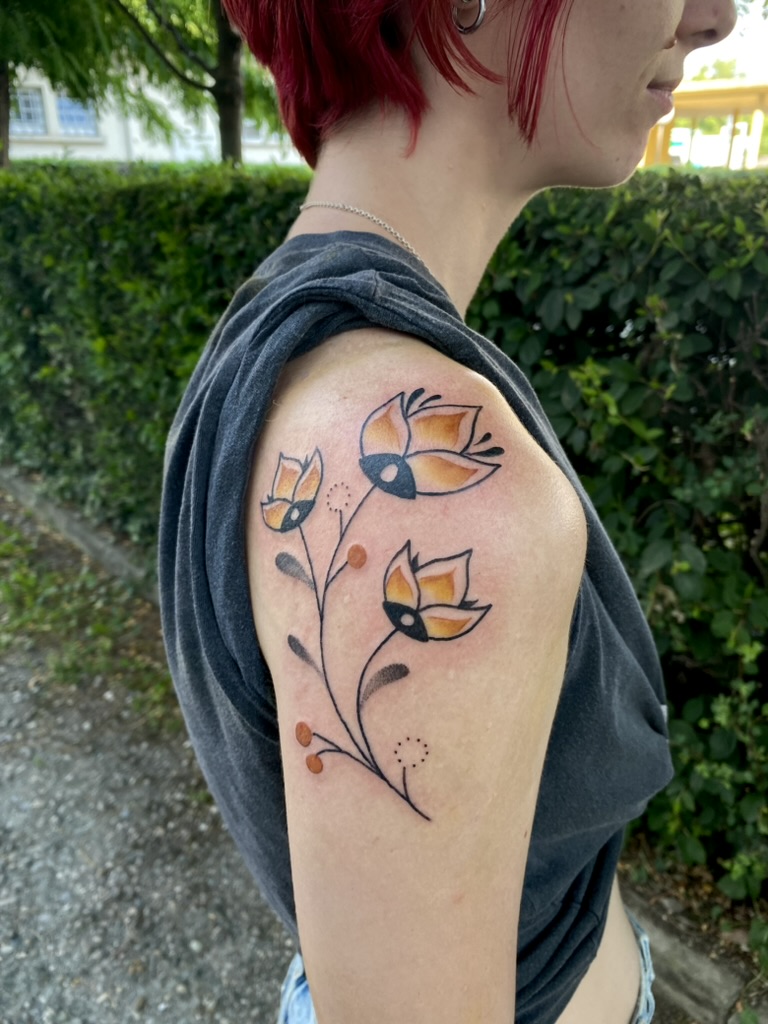
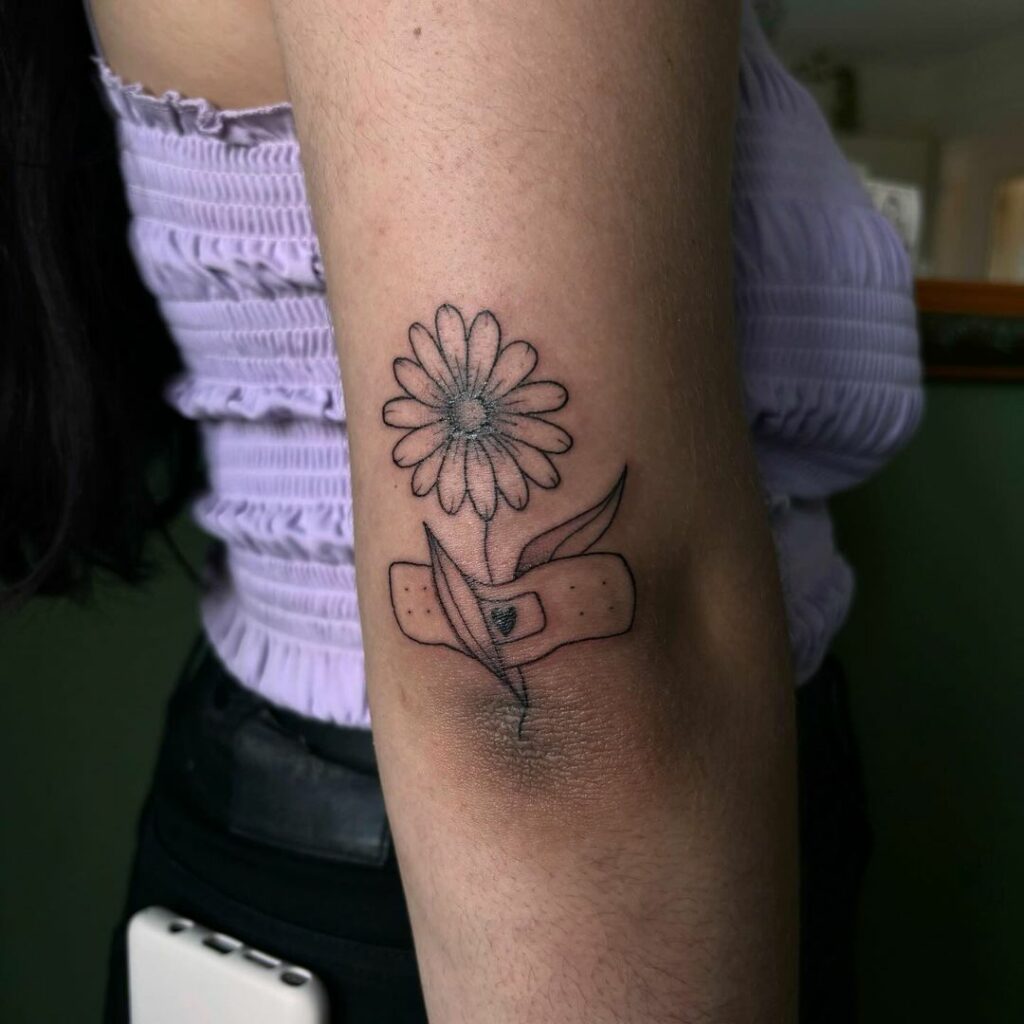
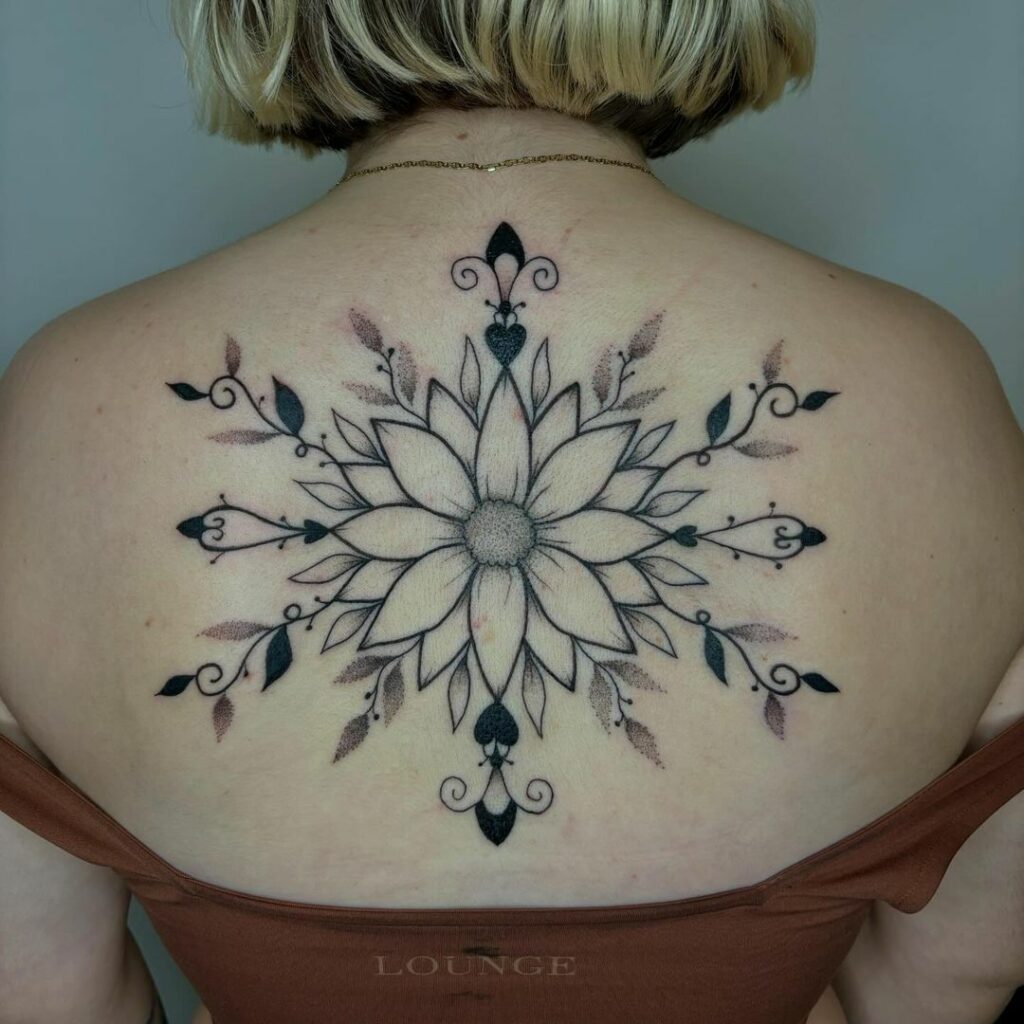
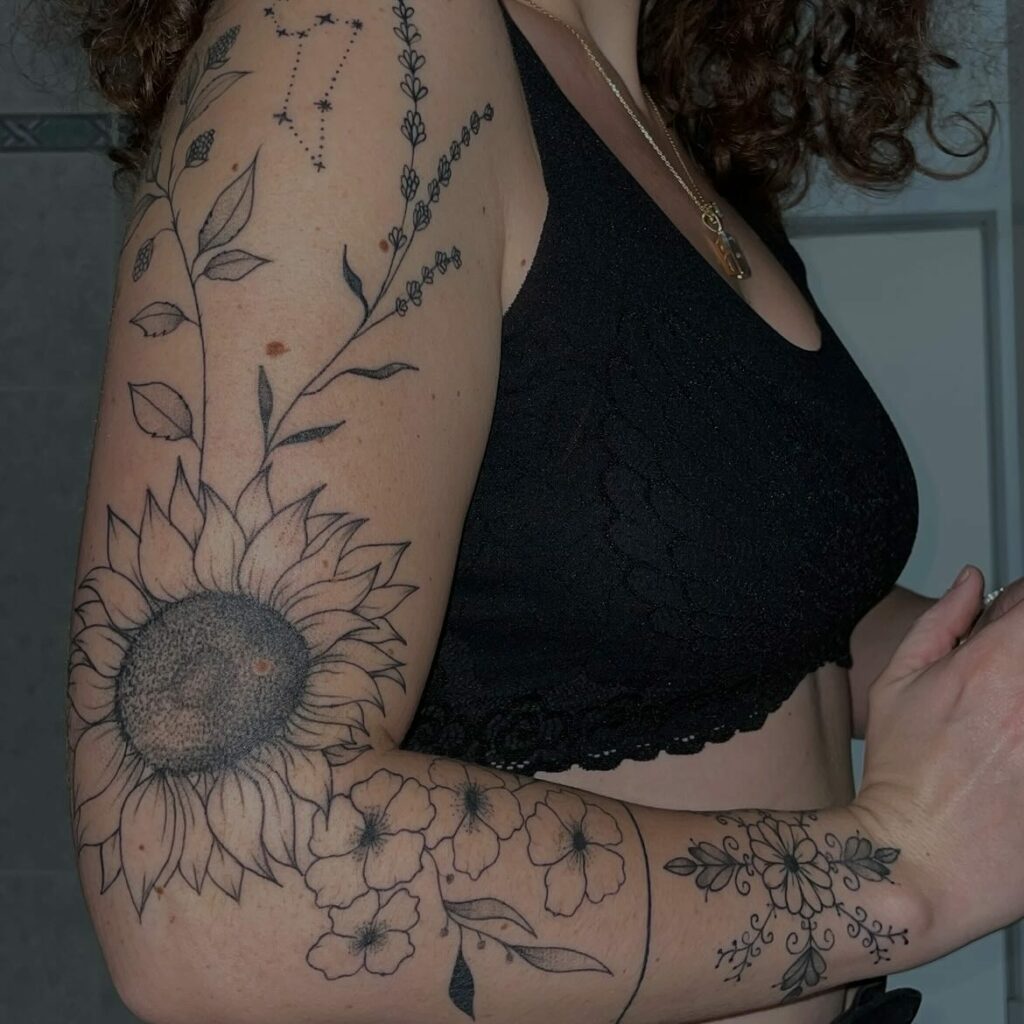
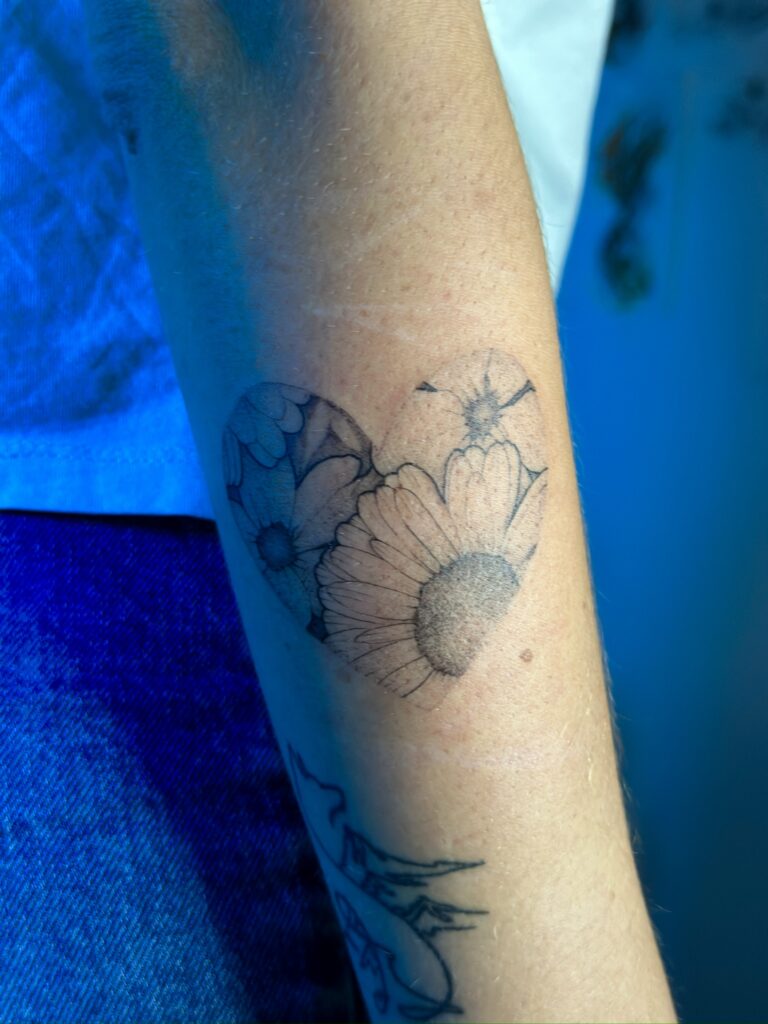
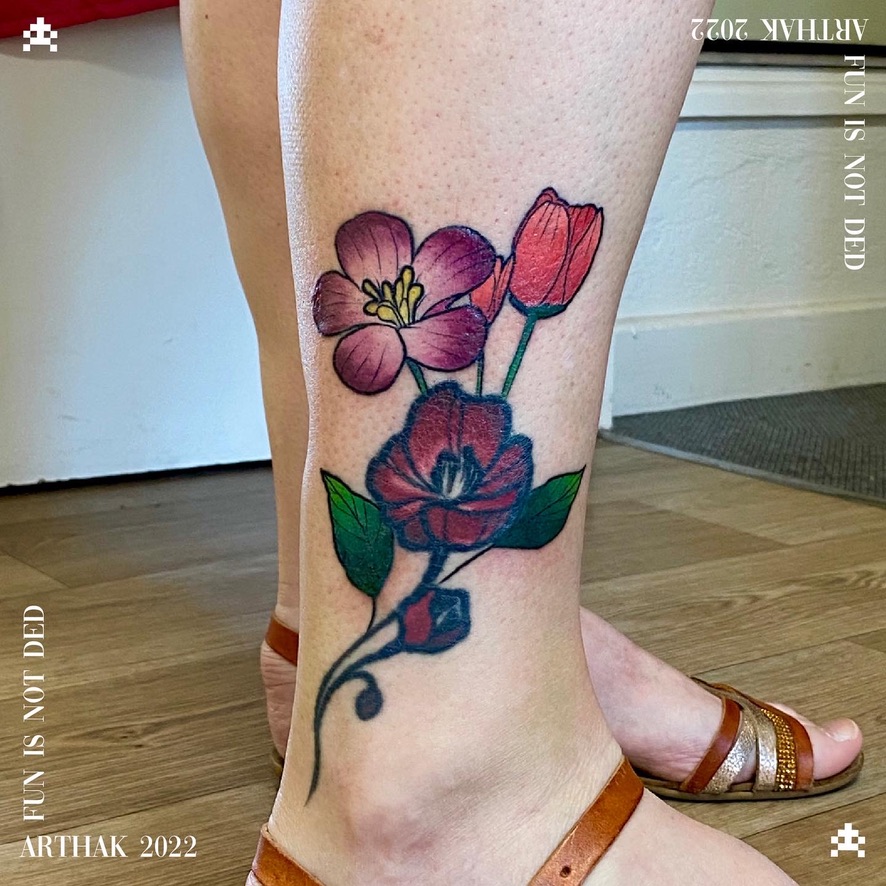
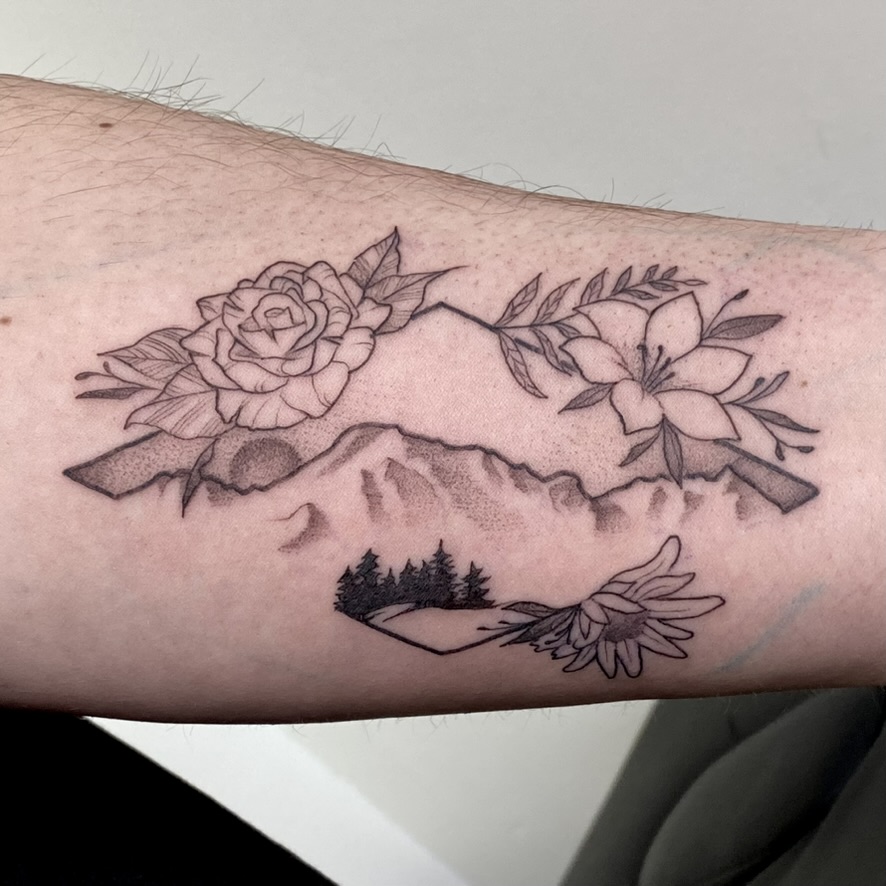
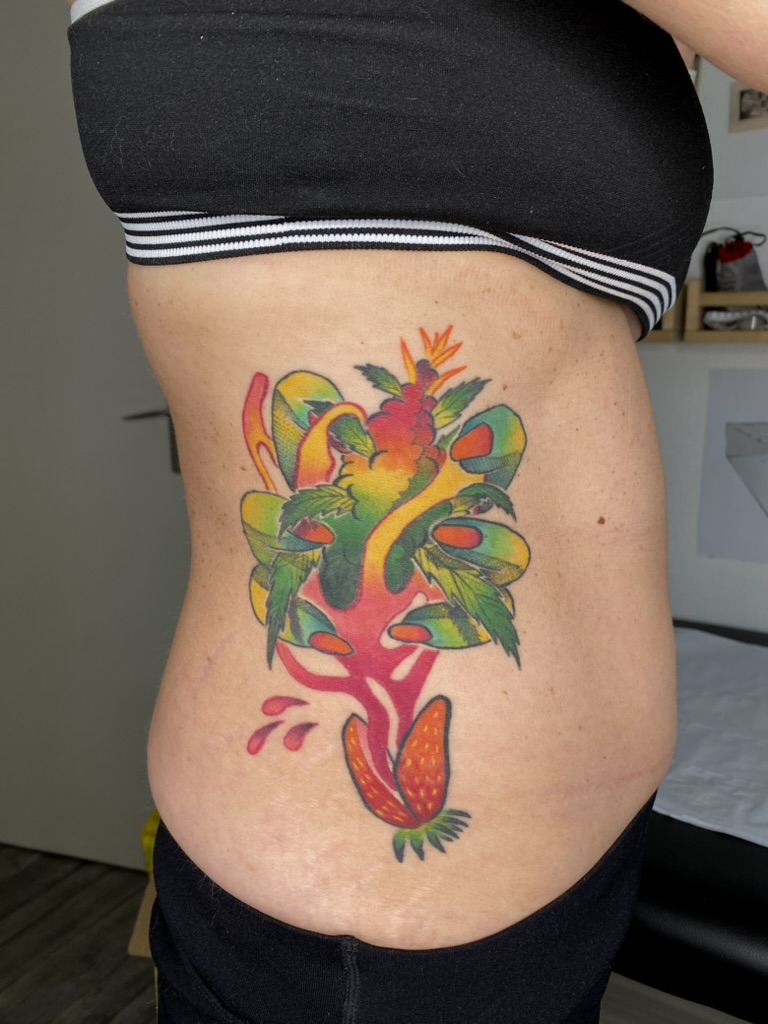
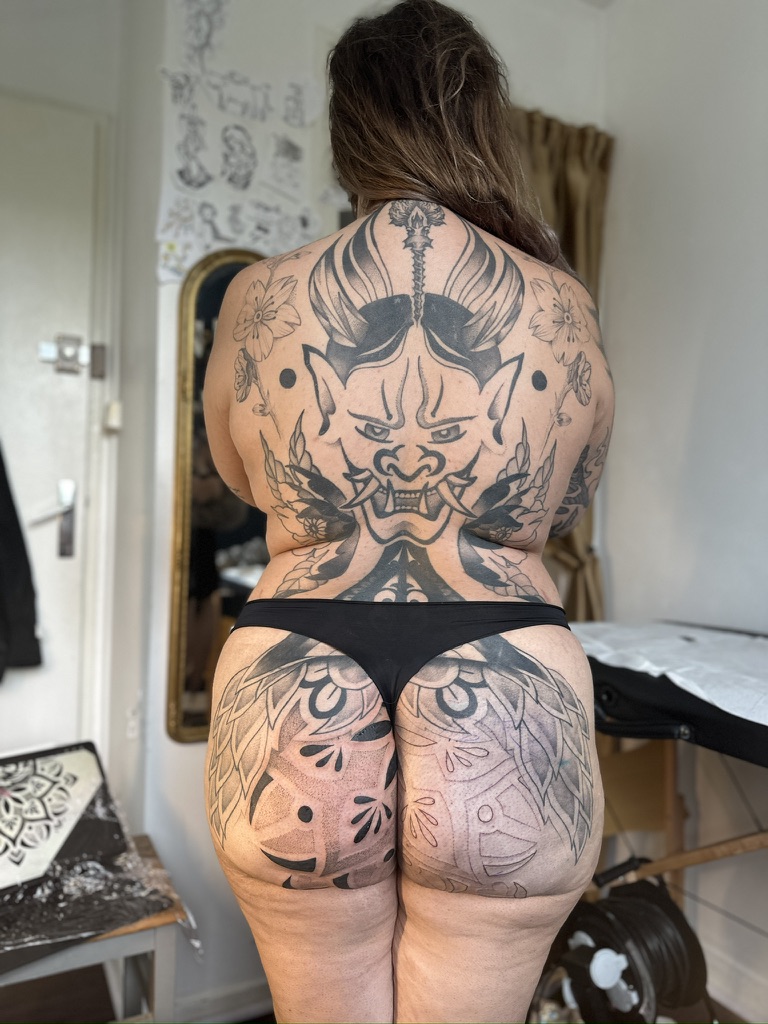
Gallery — Floral Tattoos Done at Studio Pixel
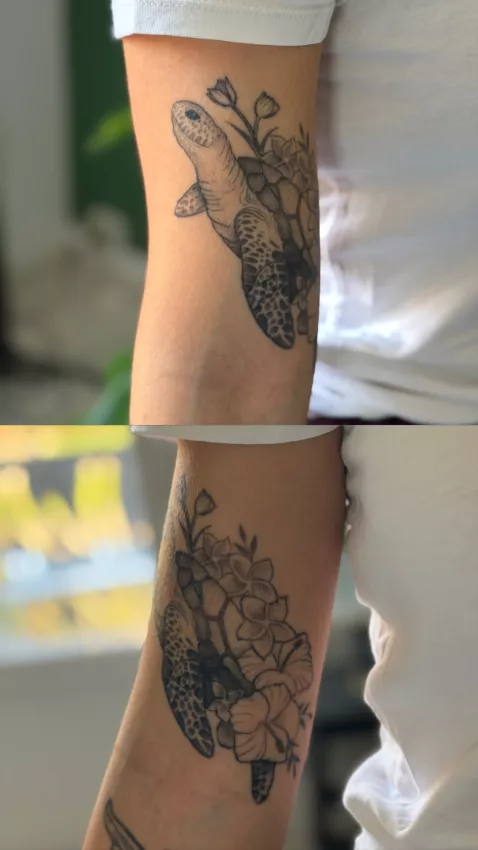
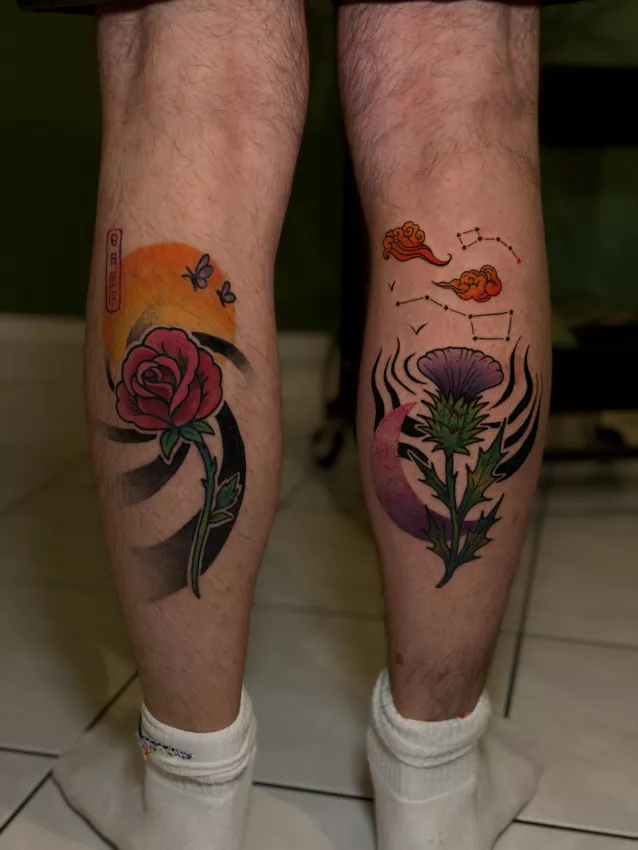
Here are a few flowers we've had the chance to tattoo at the studio:
Sources
- Greenaway, Kate. Language of Flowers (1884) — Project Gutenberg
- Smithsonian Gardens, The Language of Flowers — PDF
- Royal Horticultural Society — rhs.org.uk/plants
- Encyclopaedia Britannica — britannica.com/plant/flower