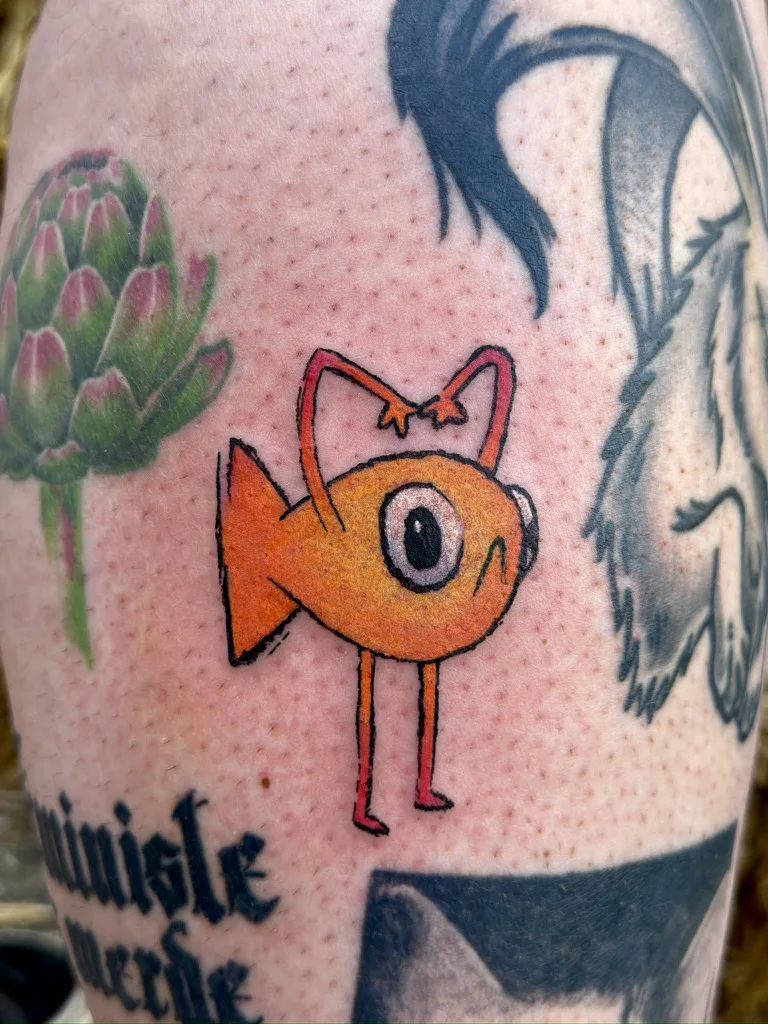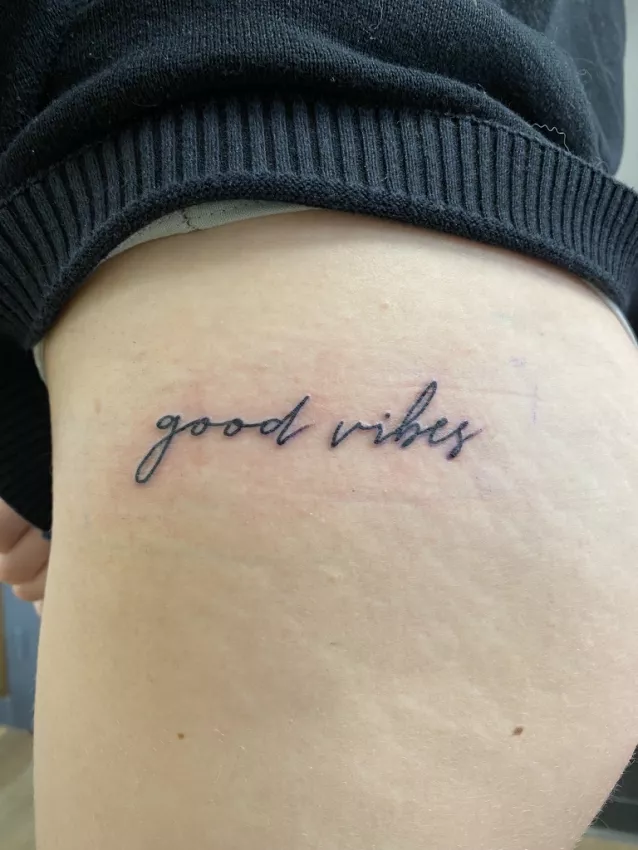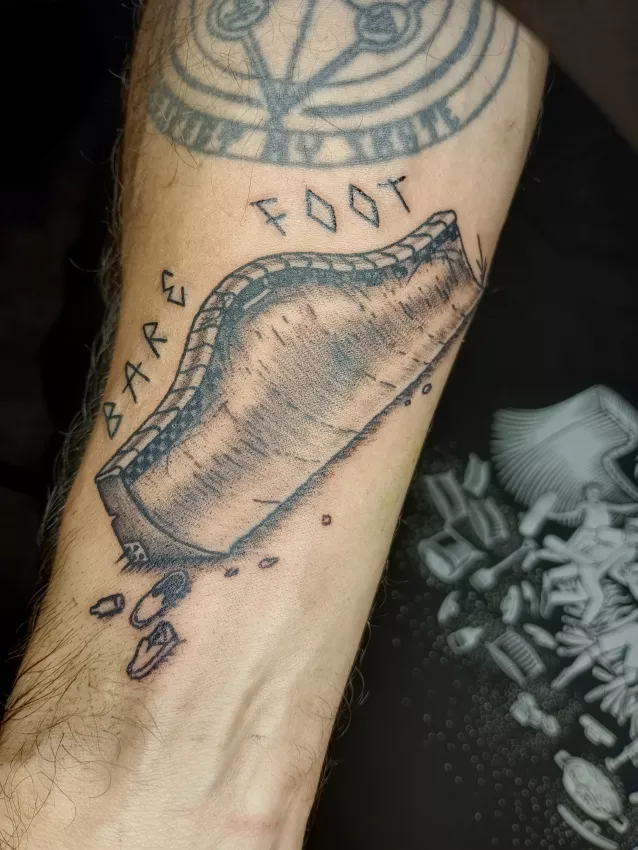
Someone once sent me a Pinterest image with this caption: "I want exactly this, but unique."
I read it three times.
Beautiful sentence. A little mental origami. Exactly the same, but different. Like ordering a four-cheese pizza with no cheese, but keeping the emotional experience of cheese.
At the same time, I completely get what they meant. They liked the image. They could picture it on themselves. They wanted to keep that feeling. Not necessarily steal someone else's tattoo.
That's where redrawing comes in.
Copying an Image Isn't Neutral
When you send a reference, it usually comes from somewhere else.
A tattoo someone else is wearing. An artist's drawing. An illustration. Sometimes an AI-generated image. A photo pulled from an Instagram account, cropped, reposted, chewed up by Pinterest into a visual soup with no origin.
Copying it as-is has a simple problem: it's not your project. And often, it's not mine either.
A serious tattoo artist won't just grab the image, slap it on your skin, and say "beautiful, next." Well, some do. Some also put ketchup on pasta and call it a sauce. The world is vast.
Redrawing respects the original work while creating something for you. Not a photocopy of a photocopy. Not a tattoo that's already lived ten lives on ten different bodies.
I've talked about this before in why your tattoo artist rejects your project. Most of the time, the rejection isn't about you. It's about the wrong starting idea.
A Flat Image Doesn't Automatically Make a Good Tattoo
A drawing can look great on screen and terrible as a tattoo.
Happens all the time.
Too many details. Too small. Weak contrast. Lines that won't hold up over time. A composition that works on paper but not on an arm. A face that gets weird once it hits a curved surface.
Tattooing isn't paper printing. Skin moves. Ages. Swells. Heals. Has texture, folds, surprises. It's alive. Like a plant, but more dramatic if you expose it to sun too early.
Redrawing translates the idea into tattooable language.
Sometimes we simplify. Reinforce a line. Change a proportion. Enlarge. Remove a detail that looks cute today but will turn into graphic mush in a few years.
That's not betraying the idea. It's giving it a fighting chance.
Your Body Changes the Composition
Pinterest designs are usually photographed at a flattering angle.
Perfect light. Fresh skin. Arm turned just right. Subtle filter. The tattoo looks like it was placed by angels of good taste.
Then you want the same one on a different area. Different shape. Different size. Different reading direction.
And copying just doesn't work.
A tattoo needs to have a conversation with your body. Sit in the right spot. Follow or contrast a natural line. Breathe when you move. Sounds a bit grand when I say it — like I'm describing a cathedral. But even for a small design, the logic holds.
That's also why stencil placement matters. We look at the design on you, not in the abstract. A good design in the wrong spot gets frustrating fast. An adapted design feels inevitable, like it was always meant to be there.
If you're preparing your first project, this guide on your first tattoo in Grenoble can help with placement, sizing, and visualising the result.
Redrawing Isn't "Charging for Nothing"
I know this idea exists.
"But the drawing already exists — why redo it?"
Because the existing drawing doesn't serve your project. It serves the image you found.
Creating a tattoo design isn't just "knowing how to draw." It's understanding what will hold up, what adapts, what has meaning, what avoids copying, what respects the intent. It takes time before the machine even starts.
That's also why I don't send free drawings into the void. I talk about it in why no free drawings. Not because I hoard my sketches like an anxious dragon. But because drawing is part of the work.
When you pay for a custom tattoo, you're not just paying for needle time. You're paying for the thinking, preparation, adjustments, experience, and sometimes the time spent diplomatically steering you away from a bad decision.
The Reference Should Launch the Project, Not Trap It
The best use of an image is to say how it makes you feel.
"I love the softness." "I love the black contrast." "I love the posture." "I love the theme, but I want something more personal." "I love the energy, not necessarily the drawing."
Now we can work.
We keep the intention without copying the form. We create a tattoo that actually feels like you. And the result is often stronger because it's not trying to be "exactly like."
I find that more interesting. Cleaner too.
Let's be honest though: not everything needs to be a spiritual quest. Sometimes you just want a cute little butterfly. Fine. But even that butterfly can be redrawn to be yours — well placed, legible, balanced.
And that's already a lot.
Copying is fast. Redrawing is slower. But tattooing isn't really a field where rushing shines.
Your skin isn't a Downloads folder. Probably best not to paste the first image you found between a ramen recipe and a beige living room moodboard.