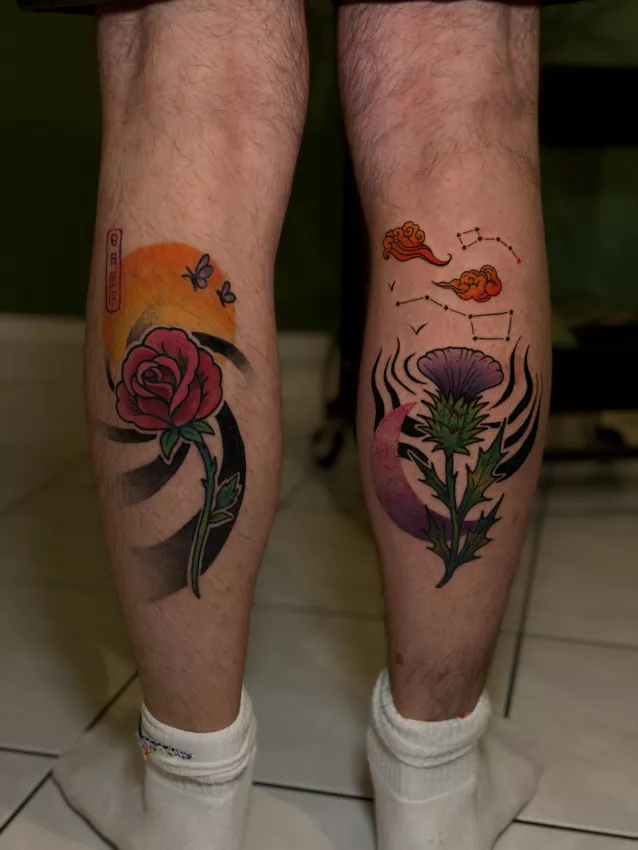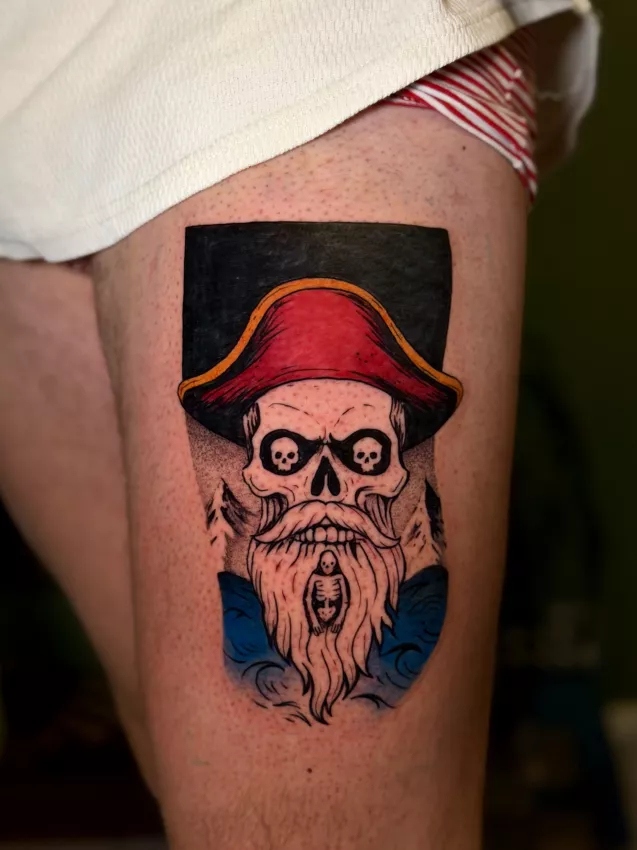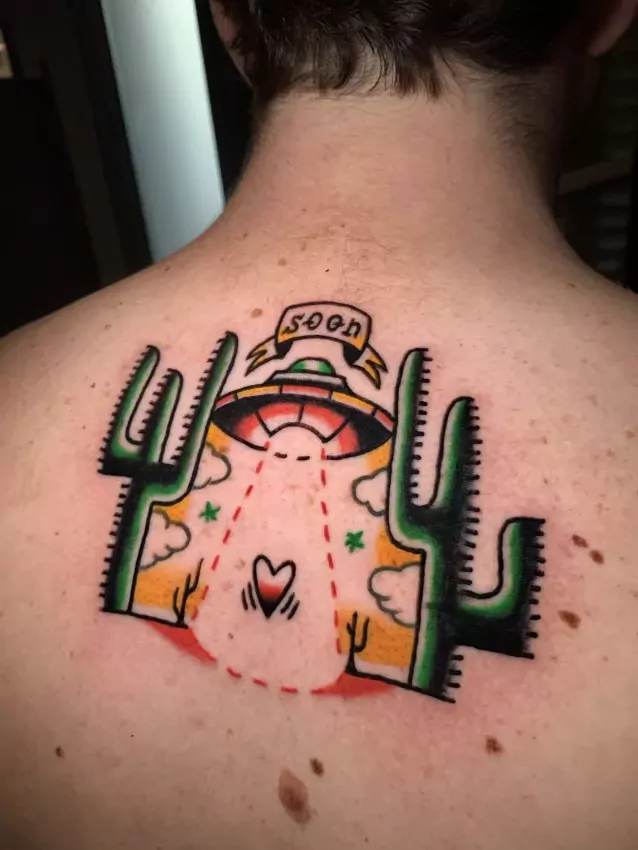
The other day at the studio, someone showed me a Pinterest screenshot with a tiny, delicate design on the side of a neck. Discreet. Almost innocent. Placed just below the ear.
In the photo, it looked simple. A thin line. Two leaves. Three stars. The kind of tattoo that feels like it'll take twenty minutes and life goes back to normal after.
Except the neck isn't really like other spots.
You see it all the time. You feel it all the time. You touch it without thinking. You rub it against clothes, hair, collars, scarves, headphones, sometimes even your own hand when you're thinking. And socially, it says something before you've even opened your mouth.
A neck tattoo can be beautiful. Really. But it's a zone that deserves a couple more minutes of thought than a small design on your ankle.
Quick local note: if you want real advice about a neck piece, a nape spot, or any visible placement, you can drop by our tattoo studio in Grenoble. Helps to talk size, visibility and healing before diving in head-first.
Why the neck draws us in
The neck is a weird zone. It's close to your face, but it's not your face. It's visible, but sometimes you can hide it a bit with hair or a collar. It can be elegant, very front-and-center, or very intimate too. A tiny tattoo behind the ear doesn't hit the same way as a big piece on the throat, obviously.
That's why searches for "neck tattoo ideas" are always popping off. People are looking for designs, sure, but also for some kind of mental permission. Can I? Will it be too much? Will I regret it? Will my mom choke on her Sunday roast?
Short answer: depends on the design, your life, how you feel about being looked at, and how the tattoo is thought out.
A neck design isn't necessarily aggressive or provocative. A fine flower on the nape, a discrete symbol behind the ear, small lettering placed low on the side — those can stay soft. But let's be real: the neck is still more visible than an arm or a thigh.
Does it hurt?
Yeah, often.
Not always horribly, but it's not the chillest spot. The skin can be thin. There are bony areas, nerves, involuntary twitching. The nape is manageable for most people. The side of the neck, depending on placement, can sting properly. The throat? Let's not lie to each other — that's a different vibe.
Pain depends on a bunch of things: size of the design, detail level, fill, duration, fatigue, stress, what you ate, hormones, sleep. The same tattoo can feel fine one day and endless another. Your body isn't a vending machine, even if sometimes you wish it was.
For a first tattoo, I rarely recommend starting with the neck. Not because it's forbidden, but because you're discovering pain, healing, other people's stares, and a very visible zone all at once. That's a lot for a first time.
Neck zones are not created equal
When someone says "I want a neck tattoo," it can mean a lot of things.
The nape is usually the easiest to own. You can hide it with hair or a collar. Works well for symbols, ornaments, flowers, small vertical designs.
The side of the neck is more visible. It can look great with a design that follows the natural line between ear and shoulder. But you have to watch the size. Too small and it floats. Too big and it's very present.
Behind the ear is popular for tiny tattoos. But watch out with microscopic details. Those micro-lines you see on Instagram don't always age like the retouched photo. Skin moves. Pigment lives. Lines can thicken a bit.
The throat is the most front-facing zone. That's a real visual statement. It can be stunning, but the design has to be solid. Not just "I saw this at 1 AM on Pinterest and slept four hours."
Healing: the neck moves a lot
A tattoo is a surface wound. Not dramatic, but not a sticker either. Derm sources remind us of the classic risks: infection, allergic reaction, unusual redness, swelling, pus, worsening pain. Nothing glamorous but worth saying.
On the neck, healing can be a bit annoying because the zone is always moving. You turn your head, sleep on it, sweat, put on a collar, wear a scarf. Hair can also rub against the tattoo, especially on the nape.
During healing: don't scratch, don't soak, skip the pool, avoid direct sun, clean gently, moisturise in a thin layer. Thin layer, really. Not like you're buttering a crêpe that's about to fight you.
Too much moisture and the tattoo macerates. Too dry and it crusts hard. As usual, good aftercare is boring: clean, gentle, regular, not excessive.
Does it age well?
Depends on the design.
A neck tattoo with lines that are too fine, too close, too tiny can lose readability over time. Doesn't mean you have to go huge. It means you need a design that accepts living.
Black fill holds up well, but it's more visible and more committing. Lettering needs to be big enough. Those tiny words stuck behind the ear in a very thin font look nice on screen. In real life, you have to plan for evolution.
The sun plays a role too. The neck is often exposed. A tattoo that gets sun without protection will age faster. Once healed, sunscreen becomes your not-fun-but-very-useful friend.
Neck tattoos and work
Let's skip the magical "mindsets have changed" speech. Yes, they have. No, not everywhere.
In some jobs, a neck tattoo won't matter. In others, it can still create a stupid filter. Not fair, but it exists. If you work in a very coded environment, or if you want to keep some discretion, think carefully about placement.
A tattoo on the nape can be hidden. A tattoo on the throat — much less. And even if you don't care today, ask yourself if you want to not care every day, with every person, in every context.
This isn't meant to scare you. It's just to avoid the tattoo you decide on like a Tuesday-night haircut. Except bangs grow back. Lettering on your neck — less so.
Neck tattoo ideas
Designs that work well on the neck often follow a natural line.
A thin branch can follow the side of the neck. A flower can sit on the nape. A butterfly can work behind the ear if it's not too detailed. A moon, a star, a personal symbol, a small abstract composition, an ornament — all of that can be interesting.
But you have to think about the body, not just the image. The neck isn't an A4 sheet. It turns, bends, breathes. A good design accepts that.
For a large piece, the neck can also connect the chest, shoulder, back or arm. Now you're thinking in terms of an overall composition. It's no longer "a small design placed there" — it's part of a bigger picture.
Common mistakes
First mistake: wanting it too small. You think small equals discreet. Sometimes yes. Sometimes it just means unreadable in three years.
Second: copying a photo without thinking about your own anatomy. That person's neck on Pinterest isn't your neck. Their posture, lighting, retouching, filter — all of it plays a role.
Third: underestimating visibility. A neck tattoo shows in photos, in meetings, in moments when you're not thinking about it. It becomes a little visual roommate.
Fourth: choosing lettering that's too thin. Text needs to breathe. Letters need space. Otherwise it can end up looking like a small grey noodle. And nobody wants a grey noodle on their neck, unless that's a very specific concept.
Before you book
Ask yourself a few simple questions.
Do I want this tattoo visible every day? Am I okay with comments? Does the design still make sense if I see it in ten years? Does the placement actually serve the design? Am I choosing the neck because it's beautiful, or because I need to feel like I'm doing something intense?
There's no automatic wrong answer. But it's better to ask before.
A neck tattoo can be delicate, strong, funny, elegant, radical, tiny, or very committed. The most important thing is that it's designed for your body and your life. Not just for a screenshot.
And if you're still hesitating, that's probably healthy. Sometimes hesitation is just your brain asking for a coffee before signing a lease with your skin.
If you want to bounce the idea around, compare two placements, or check that the design will hold up over time, you can book a consultation in Grenoble. We'll look at it calmly, without turning your neck into a rushed decision.
Sources
- Mayo Clinic, tattoo risks: https://www.mayoclinic.org/healthy-lifestyle/adult-health/in-depth/tattoos-and-piercings/art-20045067
- Cleveland Clinic, infection signs and tattoo care: https://health.clevelandclinic.org/tattoo-infection
- American Academy of Dermatology, tattoo aftercare: https://www.aad.org/public/everyday-care/skin-care-basics/care/tattoo-care
- Health.com, tattoo healing stages: https://www.health.com/tattoo-healing-7563417