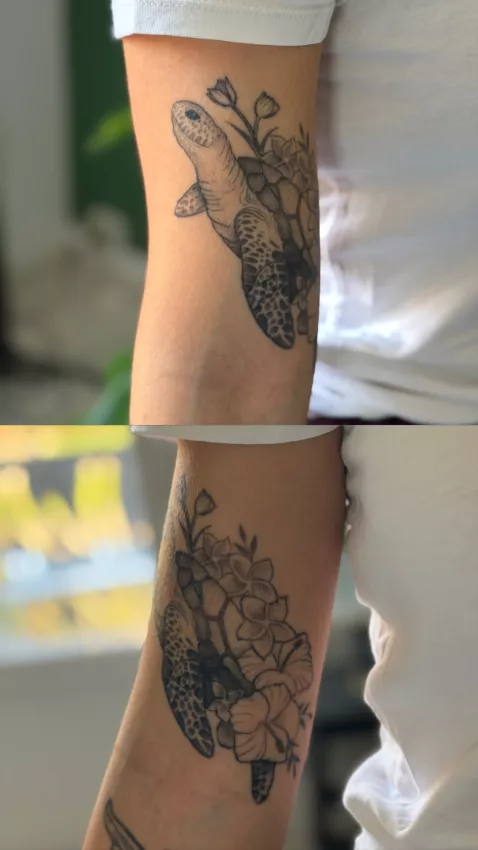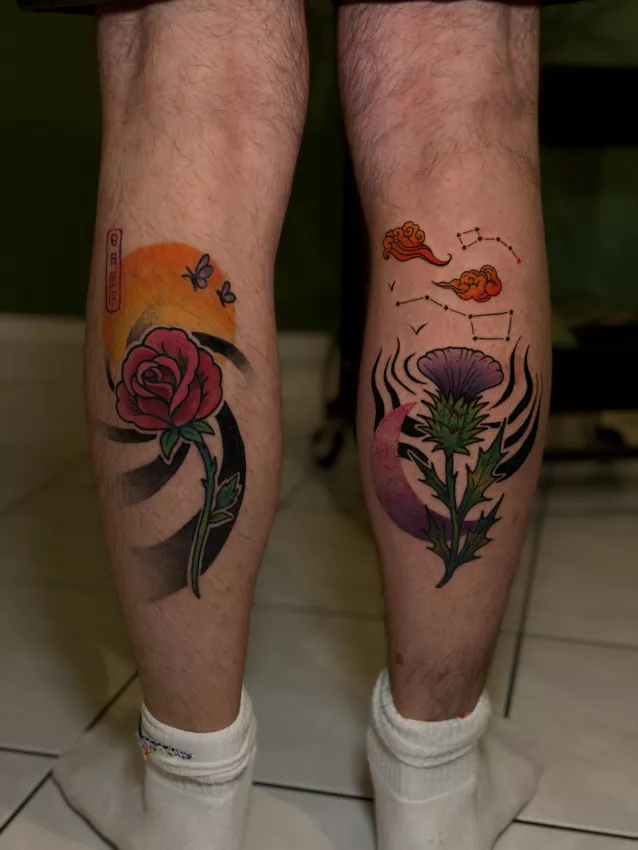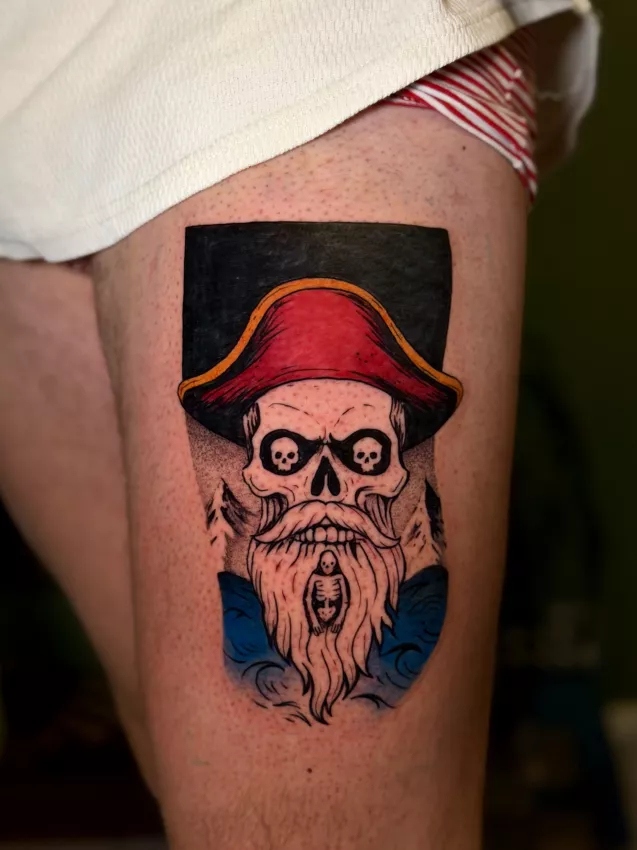
Dotwork has a hypnotic thing about it. From a distance, you see soft shading, volume, a mandala, texture. Up close, you realize it's all built with dots. Lots of dots. Really lots. The kind of style that reminds you patience isn't just a quote on a mug bought by someone who yells in traffic.
At the studio, dotwork often appeals to people who want black, but not necessarily solid fills. It's airier, more textured, sometimes more meditative. But it remains technical. A bad dot gradient can quickly look like poorly arranged dust. And nobody wants to pay for half-organized dust.
What Is Dotwork?
Dotwork, or stippling in tattooing, creates shapes, shadows, and gradients using dots. The closer the dots, the darker the area. The more spaced out, the lighter the result.
It's found in mandalas, geometric tattoos, ornamental work, blackwork, esoteric compositions, botanical or abstract motifs. It can be very fine or very dense.
It pairs well with geometric tattooing, because both styles love precision. One provides structure, the other provides texture.
Why Choose Stippling?
Dotwork allows soft shading without classical realism. It can give depth to a design while keeping a graphic aesthetic. Especially useful for mandalas, rosettes, stylized flowers, moons, ornaments.
It also gives a less brutal result than a solid black fill. If you like black but want breathing room, it's a good direction. The tattoo can stay strong without becoming massive.
Dotwork has one more advantage: it ages well if contrast and spacing are thought through. Too-tiny, too-dense dots can visually merge. Too-light areas can fade. As always, skin has the final say.
Does It Hurt Less?
Not necessarily. Some find dotwork more bearable than a continuous line or fill. Others find it long and irritating. The feeling depends on the area, density, duration, and your fatigue.
A small dotwork piece can be quite gentle. A large mandala with lots of density can become tedious simply because it takes long. Pain isn't just about intensity. It's also about repetition.
If you want a large piece, plan to eat beforehand, sleep well, and avoid booking after an absurd week. Your body isn't an accessory.
Mandala and Ornamental
Dotwork is heavily used in mandalas. Dots create volume without breaking symmetry. They add depth while keeping a clean read.
Ornamental works great too: jewelry, graphic lace, architecture-inspired designs, sternum, back, arm, thigh compositions. But watch the size. A too-small ornament with too many micro-dots can lose its delicacy.
For arm or ankle wraps, also check bracelet tattoos. Going around the body requires real adaptation, even more with repetitive patterns.
Placement
Forearm, upper arm, thigh, calf, sternum, and back are good areas. They allow for axes, symmetry, or elongated compositions.
Sternum is popular for ornamental work. Beautiful, but not the gentlest area. Neither are ribs. The back offers more space and allows more ambitious compositions.
Hands and fingers are riskier for very fine dotwork. Friction, skin renewal, exposure: hold can be less stable. The hand tattoo guide explains these constraints well.
Aging and Aftercare
Dotwork needs clean healing. If you scratch, rub, or expose it to sun too early, you can lose dots, create irregularities, or dull the result. Instructions are simple: follow aftercare, even if you think you're smarter than your skin.
Skin reactions exist for all styles. A review on medical complications of tattoos notes reactions can be infectious, allergic, or inflammatory: Medical Complications of Tattoos.
Dotwork isn't more "natural" because it's made of dots. It's still ink in skin. Poetic, but technical.
For aging, the best rule remains simple: enough contrast, enough space, enough size. A very soft gradient can look stunning fresh, then become too subtle after a few years. Well-placed dotwork handles time better because it doesn't rely on a single fragile effect.
Key Takeaways
- Dotwork creates shadows and volume with dots
- It requires patience, precision, and good spacing
- Mandala, geometric, and ornamental are its natural terrains
- Too small, it can lose its delicacy
- Recommended cover: black dotwork mandala detail, visible dots, 1200x630 format
Well-done dotwork doesn't shout. It vibrates. Maybe that's why it's so popular: it gives depth without elbowing everyone out of the way.