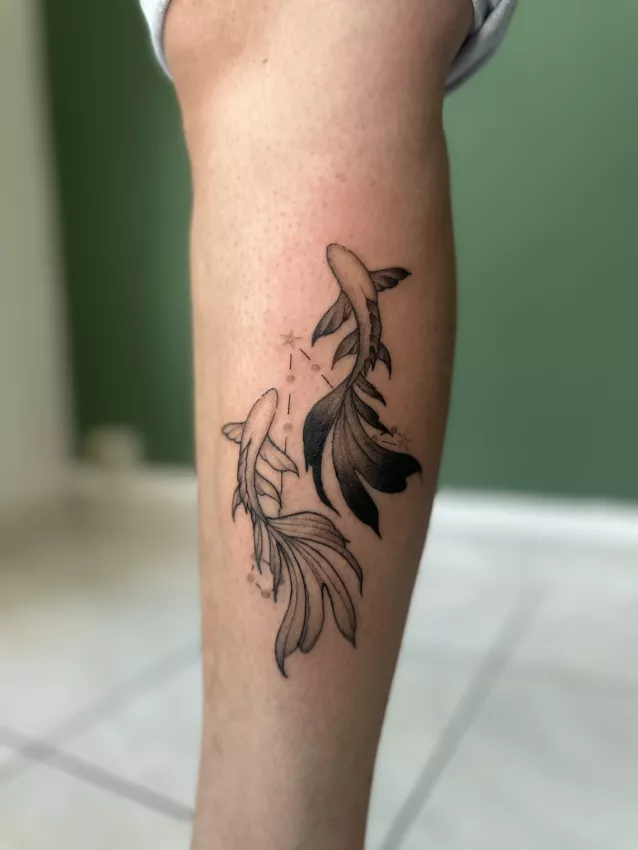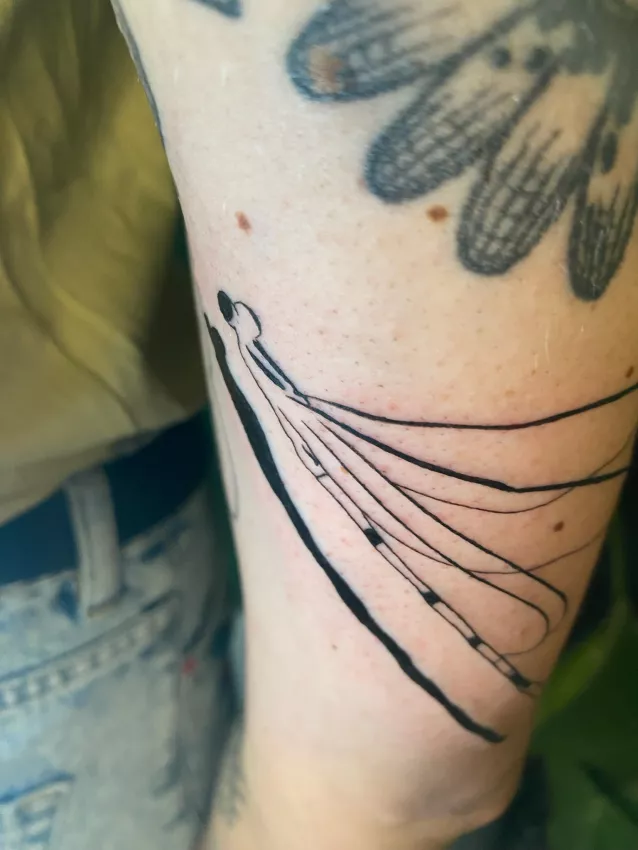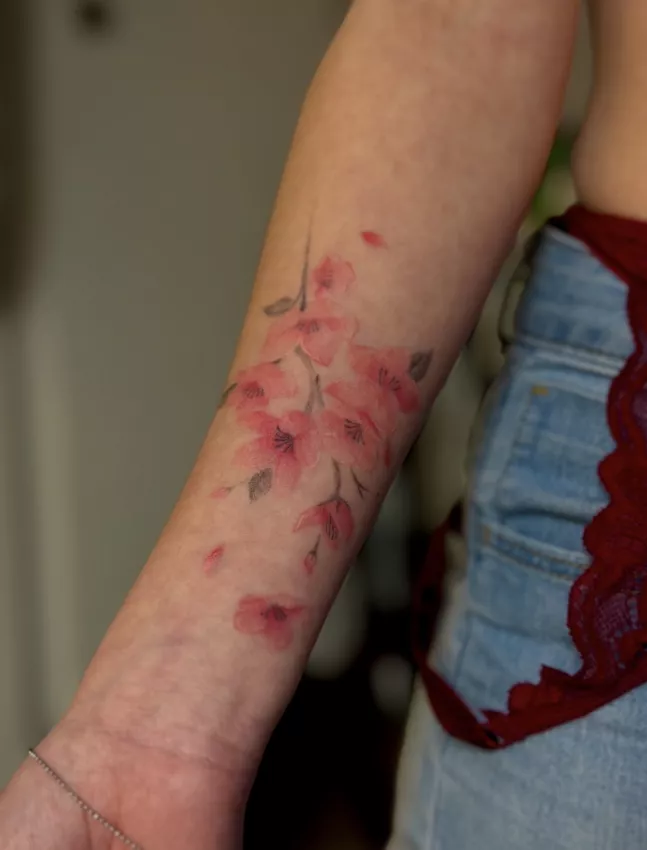
Talking about tattoo prices is always a delicate moment. On one hand, it's normal to ask. Nobody books something without knowing if it costs a restaurant meal or an electric bike. On the other hand, reducing a tattoo to "how much for this?" sent with a blurry Pinterest screenshot is a bit like asking "how much for a house?" while showing a door.
In Grenoble, budgets vary a lot depending on the project, the artist, the style, the size, the area, the level of detail. So rather than giving a magic grid that would lie after three lines, let me explain what actually moves the price.
The minimum price: what you don't see
Even a small tattoo has a minimum cost. Why? Because you need to prep the station, use sterile and often disposable equipment, print the stencil, set up, clean, tattoo, bandage, explain aftercare. Needle time is only part of the appointment.
That's why a 3cm motif doesn't cost "next to nothing." It requires almost as much preparation as a larger design. The tattoo artist isn't just billing square centimeters. They're billing a complete procedure, in a clean and responsible environment.
When people look for the lowest price, they often forget this baseline. And that's where it gets dangerous. I talk about this more bluntly in Cheap tattoos in Grenoble. Cheap can be okay in some cases, but too cheap should raise an eyebrow. Both eyebrows even, if you're flexible.
Size: small, medium, large, but not just that
Size influences price, obviously. A small symbol takes less time than a forearm piece. But it's not linear. A very fine, very precise small tattoo in a tricky spot can demand more attention than a larger but simpler design.
A small tattoo can fit an entry-level budget, depending on the studio and project. A medium piece on an arm, calf, shoulder, or rib will require more drawing and session time. A large piece can take several hours, sometimes multiple appointments.
But the real question isn't just "what size?" It's "what density?" A simple outline, soft shading, black fill, fine details, realism, color—all of that changes the time.
An 8cm simple circle and an 8cm realistic animal don't live in the same world.
Style: minimalist doesn't mean fast
A lot of people think a minimalist tattoo is automatically cheaper. Sometimes yes, if it's simple and fast. But minimalist doesn't mean easy. A fine line needs to be clean. Small lettering needs to stay readable. A very stripped-down composition doesn't have many places to hide a mistake.
The simpler a tattoo looks, the more visible the flaws. It's cruel, but logical. A shaky line in a big busy design can blend in. A shaky line alone on a wrist becomes the main subject.
If your idea is small, fine, discreet, read Minimalist tattoo: small doesn't mean simple. It helps understand why the price isn't just "but there's barely anything there."
Other styles also require different times: blackwork, dotwork, fineline, illustrative, floral, geometric, ornamental, realism, color. Each approach has its technique, its rhythm, its constraints.
Placement: some areas complicate the work
The body isn't a flat sheet. Too bad for quick quotes, but good news for life. Some areas are simpler to tattoo: arm, calf, upper back depending on morphology. Others take more time: ribs, stomach, sternum, elbow, knee, ankle, fingers, feet.
An area that moves, stretches, breathes a lot, or doesn't take stencil well can lengthen the session. Placement can also require several tries for the design to follow the body correctly.
So yes, the same design can cost differently depending on the area. Not out of whim. Because the work isn't the same.
For a first tattoo, choosing a reasonable area can help manage budget and stress. The guide First tattoo in Grenoble can help you decide without playing anatomical roulette.
Custom project: the drawing is part of the price
When you ask for a custom project, there's invisible time: understanding the idea, finding the right composition, adapting to the body, sometimes simplifying, sometimes redoing. This time counts.
A pre-drawn flash can be more straightforward. A custom project requires more back and forth. If you want a Grenoble souvenir tattoo, a Chartreuse mountain line, a family symbol, a unique composition, the price includes that translation too.
It's normal. You're not just paying for execution. You're also paying for the ability to turn a vague idea into a possible tattoo.
That's why a clear request helps enormously. Size, area, style, references, approximate budget if you have one. You don't need to be an expert. But the clearer the info, the fairer the quote.
Touch-ups, healing, and hidden costs
Always ask how the studio handles touch-ups. Some tattoos may need a small touch-up after healing. Depending on the case, it's included or not, within a given timeframe or not. Policies vary.
Also watch your own role. If you don't follow aftercare, if you go in the sun, if you scratch, if you exercise too soon, healing can be less optimal. A touch-up due to poor care isn't the same as a normal touch-up.
For Grenoble athletes, read Tattoo and sport: how long to wait?. It can save you from turning a good tattoo into an intensive friction experience.
Giving your budget: good idea or not?
Yes, if done honestly. Saying "I have about X euros, is it possible to adapt the project?" is useful. It allows proposing a size, a simplification, a flash, or saying it's better to wait.
What's less useful: negotiating like at a market. "What if we remove two leaves? What if I pay cash? What if I tag you in a story?" No. Exposure doesn't pay for needles. Or rent. Or overhead. Sad times for stories.
A budget isn't shameful. Everyone has one. But it should serve to frame the project, not to drag quality down.
Budget smart, not necessarily more
For a tattoo in Grenoble, budget according to the importance of the project. A small simple tattoo will have an accessible budget, but rarely negligible. A medium piece will cost more. A large piece or complex style deserves a real envelope.
The right price isn't the highest. It isn't the lowest. It's the one that allows the artist to work properly and you to wear the result without regret.
A tattoo stays a long time. Your bank statement—you'll hate it maybe two days. Then it'll pass. The tattoo won't. Might as well lean in the right direction.