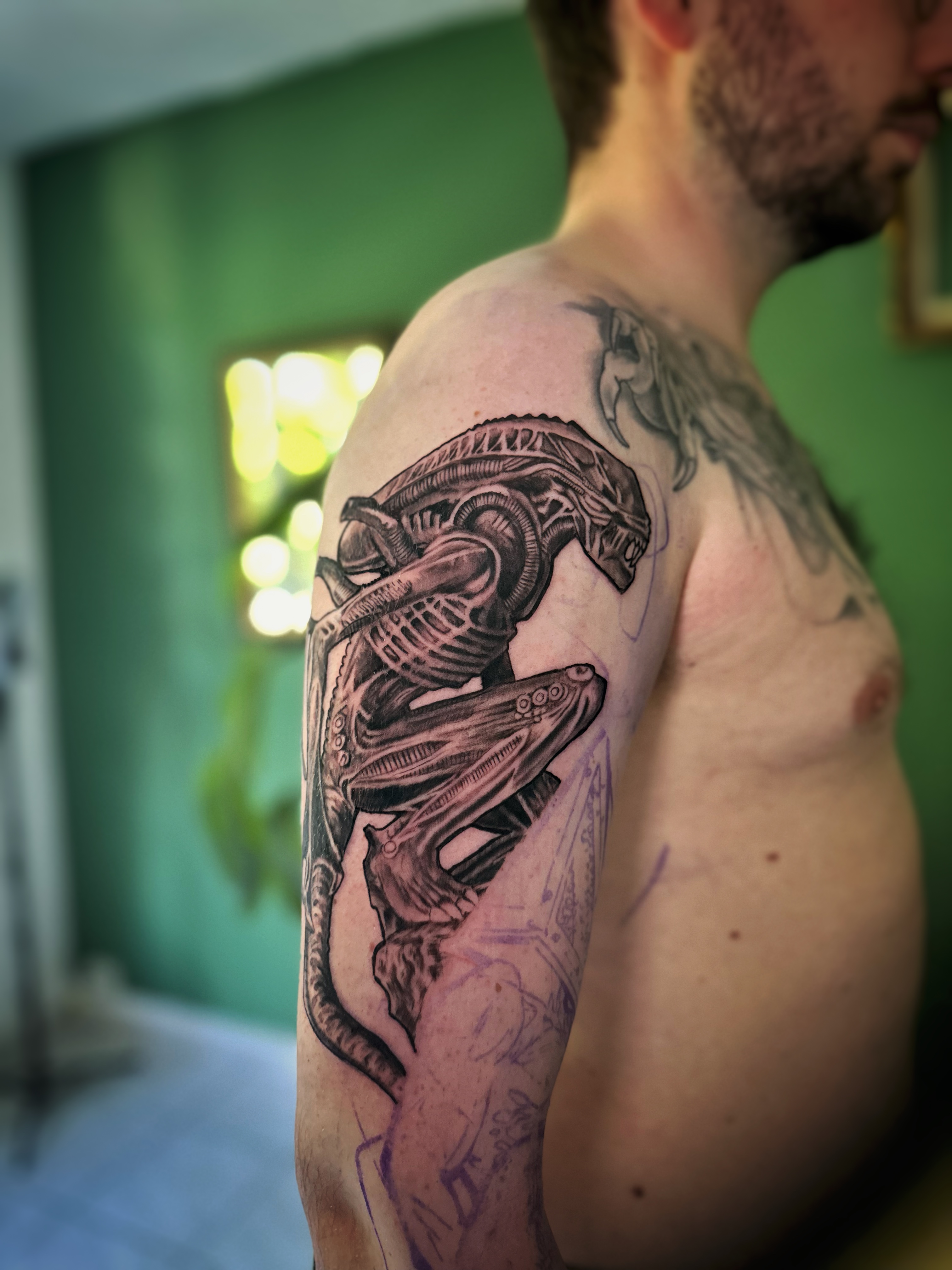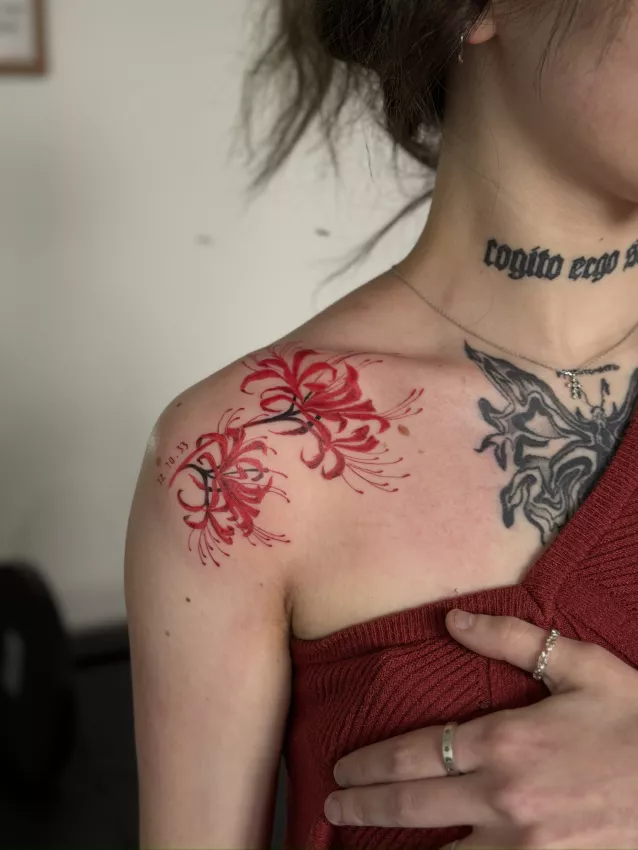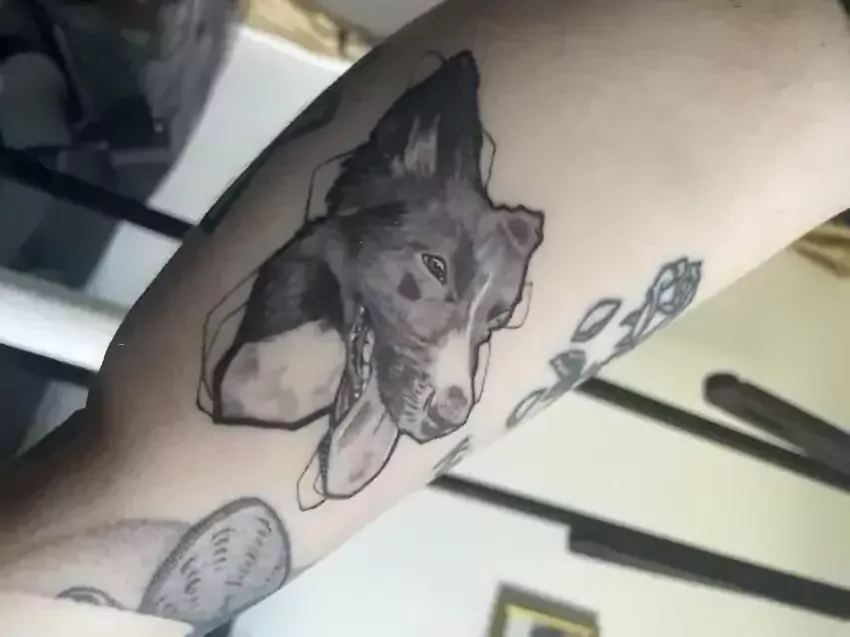
The first time I tattooed a hip, it was a quiet girl who came in for a small lavender branch starting at her waist and sliding down the iliac bone. She was scared of the pain. I told her: "It's a weird feeling, but you'll be fine."
Ten minutes in, she looks at me and goes: "This is weird — it feels like you're massaging my hip."
I didn't know what to say. She wasn't wrong.
The placement changes everything
The hip is a unique area. You've got the iliac bone sticking out, thin skin on the sides, then softer tissue toward the belly. That means the sensation changes completely depending on where the design is placed.
Over the bone, it vibrates. Not really painful, but surprising — like a phone buzzing under your skin. On the fleshier parts, front or side, it feels closer to a regular tattoo.
That's why I often recommend this spot for first-timers. Discreet, easy to hide, and the pain stays very manageable compared to ribs or sternum.
One thing though: if you go too low toward the groin, the skin gets thinner and more sensitive. And the friction with clothes the first few weeks can be annoying. Plan for loose pants.
Designs that work on the hip
The hip is paradise for elongated designs. Flowers (stems running up the torso), branches, feathers, mandalas that follow the natural curve of the bone. Geometrics also flow nicely along that line.
Most requested designs for this spot:
— Flowers (stem at the waist, petals spreading over the hip) — Symmetrical mandalas following the iliac bone — Branches or plants (lavender, eucalyptus, leaves) — Abstract drawings (lines, dots, strokes that dress the area) — Discreet minimalist tattoos
One thing that works great: a single design starting at the waist and going diagonally down the hip. It follows the body's natural line, lengthens the silhouette. In photos, it looks super elegant.
Does it hold up well?
Yes and no.
The hip moves. When you walk, when you sit, when you turn. The skin stretches a bit. That means the tattoo can warp slightly over time — nothing catastrophic, but very fine details might spread a tiny bit.
Flowers, mandalas, and organic designs age better on this area. Very small lettering, less so. Same logic as ribs or the belly.
Also: clothing friction (jeans, belts, elastic waistbands) can fade pigments faster. Nothing dramatic if you follow aftercare and protect your tattoo from the sun, but worth knowing.
Healing
The hip heals pretty well. Not a moist area, not too exposed, no major folds. Two or three days of light swelling, some peeling around day 5-7, and after two weeks it's calm.
Watch out for:
— Your pants waistband can rub and irritate. Skip tight jeans the first week. — Sleeping on your side if the tattoo is on the hip — doable but uncomfortable the first few nights. — Hair grows back faster than you'd expect and it itches. Normal. — Sports: no running, no biking for a week. Sweat and friction are enemy number one. Check our full guide on tattoos and sports.
Who's it for?
The hip is a placement I see a lot on women, but not exclusively. I've tattooed guys too, often for more geometric designs or blackwork that wraps around the pelvis.
Good choice if you want:
— A tattoo that's easy to hide (shorts, skirt, swim trunks — invisible) — A design that follows natural curves — A first experience without unnecessary suffering — An intimate placement, for you, not for others
Less ideal if:
— You want something very big, very covering (belly or back are better suited) — You do a lot of sports with friction (cycling, crossfit) — You have very loose skin there (the design might distort)
My take
The hip is one of my favorite placements. Not the most impressive, not the easiest to photograph. But one of the most natural. One of the best proportioned to the body.
A hip tattoo is like tailoring: it works or it doesn't depending on how the design is thought out. When it's done right, it follows the person. It becomes a line of the body, not a sticker slapped on.
If you're on the fence, look at photos of designs on this area. Not just the tattoo flat on a cushion — the tattoo on a person, standing, in motion. That's how you'll know if the placement is for you.
Sources
- Journal of Cutaneous and Aesthetic Surgery — Tattoo placement and skin distortion over time (2022)
- Dermatologic Therapy — Healing variations across anatomical zones (2021)
- British Journal of Nursing — Tattoo aftercare recommendations by body location (2023)
- Studio Pixel — Observations on 80+ hip tattoos (2018-2026)