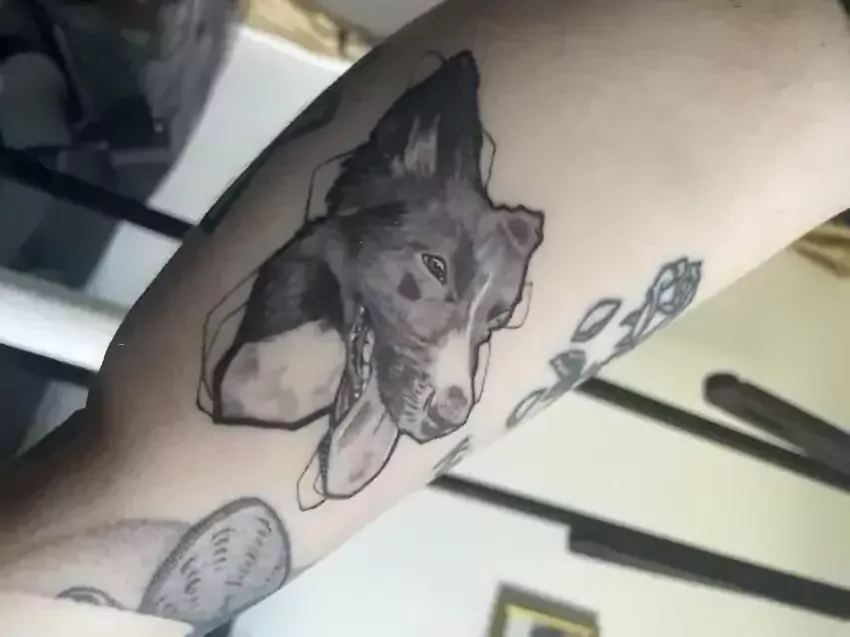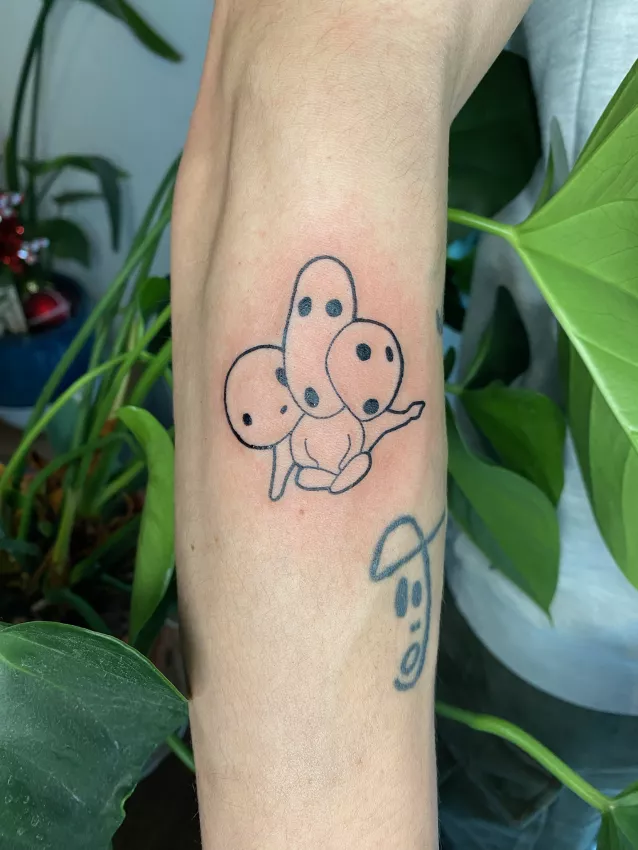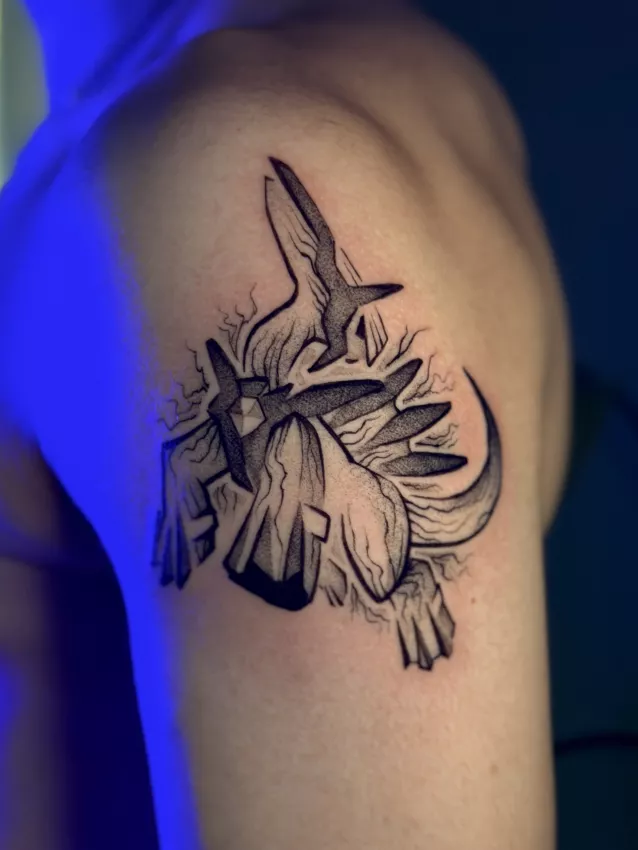
Fine line is the style that makes people say "I just want a small discreet thing." And right then, a little alarm goes off in my head. Not because I hate small discreet things. Quite the opposite. But because "just" and "small" are often the two words that hide the most complications.
A fine line tattoo can be beautiful. Light, elegant, intimate, almost whispered. But it can also become illegible if you try to cram too much into too little space. Fine line isn't magic. It's a technique with limits, a lifespan, and choices to make.
Fine Line Isn't an Instagram Filter
A lot of fine line references online are photos taken right after tattooing. Very thin black line, smooth skin, soft light, perfect contrast. Pretty. Really. But that's not the whole story.
A tattoo lives. Skin heals. Pigment settles. Lines can thicken slightly over time. That's normal. A fine line won't stay as crisp forever, like it was drawn with a tech pen on tracing paper.
So when you're looking for a fine line tattoo artist in Grenoble, don't just look at how delicate the fresh lines are. Also look at how the projects are designed. Is there breathing room? Do the details have space? Will the design still be readable in a few years?
The problem with fine line isn't the fineness. It's the excess of detail crammed into too small a size.
Small Doesn't Mean Simple
I say this a lot, with gentle fatigue: a small tattoo isn't necessarily an easy tattoo.
On a small surface, the margin for error is tiny. A shaky line, a bad angle, a letter squeezed too tight — it all shows. The artist has to control depth, speed, skin tension, line consistency. There's not much room to hide a mistake.
This is even truer for lettering, mini symbols, very fine flowers, simplified faces, contour animals, dates, initials.
Minimalist tattooing is often sold as accessible, fast, almost trivial. But technically, it demands precision. A lot.
If this interests you, read minimalist tattoo: small doesn't mean simple. It's exactly the kind of misunderstanding that prevents disappointment.
Good Projects for Fine Line
Fine line works really well when the project respects its language.
Simple outlines. Clean symbols. Airy floral elements. Small compositions with few details. Organic lines. Sentimental motifs reduced to the essentials. Writing that's big enough and readable. Delicate ornaments that aren't microscopic.
A good fine line project doesn't try to miniaturize a fresco. It accepts being simple. Not poor. Simple.
A thin branch can be gorgeous if it has space. A flower can be elegant if you don't try to fit every vein, every shadow, every tiny petal. A word can be beautiful if the typography is readable and the size is realistic.
Fine line loves restraint. When you try to load it with too much, it collapses politely.
Body Placement Changes Everything
Not all spots are equal for a fine line tattoo.
Some areas move a lot, rub a lot, heal differently, or hold fine detail less well. Fingers, hands, feet, certain areas near joints can be trickier. That doesn't mean impossible. It means accepting the constraints.
A fine line on a heavily used area won't age the same as a fine line on a more stable spot. Clothing friction, sun, aftercare, and the skin itself all play a role.
That's why a serious artist shouldn't just say "yeah cool" to your idea. They should talk placement, size, longevity, healing. Not to kill the vibe. To adapt it.
If it's your first tattoo, the article first tattoo in Grenoble can help you choose a more comfortable, logical area.
Longevity Depends on Accepting the Style
You have to accept that a fine line tattoo ages like a tattoo, not like a digital image.
A line can soften. A micro texture can disappear. A tiny detail can lose precision. That's not necessarily a failure. Sometimes it's just the consequence of an aesthetic choice.
The artist's job is to warn you. Your job is to listen. If you want a tattoo that stays very readable for a long time, you might need to go bigger, simplify, slightly thicken certain lines, or change the placement.
Sometimes the best advice for fine line is: "let's remove details." That's hard to hear when you've spent three days selecting every tiny leaf in your reference. But the tattoo often gains elegance when it breathes.
Beware of Asking for Free Drawings Too Early
Fine line often gives the impression that a drawing can be done fast. "It's just a small flower." Yeah, like a three-word sentence can take an hour if you want it to be right.
Drawing is part of the work. It requires intention, adaptation to the body, intelligent simplification. Asking for a full drawing without commitment — especially for a custom project — is asking for part of the work for free.
We talk about this more in why no free drawings. It's a sensitive topic, but important for understanding how a studio works.
Choosing a Fine Line Artist in Grenoble
When choosing your fine line artist in Grenoble, look at precision, but also at honesty. A good fine line artist doesn't promise the impossible. They don't turn every Pinterest reference into "yeah of course." They explain limits, suggest a viable size, advise on placement, and simplify when necessary.
At Studio Pixel, we love fine line when it's designed for skin. Not when it tries to reproduce a microscopic piece of jewelry with fifteen secret symbols in two centimeters.
A good fine tattoo is one that knows how to stay light without becoming fragile. That's the whole nuance. And nuance, in this style, is almost all the work.