I remember a client who came in with a gorgeous image. An illustration full of textures, micro-details, tiny almost-shy lines. On screen, it was stunning. On skin, at the size they wanted, it was future blur. Not because the idea was bad. Because a tattooable design isn't just a pretty drawing. It's a drawing that accepts skin, time, movement, healing, and sometimes the very human imperfection of a breathing body.
That's where the real work begins. Not when the needle touches the skin. Before. In the construction.
A tattooable design starts with a clear intention
When you build a motif, the first question isn't "what are we drawing?" It's more like: "what should this tattoo say first?"
A cat can be tender, mystical, funny, aggressive, graphic, minimalist, realistic. A rose can be romantic, funerary, old school, decorative, almost abstract. The subject alone isn't enough. You need a direction.
That's why communicating your project well changes everything. A good description helps the tattoo artist sort the essential from the noise. I talk about this in the article on communicating your tattoo project. The clearer the intention, the stronger the design can become.
A tattooable design shouldn't tell everything. It should tell just enough. A tattoo isn't a Wikipedia page slapped on a forearm. It's a sign. An image that needs to stay readable when the arm moves, when the light changes, when the skin ages.
Editing: remove before adding
It's often frustrating for clients, but a big part of the job is removing.
Remove details that are too small. Remove unnecessary shading. Remove elements that fight each other. Remove textures that will look amazing on day one and illegible two years later.
A tattooable design needs breathing room. Lines need space. Black masses need thought. Untattooed skin matters as much as inked areas.
That's where you see the difference between copying an image and building a tattoo. Copying is putting down everything that exists. Building is choosing what must stay.
It's also one of the reasons custom designs take time, and why a tattoo artist can't always provide a full drawing for free before any commitment. I covered this here: why no free drawing.
Size changes everything
A classic mistake: wanting a complex motif in a format that's too small.
On paper or on a tablet, you zoom in. You work with your nose in the details. On skin, nobody looks at a tattoo with digital zoom. A tattoo is seen at social distance. In a mirror. In a photo. In motion.
A realistic face three centimeters tall, with expression, hair, jewelry, and a decorative background? Technically, it can sometimes be attempted. But will it be good? Will it age well? Will it be readable? These are the real questions.
So the tattoo artist has to adapt. Sometimes enlarge. Sometimes simplify. Sometimes change the style. A mini motif can be very beautiful, but it must be designed as a mini motif. Not as a compressed mural.
The body imposes its logic
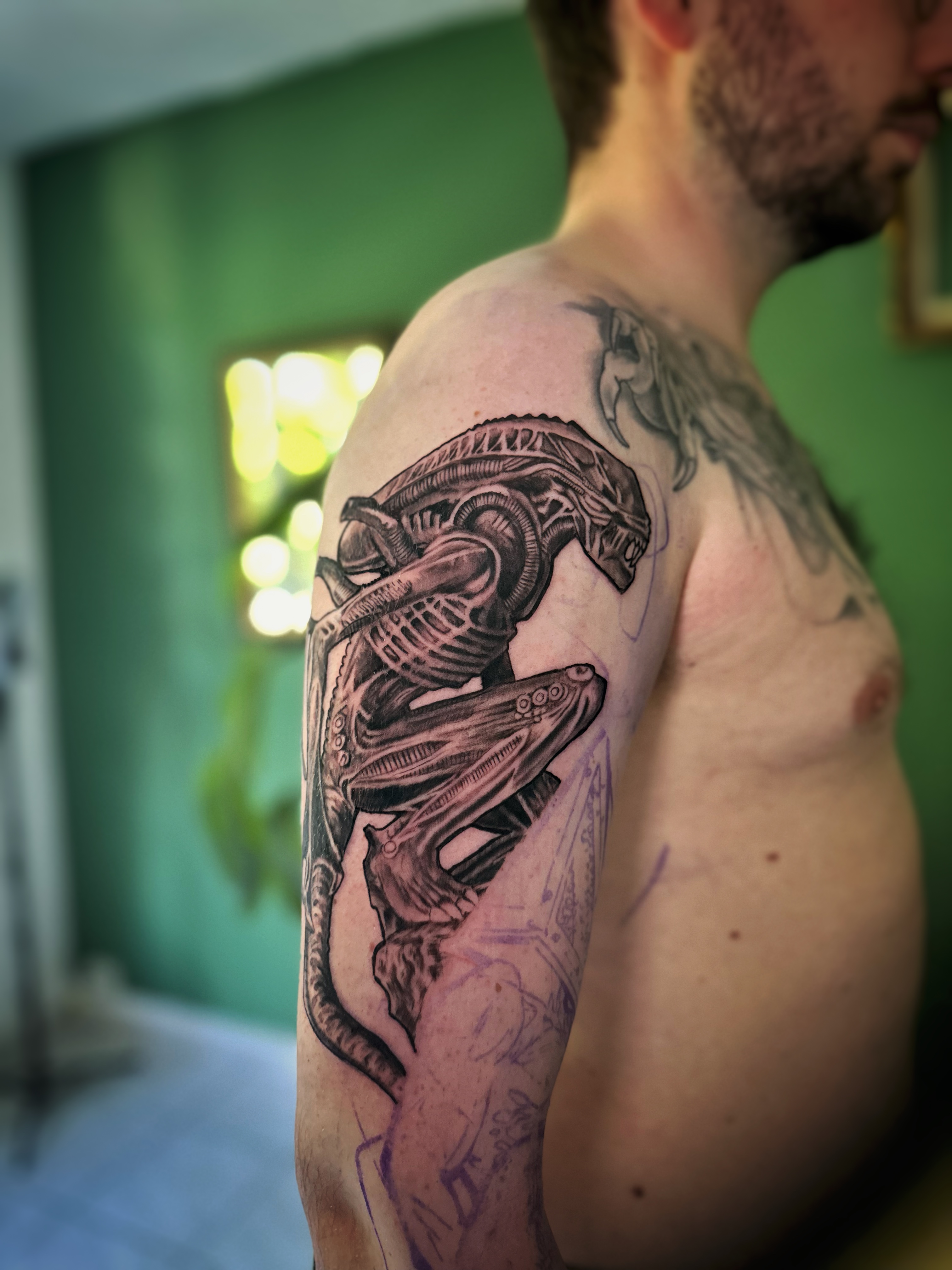
A tattooable design must follow a body part. A shoulder isn't an A4 sheet. A forearm rotates. A ribcage stretches. A calf has volume. A hand moves constantly.
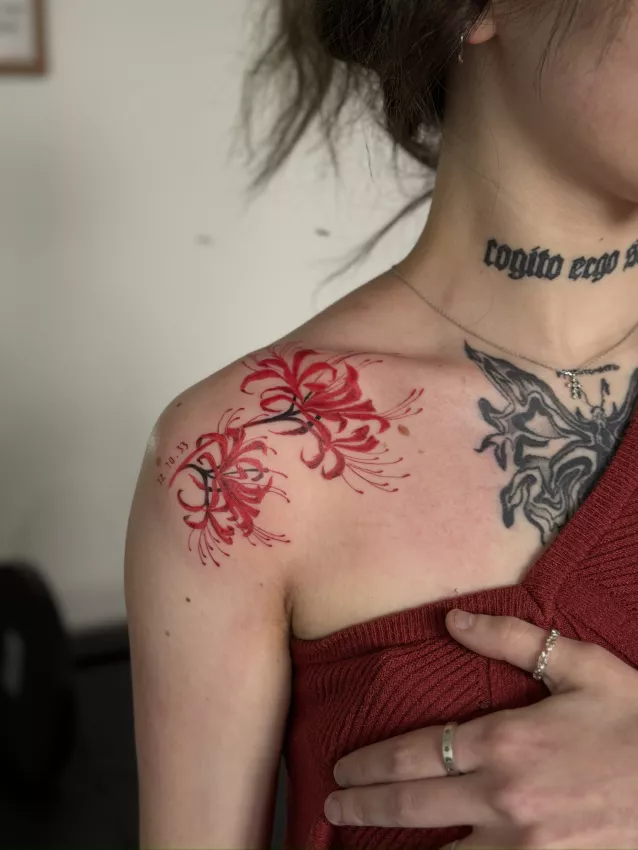
Placement influences composition. A vertical shape often works best on a forearm. A circular composition may live better on a shoulder or chest. A horizontal motif can get lost on certain areas if it doesn't follow the body's natural dynamics.
So the tattoo artist thinks in volume. They don't just draw a flat image. They imagine how it will settle. How it will appear from the front, from the side, in motion.
That's why a good project can evolve during preparation. Not to betray the idea. To make it compatible with the body.
Tattooable doesn't mean simplistic
There's a confusion I hear often: "If you simplify, it'll be less beautiful."
No. Not necessarily. Often, it's the opposite.
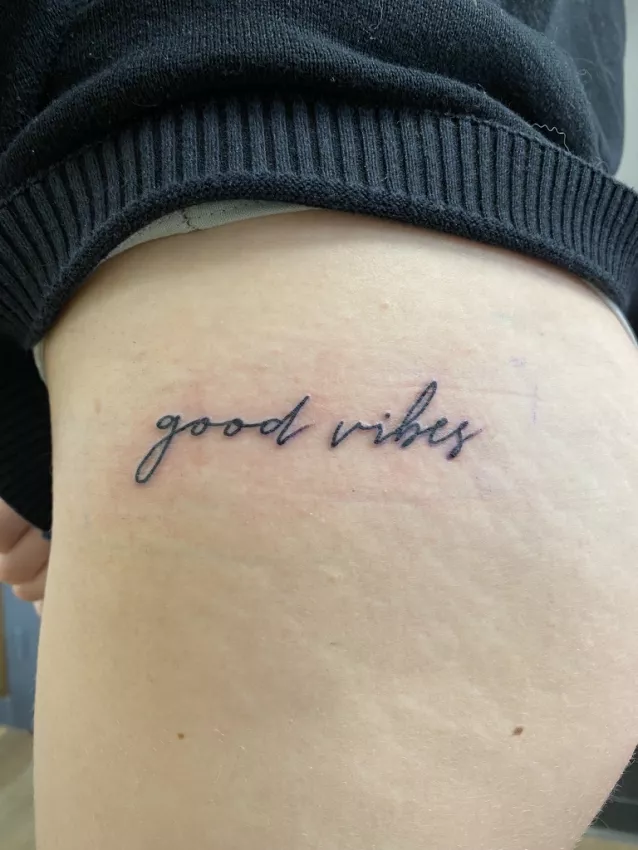
A well-simplified tattooable design can be more powerful than a highly detailed image. Because it has a strong silhouette. Clear contrasts. A rhythm. Immediate readability.
Look at good traditional flash: few elements, but enormous impact. A panther, a dagger, a heart, a swallow. You get it fast. It lasts over time. It's not poor. It's controlled.
A tattooable design is a design that accepts its constraints. And constraints aren't enemies. They give a backbone.
Building for today, but also for later
A fresh tattoo is always seductive. The blacks are strong. The details seem sharp. The skin has just been worked, sometimes swollen, sometimes shiny. But the real test is the healed tattoo.
Over time, lines can spread slightly. Contrasts can soften. Details that are too close can merge. This isn't a bug. It's the reality of ink in skin.
So when a tattoo artist builds a tattooable design, they're already thinking about the future. They anticipate. They leave space. They avoid filling every millimeter.
This is also related to hygiene, healing, aftercare, and the seriousness of the studio. A good design poorly executed or poorly healed can lose a lot. To understand the framework, you can read tattoo hygiene in a studio.
Conclusion: a good tattooable design is a smart compromise
A tattooable design isn't a less ambitious drawing. It's a more conscious drawing.
Aware of the body. Of the skin. Of time. Of style. Of size. Of readability. Of what can be promised and what must be refused.
The tattoo artist builds a motif like a translator. They take an idea that's often emotional, sometimes blurry, sometimes overloaded, and transform it into a possible image. Not just pretty. Possible. Durable. Wearable.
And in tattooing, "wearable" is a huge word.