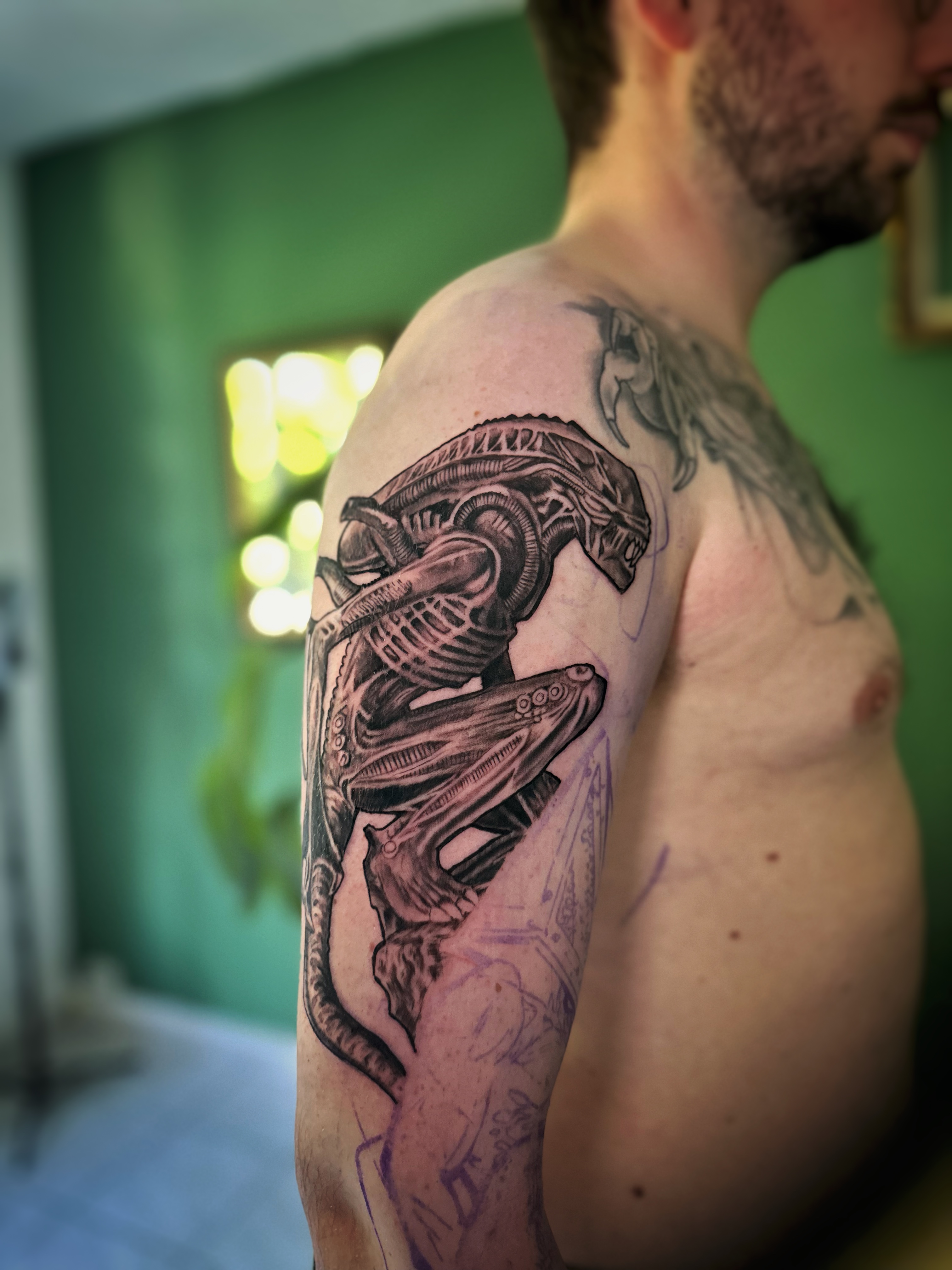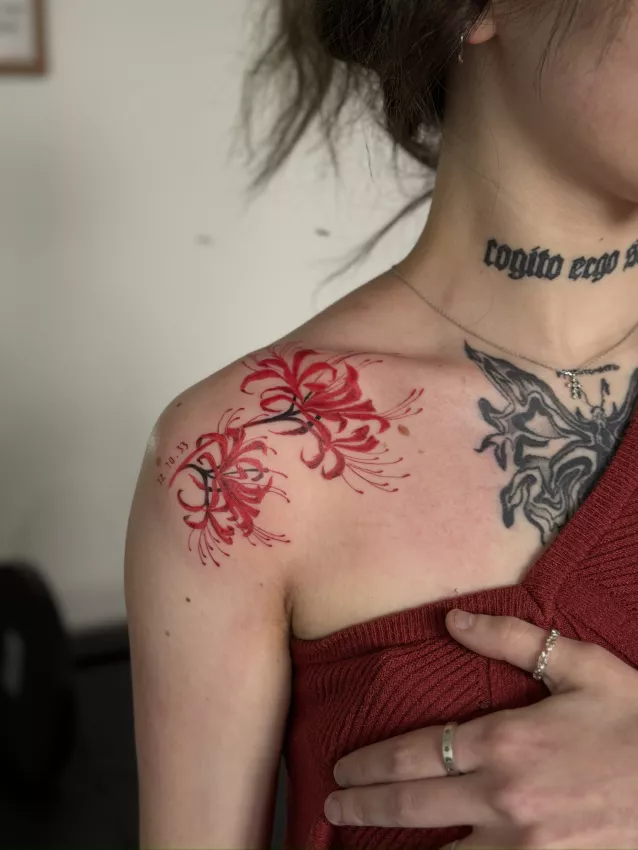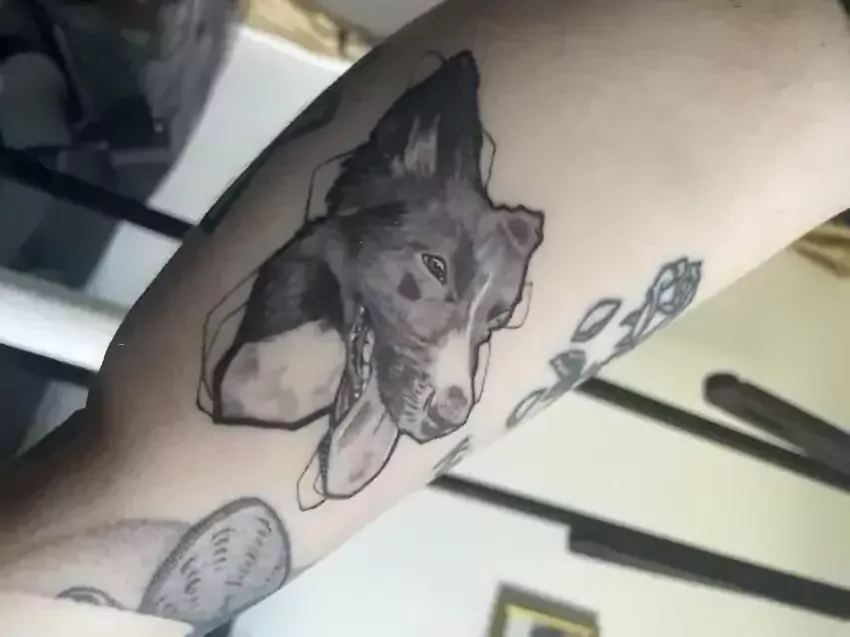
I remember the first client who asked me for a "fine line" tattoo. It was 2019. A young woman came in with a photo of her cat pulled from Instagram. She wanted a portrait, but "super delicate, really light lines, almost invisible."
I raised an eyebrow, took out a fine needle, and did my first little fine-line cat. It looked beautiful. But a year later, she came back: the lines had thickened, some details had faded. She was disappointed. So was I.
Since then, I learned to say things clearly before the needle touches skin. Fine line is beautiful. But it is not a tattoo like every other tattoo.
What exactly is fine line?
Fine line is tattooing done with very small needles, often 3RL or 5RL — the smaller numbers. The line is ultra-thin, sometimes almost like a hair. The result looks like a fountain pen drawing, placed gently on the skin.
Microrealism goes further: same kind of technique, but used for portraits, landscapes, objects. The detail can be honestly ridiculous on a tiny surface. A 2 cm flower with separate petals. A human eye the size of a 2 euro coin. Tattooing, but also a little bit magic trick. With gloves.
It exploded because of Instagram. Korean, Russian, and Polish artists pushed this aesthetic hard. Paris studios picked it up. And now everybody wants lines that "look like a temporary tattoo, but real."
The promise... and the real thing
Fine line is attractive because it promises something discreet, elegant, almost invisible. "I want a tattoo, but not a TATTOO." I hear that one a lot.
But that softness has a price.
All tattoos age. Thin lines too. Over time, ink spreads slightly under the skin. A 0.1 mm line can become 0.3 mm after 5 years, 0.5 mm after 10. That's normal. It's physiological. It happens to every tattoo. But on fine line, the difference is more obvious.
Some ultra-fine details can even disappear during healing. Not always. But it is a real possibility.
So yes, you need an artist who actually masters this technique. And you need to accept that, in a few years, your fine line tattoo may need a touch-up. I wrote more about that in the guide to tattoo touch-ups, because it's not failure. It's maintenance.
Areas that work, and areas that don't
Fine line is not made for every placement.
It works well on the forearm, shoulder, ankle, shoulder blade — flat areas, not too much friction, where the skin is relatively stable. Small discreet designs: a flower, a feather, a word, an animal outline, an ankle ornament.
It works less well on fingers, soles of the feet, inside the mouth, or any area that moves a lot. Ink spreads faster on a finger that bends all day. On fingers, a fine line can become hard to read in 2 or 3 years.
Same thing for areas exposed to the sun without protection. UV rays speed up ink degradation and make lines age faster. If you want the long version, I covered the timing in tattoos and sun exposure. Short version: sunscreen is not optional. It is the boring little bodyguard of your tattoo.
Fine line vs classic tattoo: the match
Classic tattooing — thicker lines, stronger shadows — has advantages fine line will never have. It reads from a distance, resists time better, and usually needs fewer touch-ups.
Fine line shines through subtlety, discretion, detail. It doesn't shout. It whispers.
But that whisper comes with a cost. Not always a financial one — the price is often similar — but a time cost. Fine line needs more care over the years. It is not a "set it and forget it" tattoo. It asks for a bit of ongoing attention, like a houseplant with expensive taste.
How to recognize a good fine line tattoo
A good fine line tattoo can be judged on three things: — The line: regular, clean, no blowouts, no broken parts. — Saturation: the ink is properly in the skin, not grey or pale after healing. — Composition: microrealism relies on subtle shading, not just a tiny outline.
If a tattoo artist tells you "yeah yeah, I do fine line" but their Instagram feed only shows big black traditional lines, be careful. This is a precise technique. It takes practice. It is not a style you improvise on a Tuesday between lunch and a coffee that got cold.
My advice if you want fine line
Go for it. It's beautiful, soft, and it changes from heavier tattoos that mark the skin like a rubber stamp. But go in with your eyes open:
— Choose a specialist, not just someone willing to try. — Accept that your tattoo will evolve. It may be perfect on day one, gorgeous six months later, and different in five years. — Protect it from the sun like your life depends on it. Fine line and UV are not friends.
Do you already have a fine line tattoo, or are you thinking about getting one? I'm curious what pulls you toward it. Sometimes it's just the idea of a tattoo that doesn't feel too "tattoo." And honestly, that's fine.
Sources
- Tattoo Healing Science — Long-term ageing of fine line tattoos
- Dermatology Journal — Ink migration in different needle configurations
- Clinique Dermatologique Lyon — Suivi des tatouages fins sur 5 ans