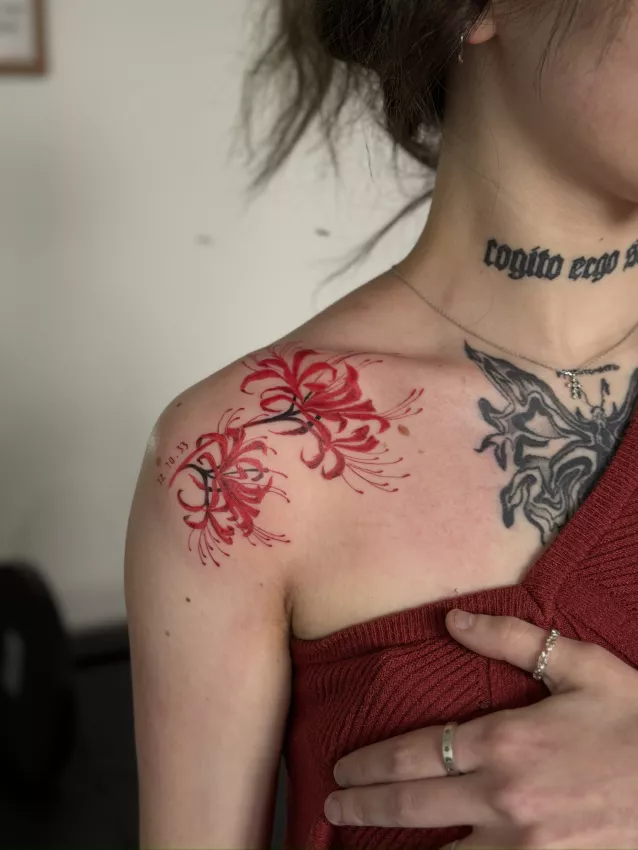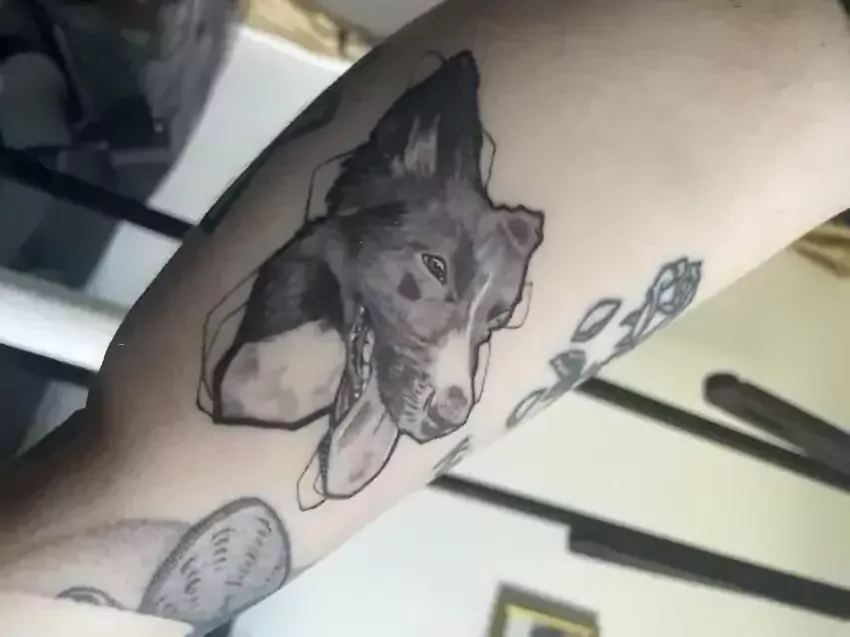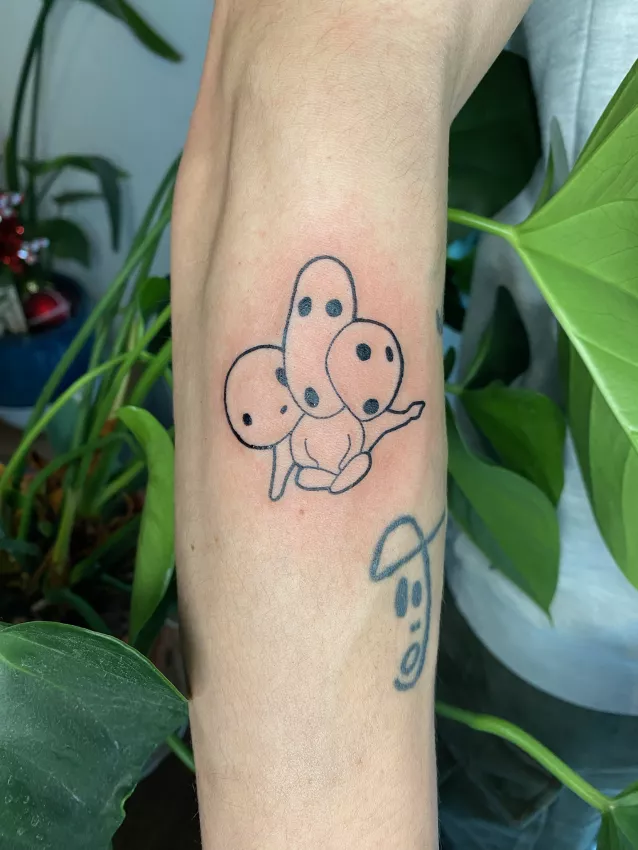
I often see people come in with a sentence that starts with "I don't know if this is a good idea but…" Usually, that's where it gets interesting. Not because the idea is perfect. Rarely. But because there's already something there. An image. A memory. A weird desire. Something scratching at the back of your mind for six months.
Choosing a tattoo artist in Grenoble isn't just typing three words on Google and grabbing the first available slot. I mean, you can. Like you can choose a restaurant because the storefront is red. It works sometimes. But for a tattoo, it's better to look a bit further than the window display.
Start with your project, not the artist
The first mistake is looking for "the best tattoo artist" before even knowing what you actually want to do.
A project can be small but complex. A fine word on the ribs. A fine line flower. An old family design to reinterpret. A graphic flash. A blackwork piece. Each request doesn't call for the same gesture or the same style.
Before choosing a tattoo studio in Grenoble, ask yourself a few simple questions.
What do you want to wear? A decorative image? An intimate symbol? A visible composition? A discreet tattoo? A strong piece? Do you want something very fine, very black, very illustrative, very floral, very geometric?
You don't need to have all the answers. But if you arrive with total fog, the studio's role is precisely to help you outline the contours. Not to sell you a random design.
If you're preparing your first project, the article on your first tattoo in Grenoble can already help you avoid classic pitfalls.
Look at the styles, not just pretty photos
Instagram has made everyone a bit of an expert in three seconds. You scroll, you see a well-lit photo, fresh skin, huge contrast, and your brain says: "that looks clean."
Yes. But a nice photo isn't enough.
Look at consistency. Does the artist actually do the style you want? Are the lines regular? Do the compositions breathe? Do the placements follow the body or just sit on it like a sticker? Do healed tattoos exist somewhere?
A fresh tattoo is always a bit flattering. The skin shines, the blacks pop, the reds are red, everyone's happy. But a good tattoo also needs to hold up over time. That's where choosing style, size, placement, and technique becomes important.
If you're hesitating between approaches, you can read how to choose your tattoo artist. Less glamorous than a Pinterest moodboard, but often more useful.
The conversation before the drawing says a lot
A good studio doesn't say yes to everything. It's frustrating sometimes. I know. You arrive with a precise idea, you spent your evening zooming on references, you already imagined yourself with the tattoo, and then someone tells you: "that, like that, won't age well."
It's not to kill the vibe. It's to stop you coming back in two years with a little sentimental blob on your forearm.
The first exchange should help understand your desire, your relationship to the design, your tolerance for visibility, your budget, your timing, and also the technical constraints. Minimum size. Density of details. Body area. Skin type. Aging. Pain. Healing.
A serious studio will rephrase, guide, sometimes refuse part of the idea. That's a good sign. Tattooing isn't paper printing. You don't slap an image on a living body without thinking.
To prepare for that moment, the article communicating your project to a tattoo artist can save you from the 47-line message with eight blurry screenshots and "kinda like that but not really."
Check hygiene without playing paranoid detective
You don't need to arrive with a UV lamp and an Excel spreadsheet. But you can look.
Is the studio clean? Is the station properly prepared? Is single-use equipment opened in front of you? Are surfaces protected? Does the artist explain aftercare? Do they make you comfortable without trivializing the act?
A tattoo salon in Grenoble should be welcoming, yes. But not at the expense of the framework. Hygiene isn't a premium option. It's not a "nice extra." It's the foundation.
You can dig deeper with hygiene in a tattoo studio, especially if it's your first tattoo and you don't know what to observe.
The price should be clear, not necessarily low
A cheap tattoo can become very expensive when you need to cover it, touch it up, or live with something badly placed for ten years.
The price depends on drawing time, size, placement, level of detail, technique, experience, equipment, preparation time, and sometimes the mental complexity of the project. Yes, mental. A small typographic tattoo can require more precision than a design twice its size.
In Grenoble, like everywhere else, comparing only prices doesn't make much sense. Instead, compare the quality of the exchange, the relevance of advice, the mastery of style, the transparency of the process.
If you want to understand why two seemingly similar projects can have very different prices, also look into the topic of tattoo pricing and what makes it vary.
Choose a studio that knows how to say "not like that"
The right studio for your project isn't necessarily the one that responds fastest, or the one with the most followers, or the one that says yes with three flame emojis in the comments.
It's the one that understands what you want, sees what can work, spots what might cause problems, and transforms your idea into a viable tattoo. Not just into a pretty drawing.
At Studio Pixel, we like that part. The moment where a raw idea becomes something wearable. Where we keep the intention but remove the noise. Where we avoid copy-paste. Where we find the right size, the right placement, the right level of detail.
Choosing a tattoo artist in Grenoble, ultimately, is choosing a conversation as much as a needle. If the conversation is blurry, rushed, or limp, the tattoo probably will be too.
Take your time. Look at the work. Ask your questions. Accept being told no on certain points. That's often where the project becomes better.