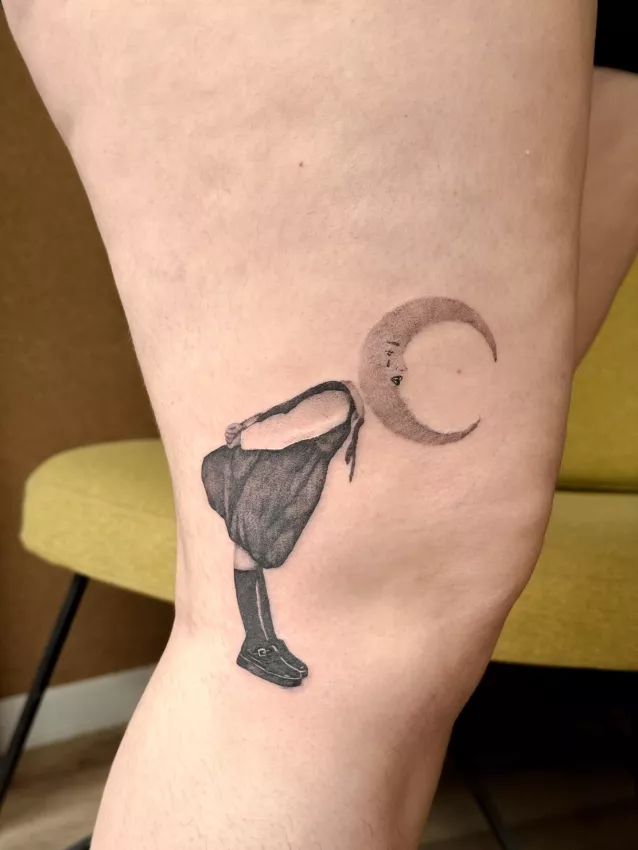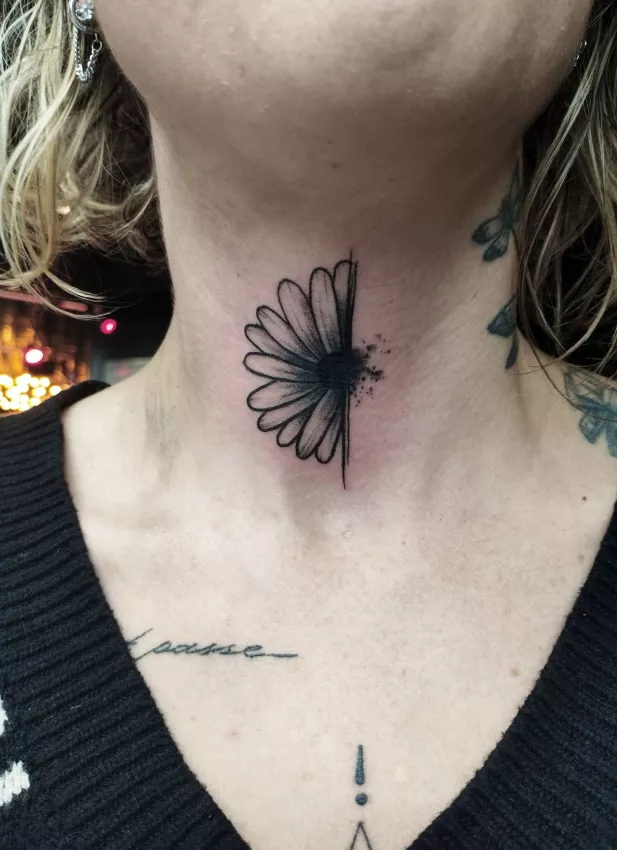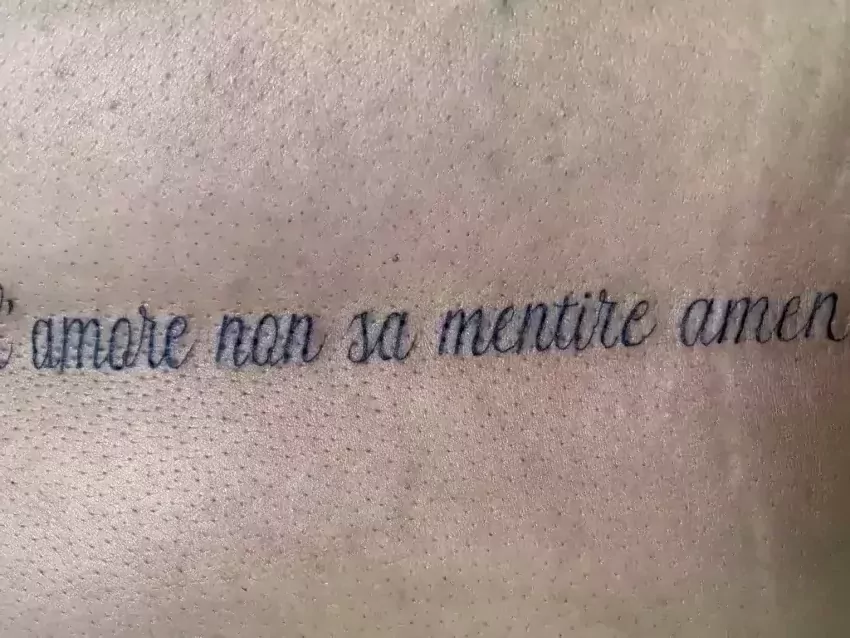
When I started drawing seriously, I mostly thought about lines, shadows, composition. When I started tattooing, the skin answered: "That's cute, but here I call the shots too."
Skin is not a blank sheet. It's obvious, almost stupid to say. Yet a lot of misunderstandings come from that exact idea. People imagine a drawing can simply transfer from paper to body. Like a perfect transfer. Except it doesn't work that way.
Skin Already Has a Color
A white sheet reflects light consistently. Skin doesn't.
It can be light, dark, pinkish, golden, olive, with freckles, scars, moles, variations. Ink doesn't exist in a void. It's seen through and with the skin.
That's why certain contrasts work differently depending on skin tone. A very light gray can be subtle on one skin and nearly invisible on another. A color can pop vividly or settle down after healing.
The tattooer has to adapt. Not with simplistic rules, but with concrete observation.
A design made for white paper often needs to be reinforced to exist on skin.
Texture Changes the Line
Paper is relatively predictable. A tablet even more so. Skin? It varies.
Some areas are thinner. Others thicker. Some move a lot. Some hold ink faster. Some are more sensitive. The line doesn't always land the same way.
Even with good technique, tattooing is an act on living material. Skin reacts: redness, swelling, light bleeding, fatigue. Then it heals.
That doesn't mean everything is random. But it means the tattooer has to respect the material. Pushing an impossible detail or excessive fineness can give a fragile result.
The Body Is Not Flat
A sheet doesn't breathe. A forearm does. A ribcage does — a lot. A shoulder rotates. An ankle bends. A belly changes. A back moves.
A perfectly balanced drawing on paper can warp on a curved area. That's not necessarily bad. It can even become beautiful if anticipated.
Tattooing has to dialogue with anatomy. Lines can follow a muscle. Shapes can follow a curve. Composition can use movement instead of fighting it.
That's one of the big differences between illustration and tattooing: the canvas participates.
Healing Is Part of the Drawing
A tattoo isn't done when the session ends.
The final result appears after healing. The skin closes. Blacks stabilize. Grays soften. Colors find their true place. Lines can lose the extreme sharpness of day one.
That's normal.
A good tattoo design anticipates this stage. It leaves enough space between details. It uses solid contrast. It avoids depending solely on tiny effects.
Hygiene and aftercare matter too. The shop needs serious standards, and the client needs to follow recommendations. For more, see tattoo hygiene: standards and precautions.
Time Is a Brutal Co-Author
Even well done, a tattoo evolves. Skin ages, sees the sun, renews itself, sometimes changes texture.
So the tattooer has to think about the tattoo in five years, not just the day-one photo. This is especially important for micro-details, very fine lettering, tiny portraits, cramped compositions.
A design that accepts time isn't necessarily thick or heavy. It can stay fine, elegant, delicate. But it must be built with enough breathing room.
The problem isn't fineness. The problem is fineness without margin.
Drawing for Skin Requires a Different Logic
When drawing for paper, you can chase effects, texture, accumulation, extreme precision. When drawing for skin, you also chase legibility over time.
You have to think in readable lines. Contrasts. Masses. Rest areas. Placement. Actual size.
That's why a tattooer might modify an illustration before tattooing it. Not on a whim. Not to "add their touch" at all costs. But because the drawing has to change worlds.
An image made to be looked at becomes an image made to be worn.
The Client Sees the Image, the Tattooer Sees the Future Problem
That's sometimes where conflict comes from.
The client sees the dream design. The tattooer sees lines too tight, the area too small, the contrast too weak, the aging complicated.
The tattooer's role isn't to kill the excitement. It's to protect it. To say what will work, what needs to change, what can be tried, what would be dishonest.
It's an invisible part of the job. See also the real job of a tattoo artist.
Conclusion: Skin Transforms Everything
Skin is not a blank sheet. It has color, texture, movement, memory. It heals. It ages.
A good tattoo happens when the design accepts this reality.
It's not less noble than illustration. It's just a different art. More physical. More constrained. More alive.
And honestly, that's what makes it so interesting.