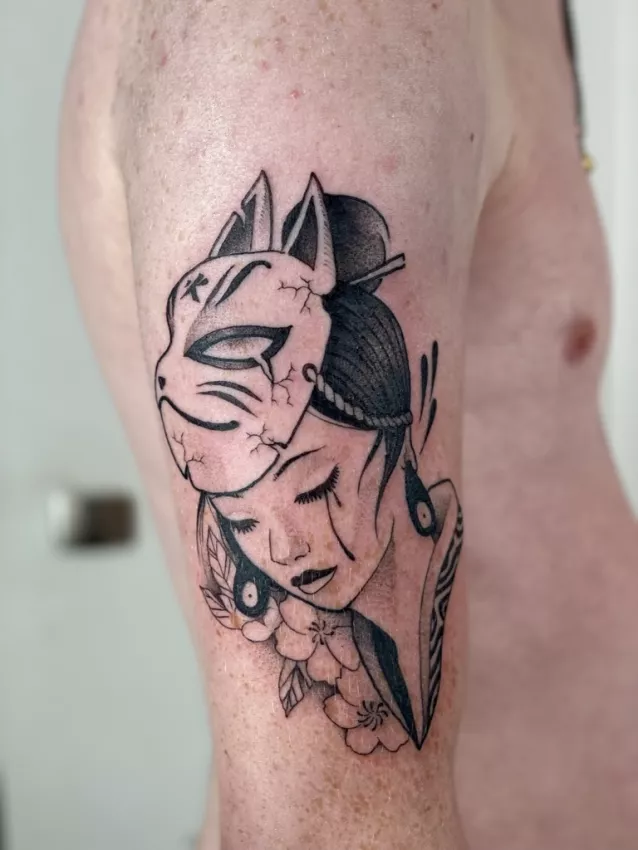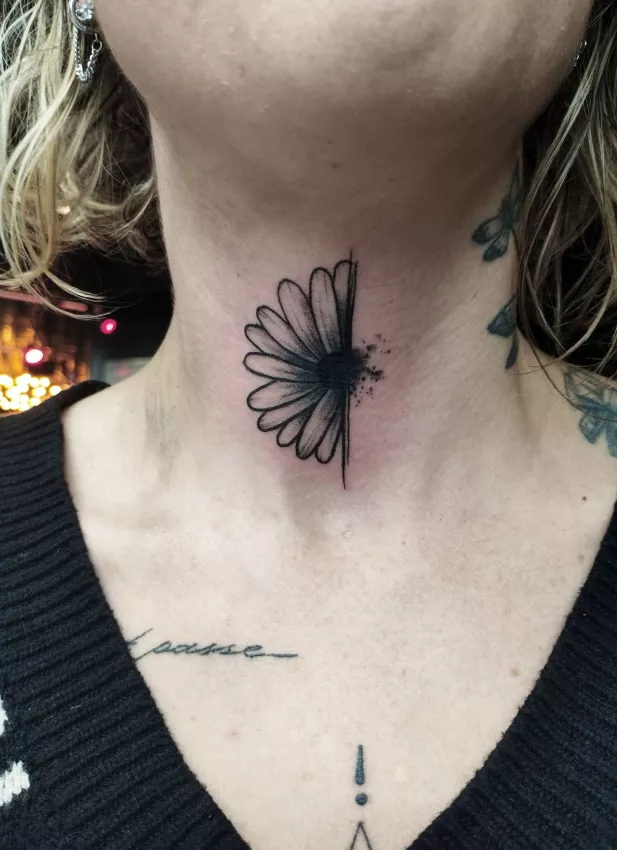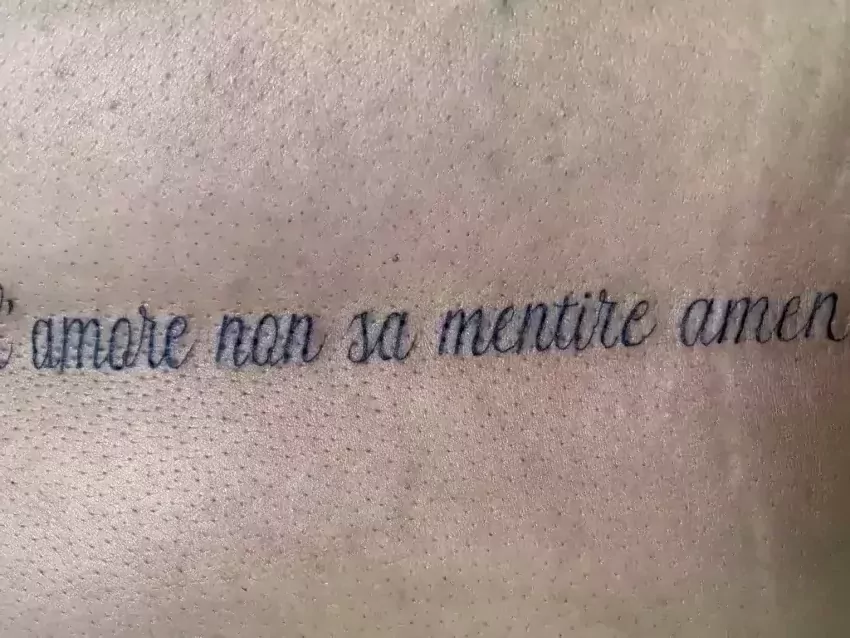
I love flash because it doesn't lie for long. Within seconds, you know if it works. The design either grabs you or it falls flat. No long explanations, no essays, no "you see, symbolically, the third petal represents..." A good flash tattoo has immediate presence.
But that apparent simplicity hides a lot of decisions.
A Flash Isn't a Random Drawing
In the popular imagination, a flash tattoo is sometimes just "a little design that's available." Like the artist doodled it between coffees.
In reality, a good flash is often very constructed. It needs to stand on its own. It has to spark desire without a personalized brief. It has to work on different bodies, at different reasonable sizes, on different possible areas.
That's different from a custom project. Flash doesn't start from a specific person. It starts from a graphic language, a mood, a theme, a tattoo constraint.
If you're torn between both approaches, flash or custom project helps clarify the difference without making a useless hierarchy.
It has to be specific enough to have character, but open enough to be worn by someone else.
Efficiency Starts With the Silhouette
An effective flash is recognizable fast.
Its silhouette must hold. Even without shading, even without detail, even seen small. That's why the classics still work: roses, daggers, snakes, hearts, butterflies, skulls, panthers. Their shape is strong.
That doesn't mean you should redraw the same motifs forever. But you need to understand why they hold.
A flash that's too fragile, too scattered, too dependent on micro-details can lose its impact once tattooed. It can look good on a tablet and flat on skin.
The question to ask: "If I glimpse this on someone's arm from across the street, do I get it?"
Style Must Be Owned
A flash needs a clear language.
Old school, ignorant, fine line, blackwork, ornamental, engraving, neo-trad, minimalist: doesn't matter. But pick one. Flash that mixes everything without decision usually ends up lukewarm.
Style sets the rules: line weight, detail level, contrast, shadow type, proportions, rhythm.
A traditional flash owns bold outlines and solid blacks. A fine line flash demands restraint and breathing room. Blackwork plays with masses. Engraving-style works with hatch direction.
Style isn't decoration added at the end. It structures the drawing.
Constraints Make Flash Better
It might sound paradoxical, but a flash often gets stronger when you limit the playground.
One sheet of only florals. A series of tiny insects. Pure black motifs. Everyday objects as tattoos. Sea symbols. Stylized animals. Shapes designed for the forearm.
Constraint creates coherence. It avoids the everything-but-the-kitchen-sink sheet where nothing talks to each other.
It also helps the client understand the artist's universe. A good flash sheet isn't an impersonal catalog. It's a small style statement.
Tattooable First
A flash can be beautiful, funny, clever. But if it's not tattooable, it misses the point.
You need to think about minimum size. Lines that are too close together. Details that might get lost. Possible body areas. Healing.
A tiny flash with ten different textures is often a trap. A very fine flash with too many crowded elements too. Delicate isn't forbidden. But delicacy needs to be technically honest.
A good flash is ready to go on skin. It doesn't need to be completely redrawn to survive.
This question of durability ties into tattoo aging, because a flash needs to stay readable long after the fresh-day-one photo.
Flash and the Artist's Personality
Flash often shows what an artist really loves to draw.
In client projects, you respond to a request. In flash, you propose a universe. It's a space of freedom. But also an exercise in discipline.
A flash says: "This is what I can do, this is what I want to tattoo, this is how I think about an image."
That's valuable for clients. Choosing a flash isn't just choosing a design. It's accepting an aesthetic already carried by the artist.
And sometimes, a flash sparks a custom project. The client sees an energy, a style, a way of composing, then asks for a tailored adaptation.
Can You Modify a Flash?
It depends.
Some artists sell their flash as-is, not modifiable or barely. Others accept adjustments: size, placement, small details. Others turn the flash into a base for a custom project.
There's no single universal rule. Best to ask clearly.
And asking clearly means giving the area, size, and context. In short, the same basics as communicating your project to a tattoo artist, even if the design already exists.
But understand this: modifying a flash too heavily can break its balance. Removing an element, adding a name, changing the shape, reducing the size, flipping the direction — every change can have an impact.
A flash is often more thought-out than it looks.
Conclusion: A Good Flash Is Simple, Not Simplistic
Drawing a flash is about efficiency.
A clear motif. A strong silhouette. An owned style. A technical constraint respected. An immediate want.
The flash should feel obvious. But that obviousness takes work.
And when it works, it has that rare quality: it already belongs to the artist's universe, but it's still waiting for the right skin to truly exist.