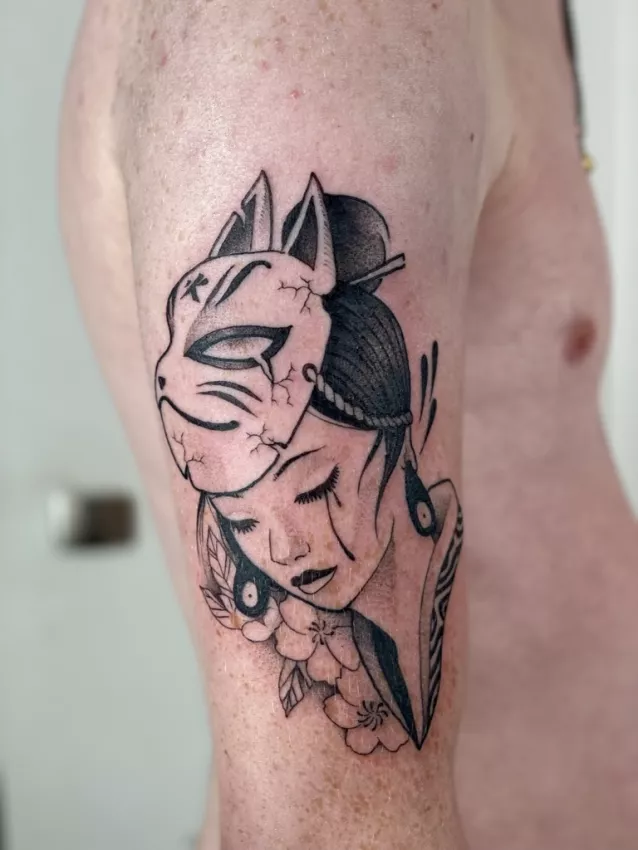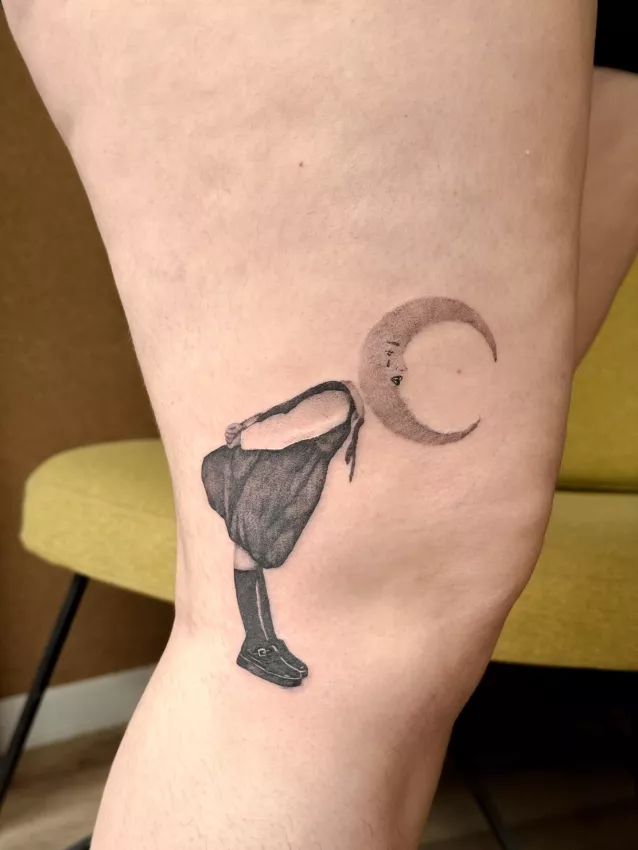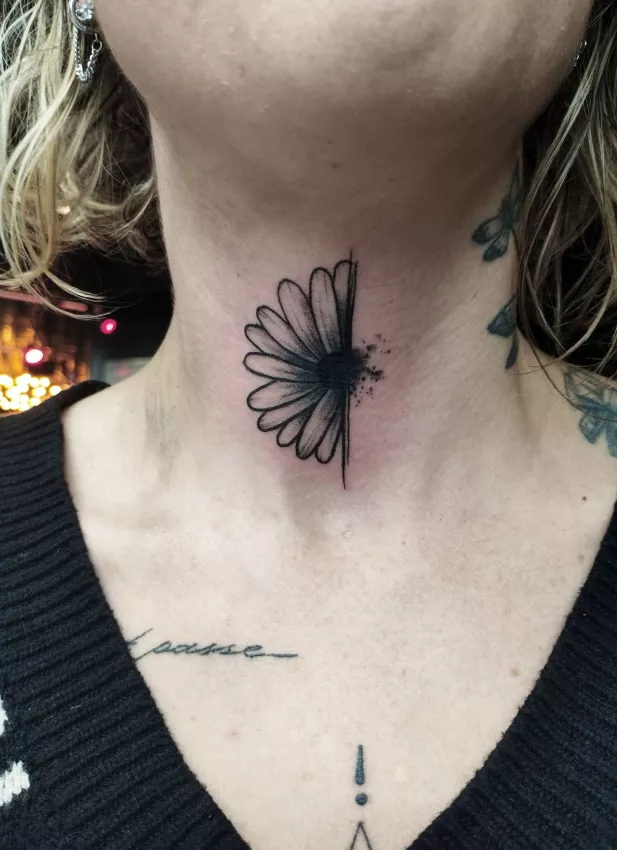
Someone once told me: "I can't draw, but I have the image in my head."
Classic line. I like it. It captures the whole problem. In your head, the image is alive, perfect, emotional. The moment you try to put it on paper, it gets weird. Too flat. Too illustrative. Too textbook. Or just not clear enough.
Turning an idea into a tattoo design is a real skill. Not just about drawing ability. It's a method. And that's exactly what a tattoo drawing workshop can explore — without promising to turn anyone into a tattoo artist in three afternoons.
Start With the Idea, Not Pinterest
The natural reflex is to look for images. Pinterest, Instagram, screenshots, old tattoos, illustrations, logos, symbols. Useful? Sure. But it can also drown the project.
A tattoo drawing workshop should start before the moodboard. With one simple question: "What do we want people to feel?"
Example: "I want a snake." Cool. But what kind of snake? Protective? Dangerous? Elegant? Mythological? Minimalist? Ornamental? Same animal, ten completely different designs.
This mirrors client briefing work. For a real project, learning to articulate your idea clearly is key. Communicating your project to a tattoo artist breaks this down from the client side.
In a workshop, you can take a raw idea and boil it down to three words. Like "cat, memory, softness". Or "dagger, rupture, energy". Those words become your compass.
Build the Silhouette Before the Details
Most beginners start with details. Fur. Jewellery. Eyes. Textures. Little leaves. Wrong move.
A tattoo design needs to work as a silhouette first. If you blur it, can you still read it? From a distance, does it exist? Strip away textures — is there a strong shape left?
In a workshop, a simple exercise: draw in solid black masses only. No gradients. No decorative lines. Just the shape.
Harsh, but revealing. If the silhouette doesn't work, details won't save the drawing. They'll just dress up the problem.
A good design isn't necessarily complex. It's legible. And in tattooing, legibility is almost a courtesy to the future.
Adapt the Idea to a Body Part
A design without placement is half a project.
A forearm drawing isn't the same as a rib drawing. An ankle flash doesn't work like a shoulder blade piece. The body dictates direction, size, rhythm.
In a workshop, working with body silhouettes is useful. Place the design. Rotate it. Shrink it. Enlarge it. See what happens.
Often, an idea gets better when it hits a constraint. A snake on a long area can stretch. A flower on a shoulder can open up. A composition that's too square can become more organic.
A tattoo isn't an image slapped on randomly. It's a graphic object worn on a body.
Simplify Without Dumbing Down
Simplification scares people. Feels like losing the soul of the project.
But simplifying is choosing. Not making it plain. Deciding what matters.
If an idea has a moon, a portrait, three flowers, a date, an animal, a quote, and a landscape — that might be too many subjects. Maybe one element can carry the whole meaning. Maybe a specific flower is enough to evoke the person. Maybe an animal's posture says more than a full background.
Learning to subtract is an essential skill.
It's also why serious prep takes time. You don't always nail a composition in five minutes. And that time has value. See also: why no free drawings.
Understand Technical Constraints
A serious tattoo drawing workshop has to talk about skin. Even if nobody's tattooing.
Lines too close together will blur over time. Tiny details can disappear. Weak contrast fades into nothing. Large black areas need real thought. Textures need to account for healing.
You don't draw a tattoo like a poster. You don't draw it like a logo either. Tattooing has its own rules.
That doesn't mean only three approved styles are valid. It means every style needs proper translation. Fine-line floral, traditional, blackwork, realism — everything needs adaptation.
Learn Without Fooling Yourself
A tattoo drawing workshop can be great. It helps with composition, legibility, placement, and design construction. It can help a future apprentice structure their eye.
But stay realistic: learning to draw for tattooing isn't learning to tattoo. Tattooing involves hygiene, skin, equipment, responsibility, client relationships, aftercare, legal framework.
The real job is bigger than drawing. I talk about this in 5 things nobody tells you about being a tattoo artist.
Conclusion: An Idea Becomes a Design When It Accepts a Form
Turning an idea into a design means moving from fog to structure.
You start with an emotion. Pick an intention. Build a silhouette. Adapt to the body. Simplify. Test legibility. Accept the constraints of skin.
It's less romantic than "I had a vision at 3 AM". But it's more solid.
And that's often where the magic happens: when the idea stops being a vague image and becomes a real, possible tattoo.